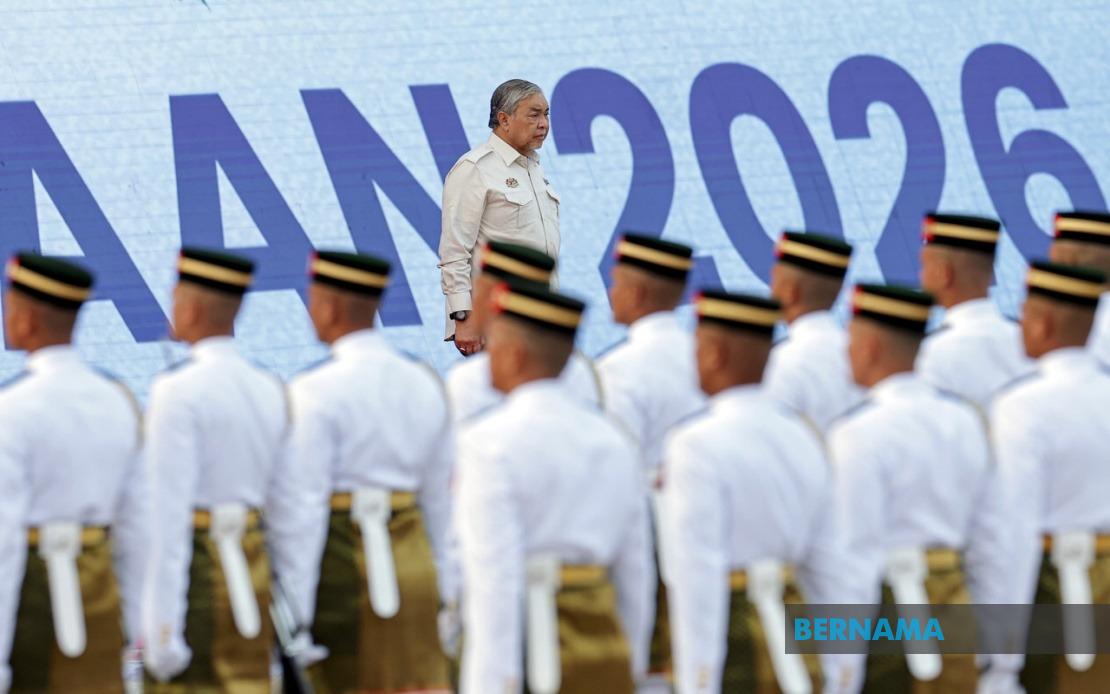
The 2026 National Day celebration held at Dataran Putrajaya demonstrated an exceptional level of public engagement and patriotic fervour, according to Deputy Prime Minister Datuk Seri Dr Ahmad Zahid Hamidi, who characterised the event as surpassing festivities from previous years. Speaking to media representatives following the ceremony, Ahmad Zahid attributed this heightened enthusiasm to a measurable uptick in patriotic sentiment across the Malaysian population, suggesting that the nation's social fabric has strengthened considerably in recent times.
The magnitude of public participation underscored the genuine appeal of the National Day observance to ordinary Malaysians. More than 100,000 citizens converged on Dataran Putrajaya from the early morning hours, indicating sustained interest in commemorating the nation's founding and identity. This substantial turnout reflects not merely dutiful attendance at a state function but rather active, voluntary engagement with the symbols and narratives of Malaysian nationhood, suggesting that patriotic sentiments retain considerable resonance across diverse demographic segments.
The parade itself showcased the breadth of Malaysian institutional and civic life. A total of 10,819 participants marched across 76 separate contingents, with 22 marching bands providing musical accompaniment throughout the procession. This organisational scope demonstrates the coordination required to bring together representatives from military units, government agencies, educational institutions, and community organisations, each contributing their own contingent to create a unified expression of national pride.
The celebration carried the thematic designation "Malaysia MADANI: Kesejahteraan Dinikmati," which translates to prosperity or wellbeing being enjoyed, signalling the government's messaging priority around equitable development and shared benefits across society. This thematic framing suggests official efforts to tie patriotism to tangible improvements in citizens' lived experiences, moving beyond abstract appeals to national sentiment toward claims about concrete gains in welfare and opportunity.
The presence of Malaysia's highest constitutional figures lent significant ceremonial weight to the proceedings. His Majesty Sultan Ibrahim and Her Majesty Raja Zarith Sofiah, the King and Queen of Malaysia, graced the celebration with their attendance, providing the symbolic apex of Malaysian sovereignty and continuity. Prime Minister Datuk Seri Anwar Ibrahim and members of the Cabinet likewise participated, ensuring senior executive leadership was visibly represented throughout the event.
Ahmad Zahid's personal engagement during the celebration extended beyond formal remarks to include direct interaction with ordinary attendees at Dataran Putrajaya. By positioning himself among the general public rather than maintaining exclusive access to VIP viewing areas, the Deputy Prime Minister demonstrated a political strategy that emphasises accessibility and connection with grassroots citizens. Such gestures, whether genuinely spontaneous or carefully choreographed, communicate a particular style of political engagement that prioritises visible rapport with the electorate.
The comparison Ahmad Zahid drew between the 2026 celebration and those of preceding years carries implications for understanding broader trends in Malaysian civic participation. If indeed the event proved more vibrant than its predecessors, this may reflect changing attitudes toward national commemoration, increased organisational capabilities within government, or genuine shifts in how Malaysians perceive their relationship to the nation-state and its symbols. Conversely, such statements require careful evaluation, as public officials have incentives to characterise events under their watch as successful and indicative of positive momentum.
For Malaysian readers, the emphasis on rising patriotism carries particular relevance in the context of a diverse, multi-ethnic society where consensus on national identity remains contested terrain. Public celebrations of Malaysia Day serve as opportunities for the state to articulate its vision of national unity and to demonstrate that citizens across different communities share common cause. The reported strength of this year's celebration, if accurate, might suggest progress toward such inclusive patriotism, though observers should remain attentive to whose voices dominate such official narratives.
The event's scale and organisation also reflect Malaysia's capacity to mount large-scale public spectacles in its administrative capital. Dataran Putrajaya, purpose-built as a symbol of modern Malaysian governance and development, serves as the natural venue for such ceremonies. The choice of location reinforces associations between national celebration and state power, a dynamic particularly pronounced in nations with strong centralised governance structures like Malaysia. The participation of over 100,000 people simultaneously demonstrates both the infrastructure to accommodate such gatherings and the continued public interest in formal national rituals despite the proliferation of alternative modes of political expression in contemporary digital environments.

