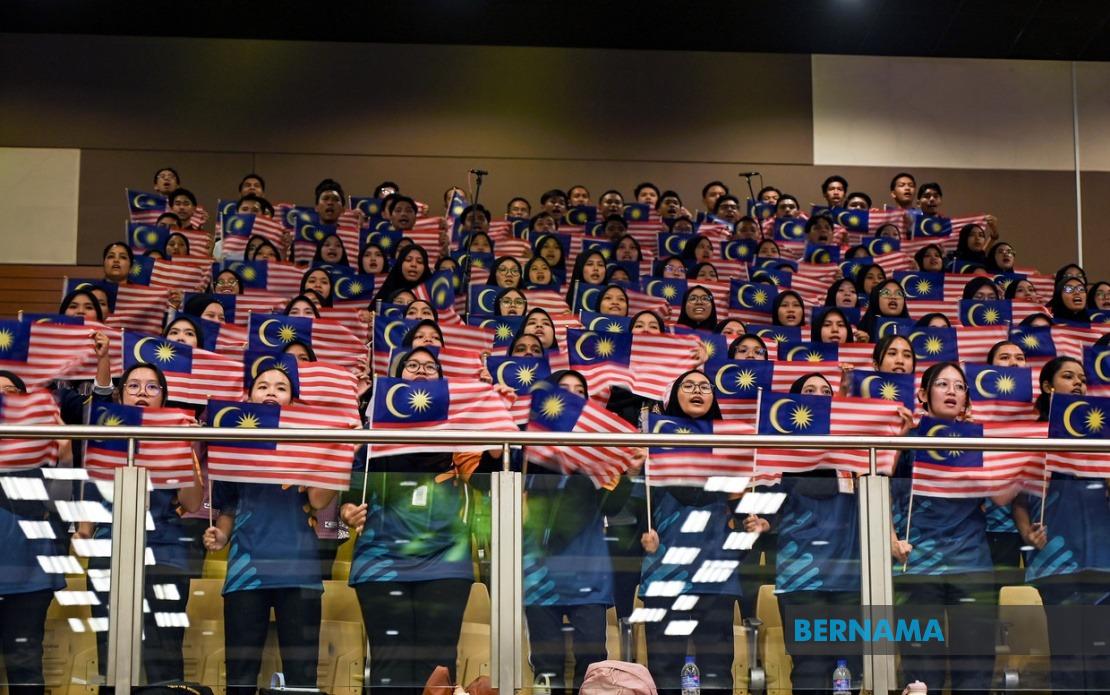
Organisers of the 2026 National Month and Kibar Jalur Gemilang launch ceremony have confirmed that preparations are well advanced, reaching the 80 per cent completion mark as the event approaches this Sunday. The ceremony will take place at Dewan Sri Perdana of the Sultan Azlan Shah Health Ministry Training Institute in Ipoh, marking a significant moment in Malaysia's patriotic calendar alongside the broader National Day and Malaysia Day celebrations.
Faizal Adanan, deputy director of the Information Department's Communication Services and Community Development Division, emphasised that despite the scaled-down nature of the event, organisers remain committed to preserving the fundamental spirit of national unity and pride. Speaking after conducting final inspections of the venue, he stressed that careful planning has characterised the preparation phase, with comprehensive rehearsals now underway to ensure seamless execution. The deliberate choice to hold proceedings in a manner that is financially measured rather than extravagant reflects broader government priorities around prudent spending whilst maintaining the symbolic and emotional resonance the occasion demands.
The venue's capacity of 3,000 attendees will be utilised to facilitate participation from diverse segments of Malaysian society, deliberately ensuring that representatives from different ethnic groups and religious communities are present. This inclusive approach serves a dual purpose: it strengthens the authenticity of the unity message whilst demonstrating commitment to the pluralistic values that underpin the nation's identity. Officials view the carefully curated cross-community participation as fundamental to countering scepticism about the government's capacity to foster genuine cohesion beyond rhetoric.
Prime Minister Datuk Seri Anwar Ibrahim will officiate the main ceremony, lending significant governmental weight to proceedings. His presence underscores the administration's investment in the symbolic apparatus of nationalism, particularly relevant given ongoing debates about national identity and social cohesion in contemporary Malaysia. The decision to have him preside over the launch signals that such patriotic initiatives remain central to the government's wider agenda of national reconciliation and forward momentum.
The programme has been structured around several engaging components intended to capture public interest and reinforce patriotic messaging. A patriotic choir comprising trainees from the Sultan Azlan Shah Health Ministry Training Institute will perform; these performers have previously garnered significant social media attention, indicating that organisers are strategically leveraging contemporary communication dynamics to amplify reach and resonance. The choir's involvement also humanises the celebration, shifting focus from top-down governmental messaging toward grassroots expressions of national pride.
A Merdeka Patriotic Run is expected to attract approximately 2,000 participants and will be formally initiated by Datuk Abdul Halim Hamzah, secretary-general of the Communications Ministry. This component introduces an element of public participation and physical engagement with national symbols, offering citizens a tangible way to express patriotic sentiment beyond passive viewership. The run's anticipated scale suggests confidence among organisers regarding public receptiveness to the event.
Among the programme's more symbolic elements is the flag-raising ceremony conducted by security forces, which represents a return to tradition following a two-year hiatus. The reinstatement of this ritual carries particular significance as it demonstrates restored commitment to ceremonial expressions of national identity. The interval without such ceremonies may reflect logistical constraints from previous years, making their resumption noteworthy for observers tracking the government's prioritisation of such patriotic observances.
The launch of the 2026 National Month theme song by a local artist will provide another cultural touchpoint, embedding national messaging within popular musical forms that enjoy broader resonance than formal speeches alone might achieve. Additionally, participating agencies will present exhibitions, offering both educational opportunities and platforms for departments to demonstrate their contributions to national development. This multi-faceted approach reflects sophisticated understanding of how diverse programming components can collectively reinforce patriotic messaging more effectively than singular focal events.
Recognising that physical attendance is restricted to selected participants, organisers have strategically prioritised digital accessibility to maximise national reach. Live broadcasts will commence at 10 am on Sunday across multiple platforms including Radio Televisyen Malaysia, the Malaysian National News Agency, the Communications Ministry, the Information Department, and through the Merdeka360 Facebook Live service. This multi-platform approach acknowledges contemporary media consumption patterns, ensuring that Malaysians without physical access to the venue can nonetheless participate in the ceremonial experience. The emphasis on social media distribution suggests organisers' understanding that national unity celebrations derive legitimacy partly from the breadth of their accessibility and viewership.
Communications Minister Datuk Seri Fahmi Fadzil previously announced that the 2026 celebrations would extend to a broader National Day observance scheduled for Dataran Putrajaya on August 31. This secondary event will maintain the modest yet vibrant character established through the launch ceremony, creating a coordinated narrative of measured celebration throughout the season. The integration of planning across multiple venues and dates suggests a coherent government vision for how national commemorations should balance financial prudence with meaningful public engagement.
The deliberate framing of this year's preparations around the concept of maintaining patriotic spirit whilst exercising fiscal restraint reflects broader governmental messaging around resource allocation during economically challenging times. Rather than presenting reduced scale as a deficit, organisers have reframed it as a virtue, suggesting that authentic patriotism transcends elaborate staging. This rhetorical positioning carries implications for how Malaysians understand the relationship between national pride and material expenditure, potentially reshaping expectations around governmental displays of nationalism.
For regional observers, Malaysia's approach to 2026 national celebrations offers instructive insights into how Southeast Asian democracies balance public ceremony with fiscal responsibility. The deliberate choice to maintain patriotic observances whilst economising reflects confidence in the substantive rather than purely ceremonial dimensions of national identity. As the event approaches, its success will likely be measured not by attendance figures or production values, but by its capacity to authentically articulate and reinforce the multiethnic, multireligious vision of Malaysian nationhood that political leadership continues to emphasise despite ongoing social divisions.

