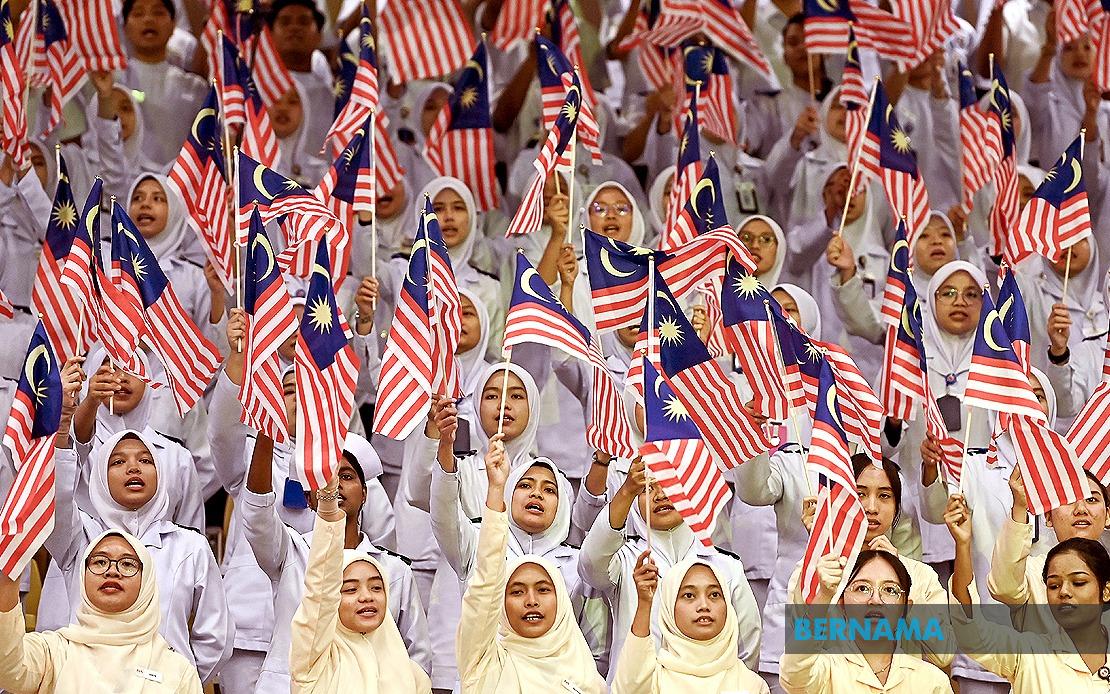
Malaysia's patriotic calendar enters a new phase tomorrow with the official launch of the 2026 National Month and Fly the Jalur Gemilang (MPBKKJG 2026) campaign, to be held at the Dewan Sri Perdana in Tanjung Rambutan, Perak. Prime Minister Datuk Seri Anwar Ibrahim will preside over the ceremony beginning at 10 am, delivering the principal address to an anticipated crowd of approximately 3,000 Malaysians representing the country's diverse communities.
The event marks a ceremonial milestone with the reinstatement of the flag-raising ritual, which had been absent from the launch programme for the preceding two years owing to logistical constraints at previous venues. During the ceremony, Anwar will symbolically transfer the national flag to a nine-member Royal Malaysian Navy team tasked with hoisting a 6 by 12-foot Jalur Gemilang. This moment will be accompanied by the playing of Negaraku and the collective recitation of the Rukun Negara pledge, reinforcing the civic dimensions of the celebration.
The government has structured this year's launch with what officials describe as a modest and closed-door format, reflecting a deliberate shift from previous large-scale spectacles. Despite the restricted venue access, organisers have ensured broad public participation through digital channels. The ceremony will be broadcast live via Radio Televisyen Malaysia (RTM), alongside streaming on social media platforms operated by Bernama, Merdeka360, the Communications Ministry, and the Information Department (JAPEN), extending the reach of the occasion across the Malaysian peninsula and beyond.
The morning programme will commence with the Patriot Merdeka Run, an athletic component designed to galvanise community engagement with national themes. Communications Ministry secretary-general Datuk Abdul Halim Hamzah will give the flag-off signal, with approximately 2,000 runners anticipated to participate in this patriotic initiative. This running event exemplifies how the government is attempting to embed nationalist sentiment within recreational and wellness activities, appealing to younger and more active demographics.
A centrepiece of the campaign is the newly launched theme song for the 2026 National Day and Malaysia Day (HKHM 2026) celebrations. Composed and performed by a prominent local artist, the song will be unveiled during the ceremony and is intended to serve as a unifying cultural marker for the entire festive season. Following this musical premiere, the ILKKM choir, comprising approximately 200 trainees from the Ministry of Health Training Institute, will perform a special medley of patriotic compositions, amplifying the emotional resonance of the occasion.
Communications Minister Datuk Seri Fahmi Fadzil and Perak Menteri Besar Datuk Seri Saarani Mohamad will be present alongside the Prime Minister, underscoring the multitiered governmental commitment to the campaign. This ministerial attendance reflects the significance accorded to national unity messaging across both federal and state administrations, particularly in a year when Malaysia continues to navigate complex social and political dynamics.
The overarching theme for the 2026 celebrations, Malaysia MADANI: Kesejahteraan Dinikmati (Malaysia MADANI: Welfare Enjoyed), encapsulates the government's development philosophy and continues the Malaysia MADANI branding that will remain the official celebration logo through 2027. This thematic continuity suggests a strategic emphasis on prosperity narratives and inclusive growth messaging as central to the government's engagement with citizens during heightened patriotic moments.
Beyond the launch ceremony, the government has designed an expansive programme architecture centred on the 1Rumah 1 Jalur Gemilang (1R1JG) campaign, which mobilises nine distinct community clusters including industry, education, security, health, government agencies, higher education, community organisations, places of worship, and sports. This clustering approach demonstrates an intent to embed national celebration messaging across institutional and grassroots levels, ensuring that nationalist sentiment permeates through workplaces, schools, security organisations, and recreational spaces throughout the month.
Supplementary programming includes the Kembara Bahasa Hari Kebangsaan and RIUH Merdeka initiatives under the broader Kira Detik programme, both designed to sustain momentum toward the principal National Day celebration scheduled for Dataran Putrajaya on August 31. These intermediate events function as stepping stones within the celebratory calendar, maintaining public engagement across an extended timeframe rather than concentrating messaging into isolated moments.
The national-level Malaysia Day observance will be devolved to Sarawak on September 16, reflecting the constitutional significance of Sabah and Sarawak's accession to the federation and acknowledging their distinct commemorative traditions. This geographic dispersal of celebration sites acknowledges Malaysia's federal structure and the particular historical narratives attached to East Malaysian territories.
Digital citizenship engagement forms a key component of the campaign strategy. The government has explicitly encouraged Malaysians to signal patriotic sentiment through social media by adopting the Jalur Gemilang as profile pictures and disseminating celebration-related content via designated hashtags including #HKHM2026, #MalaysiaMADANI, #KesejahteraanDinikmati, and #Merdeka360. This directive to utilise specific hashtags represents an attempt to curate and aggregate public discourse within controlled narrative frameworks, enabling the government to track and amplify patriotic messaging across digital platforms.
For Malaysian and Southeast Asian observers, the 2026 campaign illustrates how the government continues to invest in symbolic nationalism and grassroots institutional mobilisation to reinforce social cohesion narratives. The expansion of clustering initiatives and the emphasis on digital participation suggest recognition of evolving public engagement preferences, whilst the reinstatement of flag-raising ceremonies and choral performances indicates a persistent belief in embodied, collective patriotic expression. The Malaysia MADANI theme's focus on welfare distribution and shared prosperity reflects broader regional trends toward development-centred messaging as a complement to traditional nationalist frameworks.

