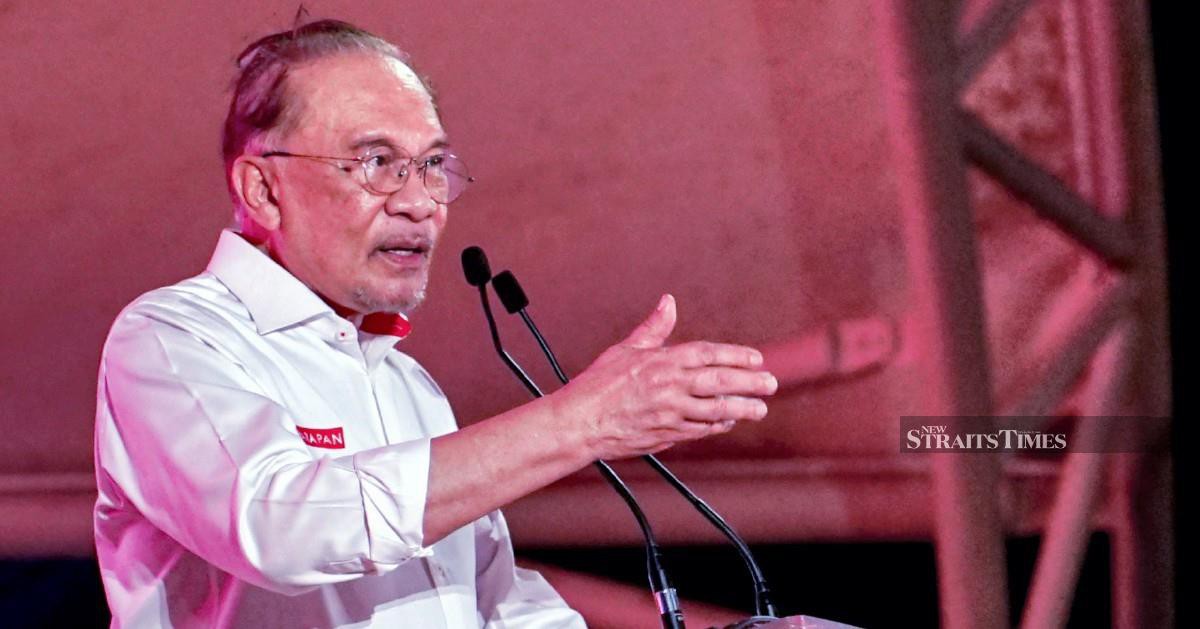
Malaysia's economy expanded by 5.8 per cent in the second quarter of 2026, outperforming initial forecasts and providing the government with substantial validation for its economic reform programme. Prime Minister and Finance Minister Datuk Seri Anwar Ibrahim seized on the figures as evidence that the nation's structural transformation—pursued through the Madani Economic Framework—is translating into tangible prosperity gains for its citizens and broader economic stability.
The growth rate represents a meaningful acceleration amid a global environment marked by trade tensions, elevated geopolitical risks, and competing pressures on emerging markets. For Malaysia specifically, this performance is significant because it demonstrates that the country can maintain momentum even as regional peers face fluctuating demand from advanced economies and shifting investment patterns. The figure also suggests that domestic consumption and private-sector confidence remain sufficiently robust to offset external uncertainties, a critical indicator for policymakers assessing whether their reform trajectory is adequately anchored.
Anwar's characterisation of the result as "stronger-than-expected" points to a gap between official and market forecasts that economists will likely scrutinise closely. That upside surprise, if confirmed by subsequent data releases, would validate the government's claim that its policy measures are generating positive feedback loops—improved business sentiment leading to higher investment, which in turn supports employment and household spending. However, interpreting a single quarter's performance requires caution; seasonal factors, one-off fiscal injections, or statistical revisions can distort perceptions of underlying momentum.
The Madani Economic Framework, which anchors the government's development strategy, encompasses initiatives designed to boost productivity, enhance digital infrastructure, attract high-value foreign investment, and reduce structural inequalities. For Malaysian readers and regional observers, the framework represents an attempt to reorient the economy away from traditional dependencies on commodities and routine manufacturing toward more knowledge-intensive sectors. The Q2 growth figures, if sustainable, would suggest these efforts are gaining traction in the real economy rather than remaining confined to policy documents.
Despite the encouraging headline number, Anwar's decision to couple his announcement with a call for continued reform momentum carries considerable weight. This framing suggests that senior officials recognise 5.8 per cent growth, while respectable, is not sufficient to secure Malaysia's long-term competitiveness or to address entrenched structural challenges. Southeast Asia's broader development context—characterised by rapid digitalisation, demographic shifts, and resource competition from other emerging markets—means Malaysia cannot afford to plateau on current achievements. The implicit message is that one strong quarter should not trigger complacency among policymakers or investors.
The broader economic picture also matters for regional context. Singapore, Thailand, and Vietnam have all pursued their own modernisation agendas, and Malaysia's growth performance must be evaluated against their trajectories. A sustained 5.8 per cent clip would place Malaysia in a competitive position, but any deterioration would risk widening gaps in per-capita income and investment attractiveness. This competitive dynamic reinforces why Anwar emphasised that reform work remains unfinished—the government is signalling that structural improvements in tax administration, regulatory efficiency, and business-friendly policies must continue at pace.
For multinational corporations and regional investors evaluating Malaysia as a production base or market opportunity, the growth figures provide reassurance that policy consistency is yielding results. Yet the simultaneous emphasis on ongoing reforms also sends a cautionary message: the government will not be complacent and will continue refining its approach. This posture can enhance investor confidence by demonstrating that officials are genuinely committed to addressing remaining bottlenecks and that they view current performance as a foundation rather than a destination.
The Q2 2026 growth rate also carries domestic political implications. Economic performance is a crucial metric by which Malaysian voters assess government competence, and positive headline figures provide the administration with tangible evidence of delivery. The framing of growth as reflecting "resilience" rather than, say, "sectoral strength" or "export momentum," suggests the government wants to emphasise that Malaysia is coping effectively despite external uncertainties—a message intended to build public confidence in its stewardship.
Looking ahead, sustaining this growth trajectory will depend on several factors beyond the government's direct control, including global demand recovery and commodity price stability, as well as on factors within its purview, such as execution of infrastructure projects, attraction of talent, and maintenance of macroeconomic stability. The government's emphasis on reform continuation suggests it recognises these interconnected challenges and is determined to address them proactively rather than coast on current momentum.
Regional observers will watch closely whether Malaysia can maintain five-per-cent-plus growth over subsequent quarters, as repeated performance at this level would substantially strengthen claims that the Madani Framework is delivering sustainable prosperity gains. Conversely, any material slowdown would invite questions about whether Q2's figures represented a temporary surge or a genuine shift in underlying growth dynamics. For now, Anwar's statement effectively announces that the government interprets the result as validation of its chosen path while signalling that the work of modernisation and structural improvement must continue unabated.

