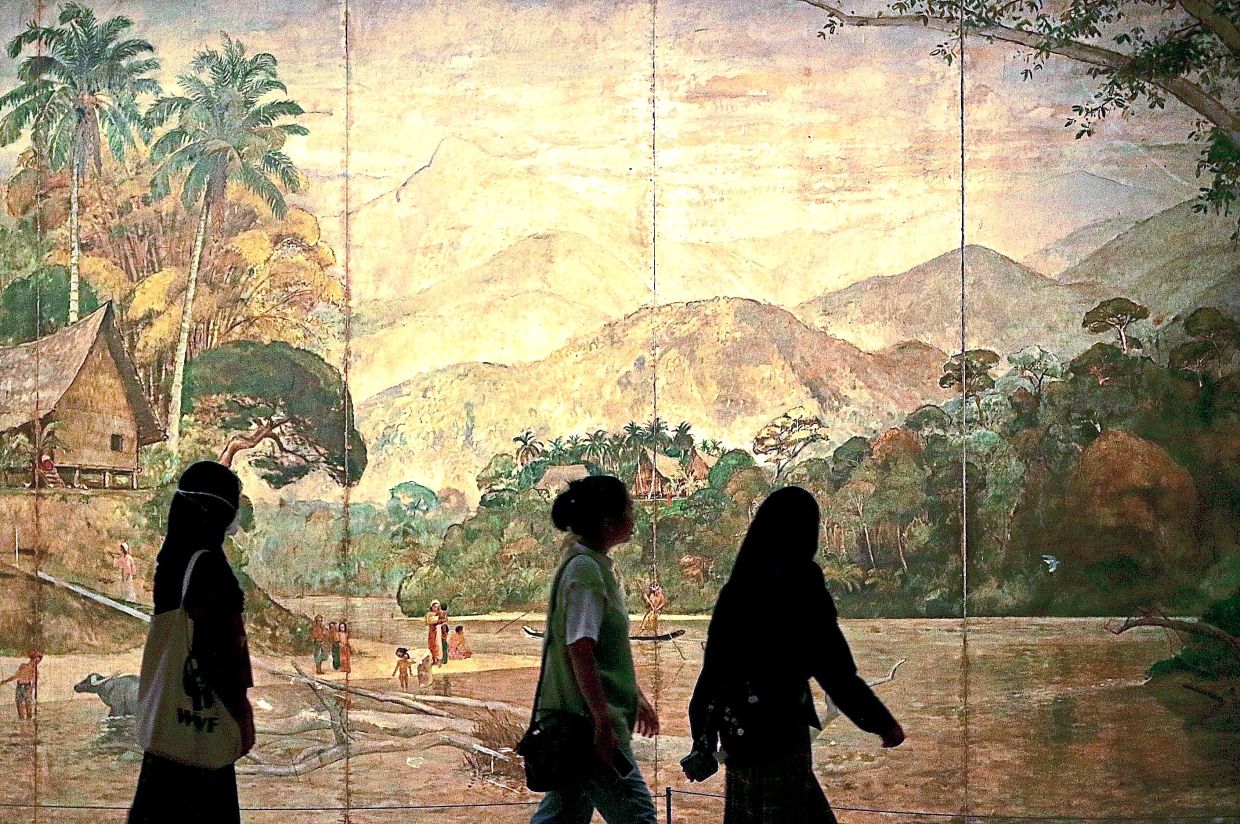
The National Art Gallery faces an ongoing battle against an invisible adversary: Malaysia's unforgiving tropical climate. Unlike museums in temperate regions where environmental conditions remain relatively stable, institutions across Malaysia must grapple with persistent humidity and intense light exposure that silently deteriorate priceless artworks, threatening the longevity of the nation's cultural patrimony. This environmental vulnerability has prompted conservation specialists to rethink preservation strategies, moving away from one-size-fits-all Western approaches toward solutions tailored to Southeast Asia's distinct climatic realities.
According to Tan Hui Koon, senior chief curator of the Collection and Conservation section at the National Art Gallery, the challenge extends far beyond simple dust control or basic storage. The material composition of artworks—whether oil paintings on canvas, wooden sculptures, or textile works—responds dramatically to Malaysia's moisture-laden air. Organic materials naturally absorb and release water vapour in response to atmospheric conditions, triggering repeated cycles of expansion and contraction that gradually weaken structural integrity and compromise paint layers. Over decades, these imperceptible changes accumulate into irreversible damage that no restoration technique can fully reverse.
The solution, Tan emphasised, lies not in reactive restoration but in preventive conservation strategies that prioritise environmental control from the outset. Museums must invest in protective measures comparable to sunscreen for human skin—using specialised tinted glass or museum-grade glazing that effectively blocks ultraviolet radiation before it penetrates to vulnerable materials. This approach represents a fundamental philosophical shift from treating conservation as a damage-repair exercise toward viewing it as a long-term protective regimen. Once an artwork suffers material loss, restorers can stabilise and preserve what remains, but they cannot truly return it to pristine condition.
These concerns take on particular urgency as Malaysia's cultural institutions grapple with resource constraints and limited expertise in tropical climate conservation. The National Art Gallery has emerged as a regional leader in addressing this knowledge gap, hosting the seventh Asia-Pacific Tropical Climate Conservation Art Research Network conference from December 7-9 in Kuala Lumpur and Ipoh. This biennial gathering brings together conservation specialists from Malaysia, Thailand, Singapore, Australia and the Philippines to share research, methodologies and practical solutions developed specifically for tropical and subtropical environments where Western conservation standards often prove inadequate.
The conference's geographic scope reflects a growing recognition that Southeast Asia must develop its own conservation frameworks rather than simply importing solutions designed for European climate conditions. Participants will examine how Western paintings and other art materials respond differently to tropical humidity, heat and light compared to their behaviour in air-conditioned Western galleries. This research proves essential as regional museums expand their collections and accept greater responsibility for preserving both local and international artistic treasures.
Beyond academic presentations, the conference incorporates field-based learning that grounds conservation theory in actual heritage contexts. Participants will visit Lenggong in Perak through a programme organised with the Islamic Arts Museum Malaysia, the Department of National Heritage and People of Remarkable Talents. These site visits enable conservators to observe deterioration patterns in situ, interact with local custodians of cultural artefacts and understand how traditional knowledge systems have long protected artworks in tropical settings before modern conservation science emerged.
Tan highlighted that this year's conference places renewed emphasis on local knowledge systems and intergenerational knowledge transfer—recognising that Malaysian and other Southeast Asian communities developed preservation techniques long before Western conservation science formalised its principles. Rather than dismissing traditional approaches as unscientific, the network seeks to integrate indigenous wisdom with contemporary materials science and technology. This hybrid approach acknowledges that optimal preservation strategies must account for geographical specificity, cultural context and available resources rather than assuming universal applicability of expensive Western methodologies.
The conference agenda extends beyond climate-focused discussions to encompass disaster management—increasingly critical as extreme weather events become more frequent across the region. Sessions will address artificial intelligence applications for condition monitoring, advanced materials research technology for identifying vulnerabilities, and ethical frameworks governing conservation decisions when resources prove insufficient for comprehensive restoration. Importantly, the programme emphasises resource-sharing among institutions, enabling smaller museums to access expertise and technologies otherwise beyond their financial reach.
Tan underscored the network's role in cultivating Malaysia's next generation of conservation specialists through structured knowledge exchange and mentorship. Conservation practice demands interdisciplinary competence spanning art history, chemistry, physics, materials science and cultural heritage management. By facilitating connections between experienced conservators and emerging professionals, the network addresses Malaysia's shortage of qualified specialists while ensuring that local expertise develops depth and sophistication. This developmental function proves particularly valuable as Southeast Asian nations increasingly assert agency over their cultural preservation rather than relying on external expertise.
Since its inaugural conference in 2008, the network has tracked Malaysia's conservation progress across fifteen years, documenting methodological advances and institutional capacity-building. The December gathering provides an opportunity to assess how far Malaysian conservation practice has evolved and to identify remaining gaps. Equally important, strengthening international networks positions Malaysian expertise and artistic heritage for greater visibility on the world stage—elevating regional practitioners' influence in global conservation discourse while attracting international research collaboration and funding to Malaysia's museums and cultural institutions.

