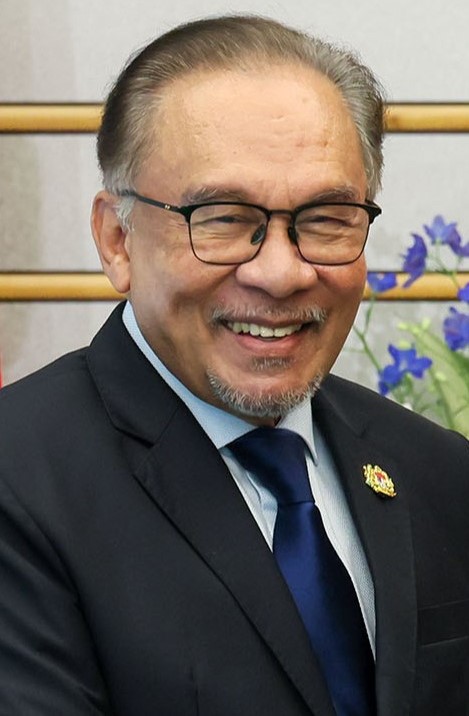
Prime Minister Datuk Seri Anwar Ibrahim has moved to quell concerns about Malaysia's diplomatic overtures toward major global powers, emphasising that deepening ties with nations such as China and the United States fundamentally preserves rather than undermines the country's long-standing international positions. Speaking in Muar, the premier sought to clarify what he frames as a crucial distinction between pragmatic engagement with world powers and any potential compromise of Malaysia's foreign policy autonomy or core values on the global stage.
The reassurance emerges amid an evolving geopolitical landscape where Malaysia, like many Southeast Asian nations, faces mounting pressure to clarify its stance on competing interests and spheres of influence. The Association of Southeast Asian Nations (ASEAN) has long positioned itself as a bridge between different power blocs, and Malaysia's role within this framework remains defined by its commitment to maintaining equidistant relations with Beijing and Washington. Anwar's comments reflect an understanding that the domestic audience increasingly scrutinises Malaysia's diplomatic choices, particularly as strategic competition between superpowers intensifies across the region.
Historically, Malaysia has demonstrated considerable skill in managing relationships with multiple powers without surrendering its strategic independence. The country maintains significant economic and defence partnerships with China while simultaneously upholding security commitments within the Western-aligned Five Power Defence Arrangements. This bilateral equilibrium has allowed Malaysia to pursue its national interests without forcing false choices between competing spheres. Anwar's statement essentially reaffirms this time-tested approach, suggesting that contemporary relations represent continuity rather than fundamental recalibration.
The timing of the prime minister's clarification carries particular significance given recent discussions around infrastructure investments, trade agreements, and regional security arrangements involving major powers. Malaysia has been recipient of substantial investment from China through the Belt and Road Initiative, while simultaneously participating in various United States-led initiatives and military exercises. The perception that engagement with one power necessarily entails distancing from another remains widespread in Malaysian discourse, making explicit reassurance politically valuable.
Anwar's framing addresses a deeper anxiety within Malaysia's foreign policy establishment: that growing economic interdependence with any single power could translate into political or strategic coercion. The historical experience of non-aligned nations demonstrates this risk, yet Malaysia's diversified approach has largely mitigated such vulnerabilities. By maintaining robust bilateral relations across multiple major powers, Malaysia retains leverage and agency that smaller nations often lack in navigating the complexities of great power competition.
Regionally, Malaysia's position carries implications beyond its borders. ASEAN's collective capacity to maintain unity and autonomy depends substantially on member states like Malaysia demonstrating that engagement with major powers need not compromise the organisation's centrality in regional affairs or its foundational consensus-based decision-making processes. The bloc's clout in managing regional disputes, from maritime conflicts to developmental challenges, rests on its perceived independence from external pressure.
The prime minister's intervention also signals Malaysia's continued commitment to its long-established foreign policy doctrines, particularly principles of non-alignment and respect for national sovereignty. These foundations, embedded in Malaysia's diplomatic tradition since independence, remain relevant even as the nature of international relations transforms. Anwar appears determined to ensure that tactical adjustments in bilateral relations do not obscure these fundamental commitments.
For Malaysian business interests and citizens engaging with international partners, Anwar's statement provides clarity that the government will continue protecting national interests within foreign policy frameworks. This includes positions on issues ranging from human rights to regional stability, environmental protection to trade fairness. The government's international stances reflect domestic values and strategic calculations, not external dictation.
The broader challenge facing Malaysia and other middle-power nations in Southeast Asia involves sustaining this delicate equilibrium as global competition intensifies. As Washington and Beijing contend for influence throughout the Indo-Pacific region, nations like Malaysia occupy increasingly contested political and economic terrain. Demonstrating that one can benefit from relationships with multiple powers without subordinating national principles becomes essential for maintaining public confidence and international credibility.
Anwar's remarks ultimately underscore Malaysia's continued adherence to pragmatic diplomacy—a approach that has served the nation well across decades of changing international circumstances. By explicitly connecting strong bilateral relationships with different powers to the maintenance rather than erosion of national principles, the prime minister frames Malaysia's diplomatic strategy as fundamentally protective of national interests rather than compromising them. This positioning allows Malaysia to continue pursuing beneficial relationships across the global spectrum while retaining the domestic legitimacy necessary for sustained foreign policy implementation.