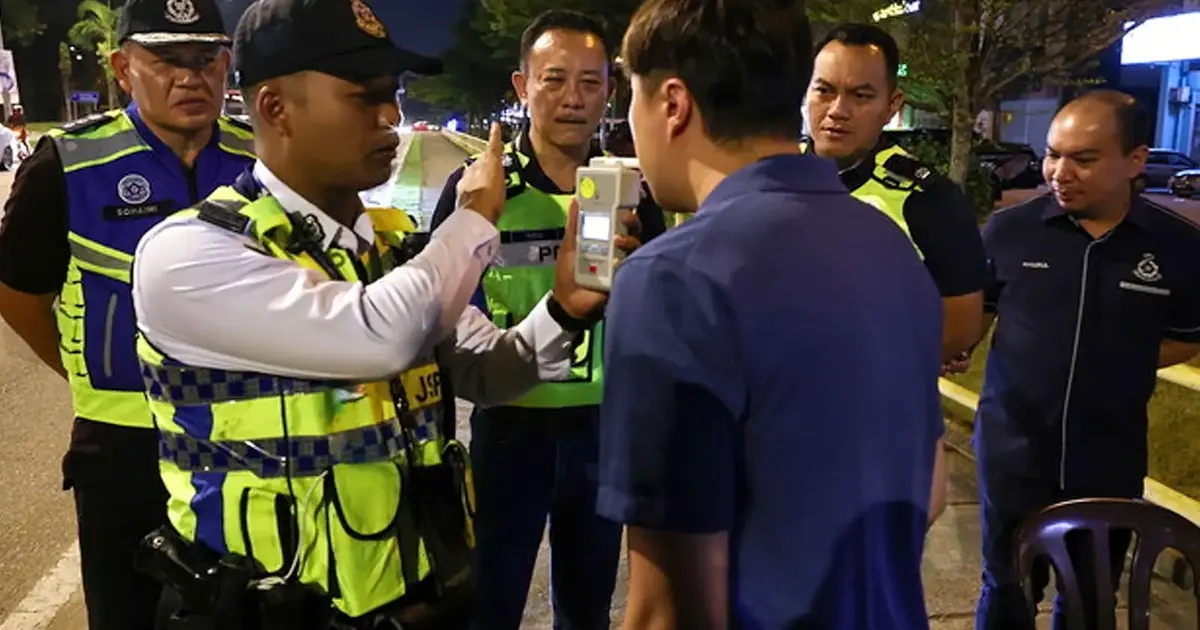
Malaysia's Cabinet has given its backing to a new framework designed to provide financial redress for victims harmed by drink-driving incidents, signalling a significant shift in how the country addresses the consequences of alcohol-impaired driving. Transport Minister Loke Siew Fook announced the Cabinet's support for the compensation mechanism, which will operate as an additional layer of accountability on top of the criminal penalties already imposed by the courts for such offences.
The mechanism represents a departure from Malaysia's traditional approach to drink-driving enforcement, which has historically focused primarily on criminal sanctions such as fines, imprisonment, and driving licence suspension. Under the new framework, court-ordered compensation will become a mandatory component of sentencing decisions in drink-driving cases, ensuring that victims who suffer injuries, property damage, or other losses receive financial remedies directly from the offenders.
Transport Minister Loke Siew Fook's announcement reflects growing recognition within government circles that existing punitive measures, while necessary, do not adequately address the real economic burden experienced by victims and their families. Individuals injured in drink-driving accidents frequently incur substantial medical expenses, rehabilitation costs, and lost income during recovery periods. The introduction of mandatory compensation orders represents an attempt to shift some of this financial responsibility back to the person whose negligence caused the harm.
The Cabinet decision carries particular significance for Malaysia's ongoing efforts to reduce road traffic accidents, which remain a serious public health concern in the region. The World Health Organization has consistently ranked Malaysia among countries with relatively high road fatality rates, with alcohol impairment identified as a contributing factor in a notable proportion of serious crashes. By introducing financial consequences that extend beyond traditional criminal penalties, policymakers hope to strengthen both the deterrent effect of existing laws and the support available to victims.
Implementing such a compensation mechanism will require careful coordination between multiple stakeholders, including the judiciary, law enforcement agencies, and victim support services. Courts will need clear guidelines to determine appropriate compensation levels based on the severity of injuries and documented losses. Additionally, enforcement mechanisms must be established to ensure that compensation orders are actually collected and paid to victims, a practical challenge that has proven problematic in other jurisdictions attempting similar reforms.
The framework's effectiveness will also depend on how it interacts with Malaysia's existing civil liability system. Currently, victims of traffic accidents can pursue civil claims against responsible parties through the courts, though this process is often lengthy and expensive. The new compensation mechanism could provide a faster, more accessible avenue for obtaining partial redress, particularly for individuals who might otherwise lack the resources to pursue civil litigation. However, questions remain about whether court-ordered compensation will be positioned as an alternative to or supplement for traditional civil claims.
From a regional perspective, Malaysia's adoption of this approach places it among Southeast Asian nations exploring more victim-centred approaches to traffic law enforcement. Several neighbouring countries have implemented or are considering similar mechanisms, recognising that the social costs of road accidents extend far beyond the obvious criminal penalties. This trend reflects a broader shift in transportation policy across the region toward more holistic responses to dangerous driving behaviour.
The Cabinet decision also raises important questions about enforcement capacity and resource allocation within Malaysia's judicial system. Court-ordered compensation mechanisms work effectively only when supported by adequate infrastructure for processing cases, determining liability, and collecting payments. Malaysia's courts already face significant backlogs in civil and criminal matters, so the integration of mandatory compensation orders will require either additional judicial resources or streamlined procedures to prevent further delays.
Transport Minister Loke Siew Fook's role in championing this mechanism reflects the broader portfolio responsibilities of his ministry, which extends beyond traditional infrastructure and licensing concerns to encompass road safety policy. The endorsement of victim compensation underscores the government's recognition that comprehensive traffic management requires attention not only to preventing accidents but also to supporting those affected when incidents do occur.
The practical implementation timeline remains unclear, with government officials likely needing to develop detailed regulations governing how compensation levels will be calculated, what types of losses will be covered, and how disputes over quantum will be resolved. Parliamentary legislation may be required to formally establish the mechanism and integrate it into existing criminal procedure frameworks, suggesting the reforms could take several years to fully operationalise.
As Malaysia moves forward with this initiative, stakeholder consultation will prove critical to its success. Insurance companies, legal professionals, victim advocacy groups, and traffic safety experts should all contribute to shaping implementation details. Their input could help ensure that the compensation framework achieves its intended purpose of providing meaningful support to victims while maintaining practicality within Malaysia's legal and administrative systems.

