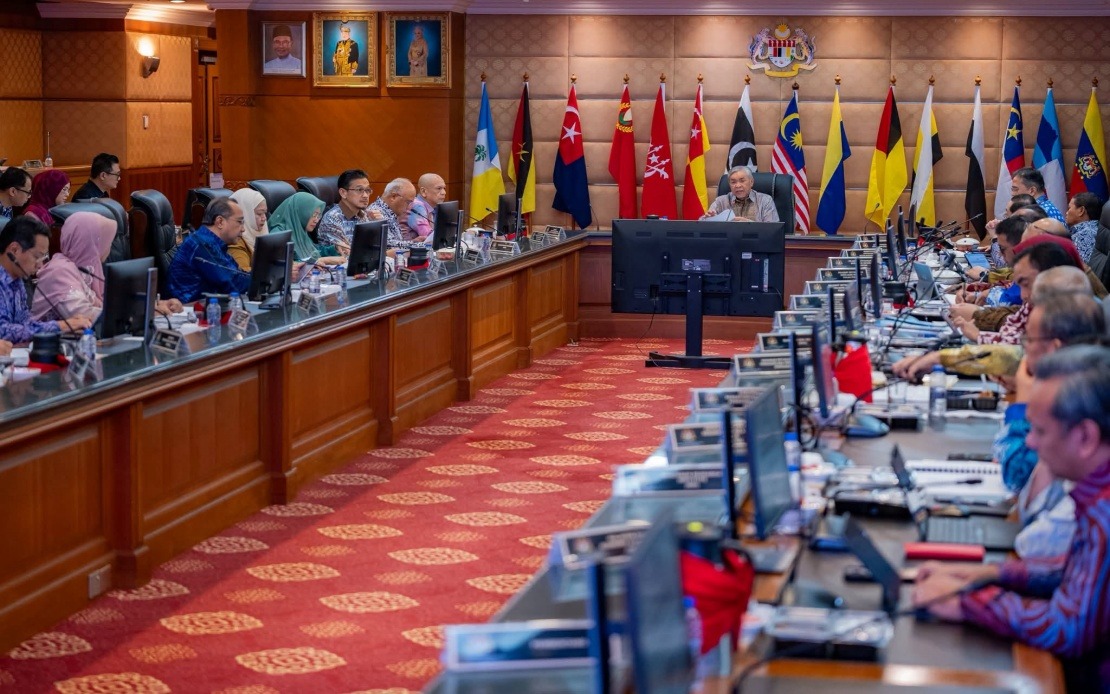
Malaysia's approach to managing cost-of-living pressures is widening significantly beyond price controls on supermarket shelves, according to strategic directives outlined by Deputy Prime Minister Datuk Seri Dr Ahmad Zahid Hamidi at the 18th Executive Committee meeting of the National Cost of Living Action Council (NACCOL) in Putrajaya on August 13. The meeting's focus extended across production economics, distribution networks, nutritional access, medical expenses, and educational financing—signalling recognition that affordability encompasses far more than retail pricing alone.
The centrepiece of the committee's deliberations involved charting a sustainable path for the domestic white rice sector, an issue of particular sensitivity given rice's cultural significance and role in household budgets across Malaysia. Rather than imposing abrupt market shifts, the council has endorsed a graduated transition mechanism featuring subsidised rice supplies as a buffer period. This approach aims to prevent sudden price shocks that would disproportionately harm lower-income households while permitting the local rice industry time to adapt to evolving policy frameworks. The transitional architecture reflects accumulated lessons from previous subsidy reforms that triggered inflationary spirals when poorly sequenced.
The decision to expand the Sumbangan Asas Rahmah (SARA) assistance programme to encompass fresh produce marks a conceptual reorientation in welfare provision. Previously, government support focused predominantly on purchasing power—essentially supplementing household cash to enable market transactions. The broadened scope now explicitly targets dietary quality by including fruits, vegetables, and fresh proteins within the assistance basket. For Malaysian policymakers, this transition acknowledges evidence that mere income supplementation without targeted nutrition interventions leaves vulnerable populations susceptible to diet-related diseases, ultimately imposing greater healthcare burdens down the line.
Ahmad Zahid's remarks underscored serious concerns about external pressures cascading through Malaysia's agricultural and food systems. Geopolitical volatility in West Asia, regulatory compliance burdens on imported inputs, and the macroeconomic effects of rationalising subsidies all create upward cost pressures on farmers and producers. The committee has tasked relevant agencies with continuous monitoring of these variables to prevent cost transmission into consumer inflation. This formulation recognises that merely stabilising shelf prices while allowing upstream production costs to escalate generates unsustainable fiscal strain and eventual market dysfunction.
The government's commitment to refining support mechanisms for primary producers—farmers, fishermen, and allied groups—represents acknowledgment that agricultural viability underpins food security. Without protecting producer margins, the medium-term risk involves supply-side contraction as smallholders exit the sector. Malaysia's agricultural workforce has aged considerably, and younger cohorts show declining interest in farming; margin compression accelerates this generational transition. Targeted assistance schemes must therefore balance consumer affordability with farm-gate sustainability, a challenging equilibrium requiring sophisticated policy calibration.
On the healthcare dimension, the committee reviewed eleven initiatives within the RESET strategy framework, aimed at constraining private sector cost trajectories while enhancing public-system capacity and treatment scope. This two-pronged approach acknowledges that Malaysia's healthcare landscape comprises both public provision and significant private utilisation, particularly among middle-income households seeking shorter wait times or specialised services. Unchecked private-sector pricing creates affordability pressures independently of public-system performance, while insufficient public capacity diverts demand toward costlier private alternatives. The integrated framework thus targets both supply-side constraints and demand-side incentives.
Educational financing emerged as another priority domain within NACCOL's expanded remit. Analysis of thirteen tertiary-education aid schemes revealed that 62,937 Form Six and university students received assistance totalling RM589.6 million during the preceding year. These figures underscore the scale of government commitment to post-secondary access, yet also highlight potential gaps in the system. The committee's emphasis on reinforcing such support reflects concern that rising tuition fees, accommodation costs, and living expenses increasingly deter capable students from disadvantaged backgrounds from pursuing higher education. Over time, such exclusion undermines human capital development and perpetuates intergenerational inequality.
The framing of cost-of-living management within the broader Cost of Living Action Plan 2030 represents movement away from ad hoc interventions toward systematic coordination across sectors. Piecemeal approaches often generate unintended consequences—subsidising one commodity may distort relative prices elsewhere, while targeted assistance in one domain may prove insufficient if pressures persist across multiple categories. An integrated framework recognises these interdependencies and attempts to calibrate policy levers in complementary fashion. For Malaysia, such systematisation is particularly important given the diverse economic profiles across states and the heterogeneity within vulnerable populations.
The political economy dimensions merit consideration. The emphasis on vulnerable-group protection aligns with the government's electoral mandate and broader social policy orientation. However, the scale of required fiscal commitments—across expanded SARA provisions, agricultural support, healthcare cost management, and education financing—creates budgetary pressures. Sustaining these commitments amid revenue constraints may necessitate difficult tradeoffs with other expenditure categories or measures to broaden the tax base. The NACCOL framework thus functions partly as a mechanism for managing political expectations around what government can realistically deliver across competing sectors.
Regionally, Malaysia's integrated cost-of-living strategy offers a model potentially instructive for neighbouring economies facing similar pressures. Indonesia, the Philippines, and Thailand confront comparable challenges regarding agricultural sustainability, healthcare affordability, and educational access amid cost inflation. The coordination visible in NACCOL's multi-sector approach contrasts with more fragmented responses elsewhere in Southeast Asia, where agriculture, health, and education policies often operate in silos. Whether Malaysia's framework proves durable and effective in practice will likely influence regional policy thinking in coming years.
The emphasis on phased transitions and stakeholder impact assessments reflects mature policymaking cognisant of implementation complexities. Rice market restructuring, healthcare system reforms, and educational financing changes all involve powerful constituencies with divergent interests. Farmers fear margin compression; consumers demand affordability; private healthcare providers resist regulation; education institutions resist funding constraints. The NACCOL approach attempts to navigate these tensions through explicit stakeholder consideration and graduated implementation timelines, though tensions will inevitably emerge as specific measures crystallise into concrete policy.

