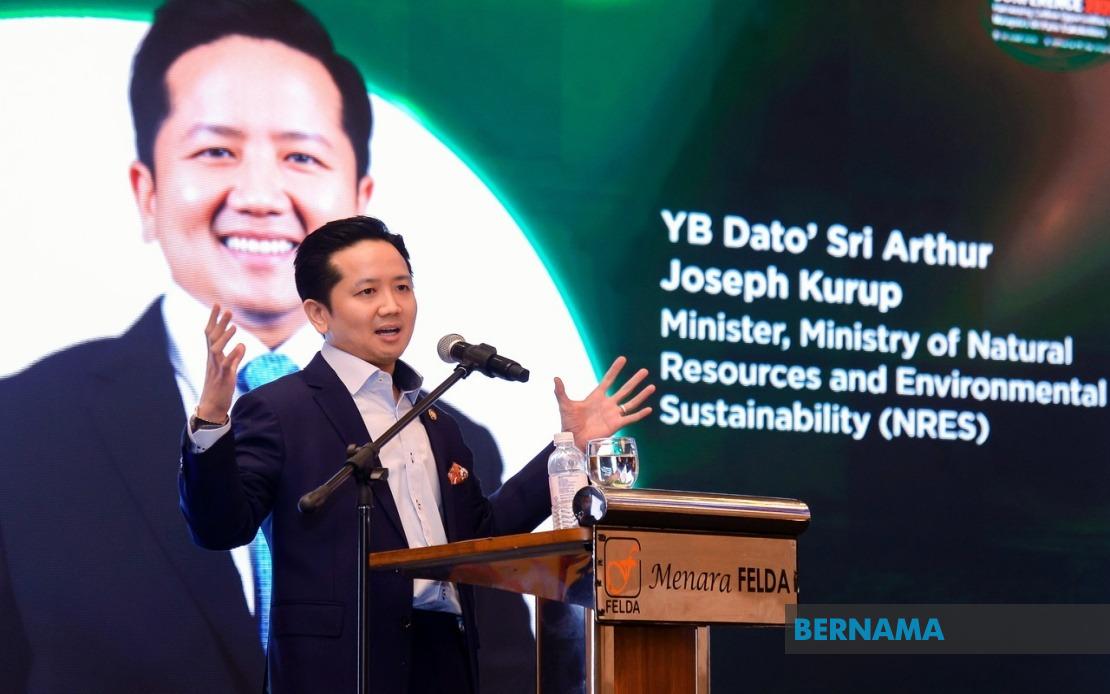
Malaysia's planned carbon tax mechanism is undergoing continued refinement at the government level, with officials emphasizing that implementation will proceed once readiness conditions and policy frameworks are sufficiently developed. Natural Resources and Environmental Sustainability Minister Datuk Seri Arthur Joseph Kurup reiterated this commitment while speaking at the Malaysia Palm Carbon Conference 2026 in Kuala Lumpur on June 16, indicating that the government remains committed to introducing the initiative but with careful consideration of timing and sectoral capacity.
The sequential approach reflects recognition that rushing implementation without proper groundwork could undermine both environmental objectives and economic stability. Datuk Seri Arthur Joseph Kurup acknowledged that the government is actively examining multiple dimensions of the carbon tax framework simultaneously—from the technical mechanics of collection to the strategic allocation of resulting revenue streams. This multifaceted review process suggests policymakers are determined to design a system capable of achieving climate goals while minimizing disruption to industries already navigating complex global market conditions.
A critical distinction being emphasized by the government is that the carbon tax is fundamentally intended as an incentive-driven policy rather than a punitive mechanism. Instead of viewing the measure as a penalty for carbon-intensive activities, officials are framing it as a financial motivation for enterprises to adopt cleaner technologies and operational practices. This messaging is particularly significant for Malaysia's manufacturing and resource sectors, which have expressed concerns about additional compliance costs in an already challenging economic environment.
Revenue deployment represents another area receiving substantial government attention. Multiple proposals are currently under consideration regarding how funds generated through the carbon tax should be allocated. Prominent suggestions include channeling collections toward climate adaptation infrastructure projects, forest conservation initiatives, and sustainable land management programs. This approach would create a circular mechanism where businesses contributing to carbon tax collections simultaneously fund investments that enhance Malaysia's resilience to climate-related disruptions—a strategy that could garner broader stakeholder support by demonstrating tangible environmental returns on the policy investment.
The timing of implementation has proven particularly complex given Malaysia's position within global supply chains and exposure to macroeconomic volatility. In April, Datuk Seri Arthur Joseph Kurup indicated that the government was reconsidering the original timeline for introduction, citing energy supply challenges and geopolitical tensions as complicating factors. The carbon tax had been initially scheduled for rollout during 2024 and was expected to target specific industrial segments including steel production, cement manufacturing, and construction materials—sectors that are simultaneously critical to Malaysia's development infrastructure and vulnerable to cost shocks.
The potential deferral of implementation deadlines reflects pragmatic policymaking that acknowledges the interconnected nature of climate action and economic stability. By refusing to impose carbon pricing during periods of significant global uncertainty, the government is attempting to avoid simultaneously burdening domestic industries with elevated input costs while they are already managing supply chain disruptions and volatile commodity prices. This deliberate pacing also allows time for affected sectors to invest in emissions reduction technologies before financial penalties apply, potentially making the eventual transition smoother and more sustainable.
Complementing the carbon tax framework is the National Climate Change Bill, which Datuk Seri Arthur Joseph Kurup confirmed is expected to reach the Dewan Rakyat for consideration during the current parliamentary year. This legislation is positioned as foundational to Malaysia's long-term climate governance architecture, establishing the legal and institutional scaffolding necessary for coordinated climate action across government and the broader economy. The bill's passage would signal Malaysia's commitment to meeting international climate obligations while creating domestic regulatory clarity for businesses planning long-term investments in sustainable operations.
For Malaysian businesses, particularly those in carbon-intensive sectors, the extended timeline offers both opportunity and uncertainty. While the delayed implementation provides breathing room to assess technological options and cost implications, it also prolongs the strategic ambiguity surrounding when and how the carbon tax will affect operations. Companies seeking to demonstrate environmental leadership or secure contracts with international buyers increasingly sensitive to carbon footprints may view the extended preparation period as sufficient to implement meaningful emissions reductions voluntarily, positioning themselves advantageously ahead of formal regulatory requirements.
Regionally, Malaysia's approach to carbon taxation is being watched closely by other Southeast Asian economies grappling with similar policy questions. Several neighboring nations are exploring comparable mechanisms to meet climate commitments while protecting industrial competitiveness. The Malaysian experience—with its careful consideration of timing, sectoral impacts, and revenue recycling—may influence policy design decisions across the region. If Malaysia successfully implements the carbon tax in a manner that achieves environmental outcomes without triggering economic hardship, it could establish a model for responsible climate finance that other developing economies might emulate.
The involvement of key stakeholders such as the Federal Land Development Authority chairman Datuk Seri Ahmad Shabery Cheek in policy development discussions underscores the cross-cutting nature of carbon pricing across Malaysia's economy. Agricultural and land-use sectors are simultaneously sources of carbon emissions and potential beneficiaries of climate adaptation funding, requiring nuanced policy design that reflects these complex relationships. The participation of multiple government bodies in refining implementation details suggests a whole-of-government approach to ensuring the carbon tax serves broader sustainability objectives rather than functioning as merely a revenue-raising instrument.