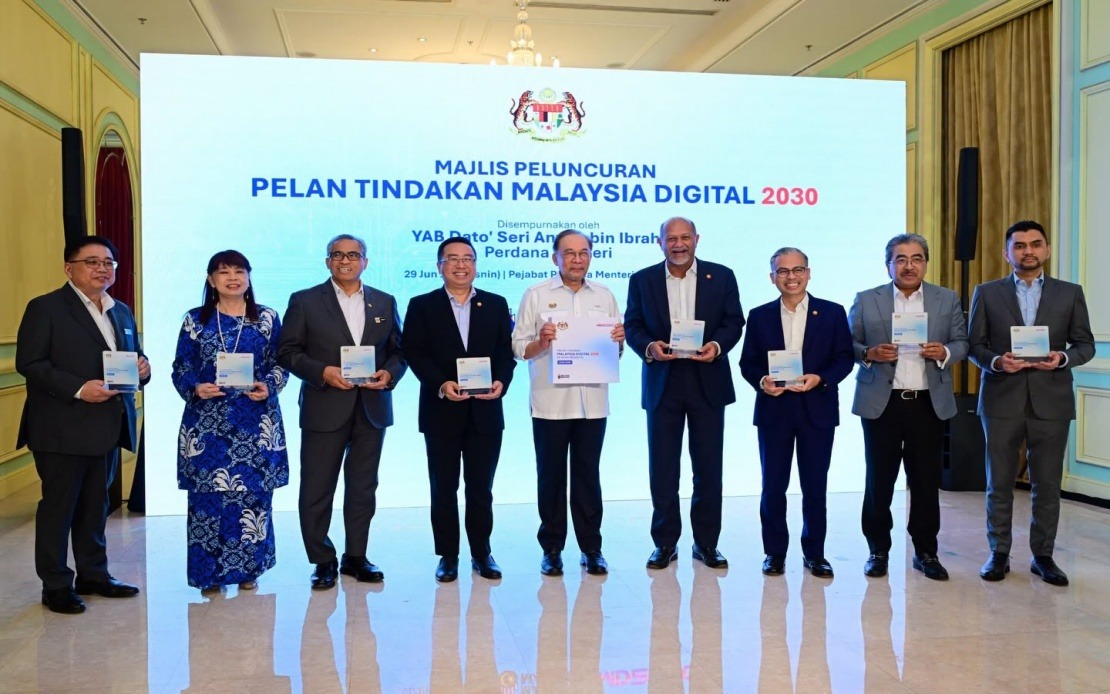
Malaysia's bureaucracy is making tangible progress toward becoming a paperless operation, with the civil service having successfully eliminated 116,405 reams of paper and achieved cost savings of RM1.99 million through its ongoing digitalisation drive. The achievement, disclosed during a high-level Digital Economy and Fourth Industrial Revolution Council meeting chaired by Prime Minister Datuk Seri Anwar Ibrahim, underscores the government's commitment to modernising how it conducts routine administrative work and manages internal operations.
Chief Secretary to the Government Tan Sri Shamsul Azri Abu Bakar revealed the milestone while updating senior officials on progress across multiple digital initiatives. The paperless initiative, which began rolling out in February with simple transactions moving onto digital platforms, represents one of several concurrent efforts to reshape Malaysia's digital infrastructure and reduce environmental waste. By quantifying both the volume of paper eliminated and the corresponding financial benefit, the government is creating a measurable framework for tracking the success of its broader transformation agenda.
The paperless transition carries significance beyond mere cost reduction. For a civil service that traditionally relied heavily on physical documentation across thousands of departments and agencies, shifting simple transactions to digital workflows requires substantial changes to established procedures, staff training, and system architecture. The successful implementation of these changes across multiple government entities demonstrates that the groundwork for more ambitious digitalisation projects is already in place, a reality that lends credibility to the government's longer-term vision.
The council meeting itself reflected the government's multifaceted approach to digital transformation, with discussions encompassing MyDigital ID, the MyGov platform, and expanding digital infrastructure within Malaysia's higher education sector. These initiatives are not disconnected from the paperless initiative but rather form interconnected components of a larger national strategy to embed digital-first thinking across both public and private spheres. The focus on developing comprehensive digital talent through the MyMAHIR National AI Council for Industry indicates recognition that technological infrastructure alone cannot succeed without a corresponding workforce equipped to navigate and advance digital systems.
Prime Minister Anwar Ibrahim's launch of Malaysia Digital 2030 during the council meeting provided the overarching framework into which these individual initiatives fit. The strategy explicitly targets positioning Malaysia as an Artificial Intelligence nation within this decade, a declaration that signals the government's intention to compete regionally and globally in AI-driven sectors. For Malaysia to achieve this ambition, the foundational work currently underway—such as paperless administrative systems and digital talent development—must proceed rapidly and successfully, establishing the technological and human capital prerequisites for more sophisticated AI applications.
The timing of the paperless initiative reveals careful sequencing in the government's digitalisation roadmap. Beginning with simple transactions in February allowed the government to test systems, identify bottlenecks, and refine processes before scaling to more complex administrative functions. This methodical approach, though it may appear incremental, actually reflects lessons learned from digital transformation efforts elsewhere that have faltered when implementation proceeded too quickly or without adequate preparation. Malaysia's staged approach suggests policymakers are conscious of potential pitfalls and have structured the rollout accordingly.
For Malaysia's civil service workforce, the transition to paperless operations carries both opportunities and challenges. Employees must adapt to new digital tools and workflows, requiring investment in training and change management. Simultaneously, the elimination of paper-based processes can streamline operations, reduce the time required to complete transactions, and potentially improve accuracy by minimizing manual data entry errors. The success of this transition will depend significantly on how effectively government agencies manage the cultural shift from paper-dependent to digital-first operations.
The environmental dimension of the paperless initiative resonates with Malaysia's broader sustainability commitments and the global trend toward reducing organisational carbon footprints. Government agencies command enormous purchasing power for office supplies, and reductions in paper consumption translate into measurable environmental benefits through diminished logging pressure and reduced waste in landfills. This alignment with environmental objectives provides additional justification for digitalisation beyond cost savings and operational efficiency, framing the initiative as part of Malaysia's contribution to global climate and sustainability goals.
For Malaysian citizens and businesses that interact with government agencies, the progression toward paperless systems promises potential improvements in service delivery speed and accessibility. Digital platforms can enable individuals to complete transactions from remote locations, eliminating the need to physically visit government offices. For small and medium enterprises navigating regulatory compliance and licensing requirements, digital processes may reduce administrative burden and transaction costs. However, the government must remain attentive to digital divides, ensuring that vulnerable populations without reliable internet access are not excluded from essential services.
The paperless initiative also sets the stage for more sophisticated data analytics and process optimisation within government. Digital systems generate data about how transactions flow through the bureaucracy, where bottlenecks occur, and which processes consume the most resources. Armed with these insights, government agencies can continuously improve their operations, identify inefficiencies, and allocate resources more strategically. This data-driven approach to administration aligns with the artificial intelligence ambitions embedded in Malaysia Digital 2030.
Regionally, Malaysia's move toward a paperless civil service positions it alongside other Southeast Asian nations undertaking similar transformations. Singapore and Thailand have pursued aggressive digitalisation of government services, and Malaysia's efforts ensure the country maintains competitive parity in this domain. As regional economies increasingly compete for digital talent and investment, governments that demonstrate effective digital transformation become more attractive to knowledge-intensive businesses and innovative enterprises seeking stable, tech-savvy operating environments.
Looking ahead, the government faces the challenge of sustaining momentum beyond the initial cost savings and efficiency gains. True digital transformation requires ongoing investment in infrastructure, cybersecurity, and workforce development. The RM1.99 million saved through paper elimination represents tangible progress, but scaling this success across the entire civil service and extending it to citizen-facing services requires commitment and resources that extend well beyond the initial rollout phase. How effectively the government manages this longer-term dimension will ultimately determine whether the paperless initiative represents isolated cost reduction or genuine structural change.

