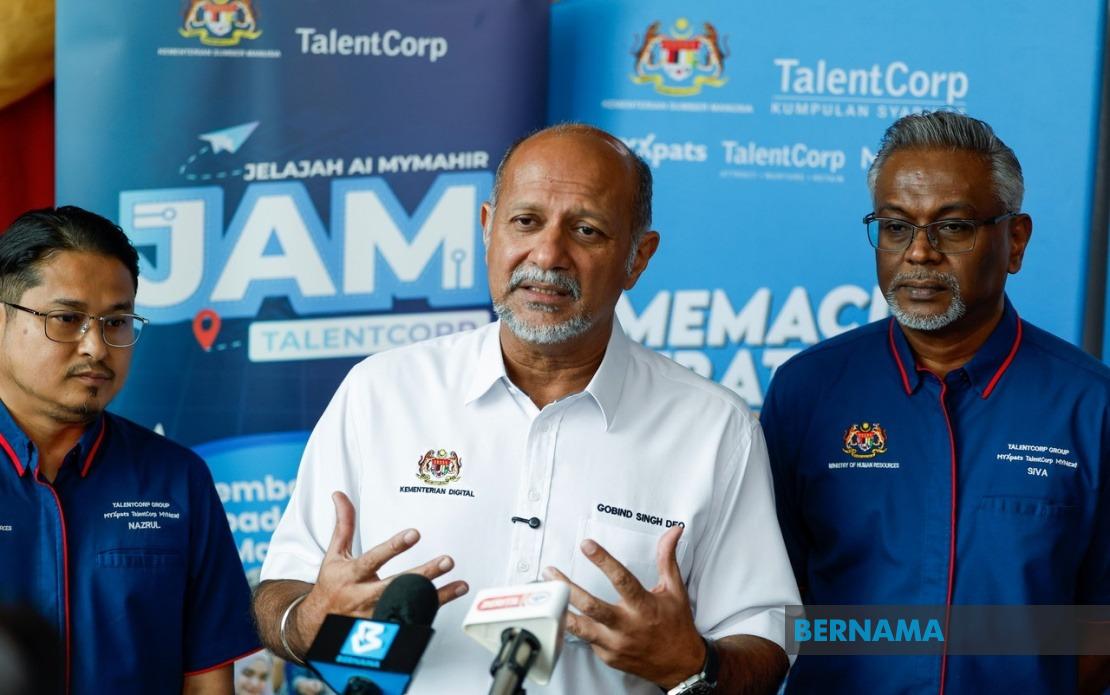
Malaysia's digital creative sector has emerged as a significant economic engine, generating more than RM92.5 billion in revenue while establishing itself as an increasingly important contributor to the nation's GDP. Digital Minister Gobind Singh Deo unveiled these figures during the inaugural Borneo Animation and Games Festival in Kuching, highlighting the sector's dual impact on both creative excellence and economic growth. The statistics underscore how entertainment and digital content have transcended their traditional cultural boundaries to become major revenue generators for the Malaysian economy.
Beyond domestic revenue, the industry has demonstrated substantial international competitiveness, with exports reaching RM12.1 billion and attracting RM85.7 billion in direct investment. These figures reflect growing confidence from local and foreign investors in Malaysia's creative talent and production capabilities. The inflow of capital has been instrumental in enabling the sector to scale operations, upgrade technology infrastructure, and expand its reach into global markets where Malaysian content now competes alongside established international producers.
The employment landscape within the digital creative space presents particularly promising opportunities for Malaysian workers. Over 11,000 high-value jobs have been created, representing positions that typically offer competitive salaries and career progression prospects. These positions span various roles including animators, game developers, digital artists, producers, and technical specialists. For policymakers and workforce planners, this concentration of skilled employment opportunities addresses Malaysia's broader objective of developing a knowledge-intensive economy less dependent on traditional manufacturing sectors.
Much of the sector's international recognition stems from Malaysian intellectual property that has achieved household status both domestically and abroad. Animated franchises including Upin & Ipin, Ejen Ali, and Mechamato have transcended their origins as regional content to build global audiences and commercial ecosystems. These successes demonstrate that Malaysian creative talent can produce properties with universal appeal while maintaining distinctive cultural identity. The economic multiplier effect of such IP extends beyond initial production to encompass licensing, merchandise, streaming rights, and cross-media adaptations that generate sustained revenue streams.
Gobind emphasised that recognising digital content's economic potential, rather than viewing it solely through a cultural lens, represents a strategic shift in how government approaches the creative industries. This perspective aligns with broader global trends where countries increasingly compete for market share in digital entertainment and gaming. By framing animation and games as substantial economic activities generating skilled employment and export revenue, Malaysian policymakers can justify sustained investment in infrastructure, talent development, and regulatory frameworks that support industry expansion.
The government has set ambitious targets for the digital economy's overall contribution, projecting that it will account for 30 per cent of Malaysia's GDP by 2030. Concurrently, authorities aim to generate 500,000 high-value digital jobs over the forthcoming four years, significantly expanding the current employment base. These targets suggest the digital creative sector will likely receive prioritised support through policy initiatives, training programmes, and infrastructure development. The scale of employment creation envisioned indicates recognition that digital skills and creative capabilities will define Malaysia's competitive advantage in an increasingly technology-driven global economy.
Sarawak occupies a strategically important position within Malaysia's digital creative growth narrative. The state possesses distinct advantages including a creatively engaged population, rich cultural heritage providing distinctive storytelling material, and an emerging digital infrastructure. The Borneo Animation and Games Festival represents both a showcase for existing Sarawakian creative talent and a platform to attract investment and partnerships. By positioning Sarawak as a regional animation and games hub, the state can leverage its unique cultural assets while participating in Southeast Asian creative industry networks and establishing itself as a destination for creative professionals and production companies.
The Federal Government's commitment to strengthening Sarawak's digital capabilities reflects recognition that Malaysia's creative industry growth requires development beyond Peninsular Malaysia's established centres. By working with state authorities to enhance digital infrastructure, facilitate connectivity with national and regional opportunities, and support local creative enterprises, the federal approach aims to distribute economic benefits across the country. This decentralised growth model potentially reduces urban congestion in established creative hubs while creating employment and investment opportunities in Sarawak's major cities.
Connectivity between Sarawak's creative community and broader Malaysian, Southeast Asian, and global markets represents a critical enabler for the state's digital ambitions. The festival serves as a tangible mechanism for showcasing local talent to international producers, investors, and distribution partners. Through networking opportunities and commercial partnerships forged at such events, Sarawakian creators gain access to funding sources, technical expertise, and distribution channels that would otherwise require relocation to larger regional centres. This accessibility to global opportunities without necessarily requiring permanent migration represents significant value for local creative professionals and entrepreneurs.
The BAGFest 2026 branding as Borneo's first major international animation and games festival reflects both the region's emergence as a creative centre and a deliberate strategy to position Sarawak within Southeast Asian cultural narratives. This positioning carries implications for regional competition, as other Southeast Asian nations similarly develop their creative industries. Malaysia's advantage derives partly from established successes like Upin & Ipin and from government support demonstrating long-term commitment to the sector's development. However, sustained growth requires continued investment in talent pipelines, technological infrastructure, and policy environments that remain attractive compared to competing jurisdictions in Thailand, Vietnam, and Indonesia.
For Malaysian stakeholders across government, business, and creative professions, these developments signal shifting economic priorities. The digital creative industry's substantial contribution to revenue, exports, and employment justifies sector-specific policy attention previously reserved for conventional manufacturing and resource extraction. Educational institutions increasingly recognise demand for animation, game design, and digital media training programmes. Meanwhile, infrastructure providers must ensure reliable broadband connectivity and data centres to support content production and distribution requirements. The industry's growth trajectory suggests these supportive investments will yield multiplying returns through employment creation, export earnings, and technology spillovers benefiting other economic sectors.

