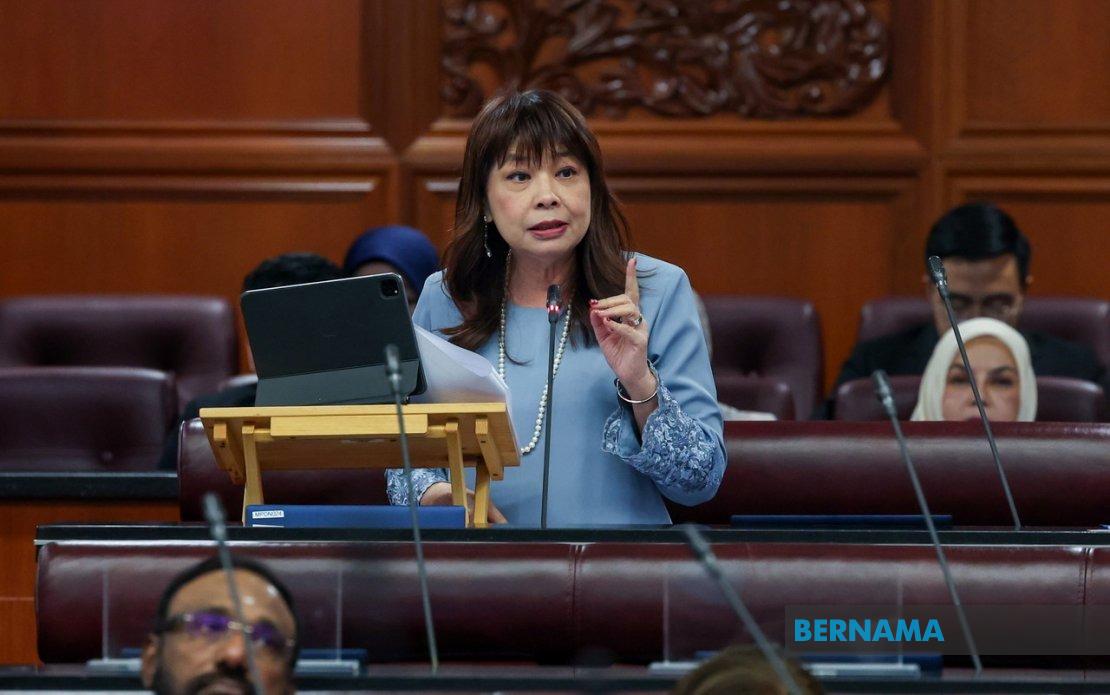
Malaysia's dedicated domestic violence hotline Talian Kasih 15999 has received 9,327 calls concerning family violence cases stretching from 2022 through May 2025, Deputy Minister of Women, Family and Community Development Lim Hui Ying disclosed during parliamentary question time. The revelation underscores the persistent scale of intimate partner violence across the nation, even as enhanced reporting mechanisms have made it easier for victims to seek help. These figures represent a substantial portion of the 127,000 total calls the service handled during the same timeframe across broader social and welfare matters, suggesting that family violence remains one of the most pressing community concerns requiring government intervention.
The progress in case resolution demonstrates operational efficiency within the ministry's response framework. According to Lim's parliamentary statement, every domestic violence complaint lodged since 2022 through the end of last year has been fully resolved and closed. The more recent cohort—470 calls received between January and May 2025—shows active progress, with 406 cases already resolved and the remaining 64 currently receiving follow-up action. This trajectory indicates the hotline operates beyond mere complaint collection, functioning as an active intervention mechanism designed to address immediate safety concerns and facilitate longer-term protection arrangements for affected households.
The ministry's intervention arsenal extends well beyond sympathetic listening. When victims contact Talian Kasih, officers can facilitate access to Emergency Protection Orders, which offer immediate legal safeguards against abuse, or Interim Protection Orders, which provide sustained judicial oversight. Beyond court-ordered protections, the service connects vulnerable individuals with safe shelter networks, removing them from threatening environments. These layered protective mechanisms reflect recognition that escaping domestic violence requires multifaceted support spanning legal, physical, and psychological dimensions. The coordination between hotline staff, law enforcement, judicial officers, and shelter providers represents a comprehensive ecosystem designed to prevent escalation and protect lives during the critical period when victims first seek help.
A significant shift emerging from the data concerns the demographic composition of victims. While domestic violence has historically been framed as primarily affecting women, Lim highlighted a growing trend of men reporting abuse within intimate relationships. Although male victims currently constitute a smaller absolute number relative to female victims, the increasing trajectory warrants attention from policymakers and service providers. This evolution challenges conventional narratives surrounding family violence and demonstrates that coercive control, physical aggression, and psychological harm transcend gender boundaries. The ministry's stated commitment to protecting victims "without prejudice" across all genders and ethnicities suggests institutional recognition that comprehensive victim support cannot operate within categorical stereotypes.
The emergence of male victims within Malaysia's domestic violence landscape reflects broader regional and global patterns becoming visible as stigma diminishes and reporting pathways improve. Men historically underreport abuse due to shame, social expectations of stoicism, and fear that authorities will disbelieve them or dismiss their experiences as unmanly. As awareness campaigns continue and support services explicitly affirm that abuse affecting men deserves equal attention, reporting rates may continue climbing. This demographic shift carries implications for how the ministry trains hotline staff, structures shelter facilities that have traditionally served predominantly female residents, and crafts public messaging about domestic violence prevention and victim support.
The substantial call volume—approximately 9,300 cases over three years—suggests either persistent violence in Malaysian households or improved willingness among victims to reach out, likely both factors operating simultaneously. The availability of a dedicated 24-hour hotline with Malay-speaking staff removes certain barriers to access compared to reporting through conventional police channels, which carry reputational and bureaucratic friction. Over time, as public awareness of Talian Kasih expands through campaigns and word-of-mouth referrals in communities, utilization may increase further. However, the true burden of domestic violence likely exceeds reported figures substantially, as many victims remain isolated, unaware of support services, or too frightened to make contact. The recorded 9,327 calls represent only those who successfully overcame barriers to disclosure.
Parliamentary scrutiny of Talian Kasih's effectiveness, as demonstrated by Datuk Muslimin Yahaya's question, reflects broader legislative engagement with victim support infrastructure. Political pressure to demonstrate results encourages transparency about case outcomes and intervention success rates. When Deputy Minister Lim provided granular breakdowns of resolved versus pending cases, she was essentially answering an implicit demand from lawmakers to justify budget allocations and prove that resources directed toward the hotline translate into tangible protection for vulnerable Malaysians. This accountability mechanism, while imperfect, creates incentives for continuous improvement and prevents support services from operating as invisible bureaucratic functions disconnected from parliamentary oversight.
The resolution rates reported—100 percent for historical cases and approximately 86 percent for current-year cases—require careful interpretation. A "resolved" case does not necessarily mean the underlying family conflict terminated, the abuser was prosecuted, or the victim achieved permanent safety. Resolution might indicate that protection orders were obtained, shelter placement was arranged, or counseling was initiated. Longer-term success depends on factors beyond the hotline's control: whether victims remain in safe situations, whether abusers complete rehabilitation programs, whether family dynamics genuinely transform. The metrics available obscure the complexity of intimate partner violence, which often involves cycles of reconciliation and renewed abuse. Nevertheless, documenting that initial interventions occur represents baseline accountability.
For Malaysian readers and policymakers, these figures contextualize the domestic violence challenge within Southeast Asia's broader landscape. Countries throughout the region grapple with similar problems, though reporting infrastructure varies considerably by development level and governance capacity. Malaysia's Talian Kasih represents a functional model other regional nations reference when expanding victim support services. The hotline's willingness to address male victims and its multiethnic, multiconfessional approach to victim protection aligns with Malaysia's constitutional commitment to equal protection before law regardless of gender, ethnicity, or religion. However, the persistence of 9,327 reported cases since 2022 also signals that awareness campaigns and prevention initiatives require continued strengthening to reduce violence incidence rather than simply managing its consequences.
Looking forward, several dimensions merit attention from ministry leadership and parliamentary observers. First, expanding hotline capacity and geographic reach ensures rural communities and indigenous groups access the same services available in urban centers. Second, integrating domestic violence response with broader mental health services recognizes that trauma and psychological harm accompany physical abuse. Third, developing culturally competent intervention approaches acknowledges that family structures and conflict resolution norms vary across Malaysia's diverse communities, and imported models of victim support may require localization. Fourth, supporting survivor economic empowerment through job training and entrepreneurship programs helps victims achieve independence rather than remaining economically trapped in abusive relationships. Finally, perpetrator rehabilitation and anger management programs address the demand side of violence, potentially preventing future incidents. The Deputy Minister's parliamentary disclosure indicates the government tracks outcomes, but sustained improvement requires evolving strategy beyond hotline operation toward comprehensive ecosystem transformation.

