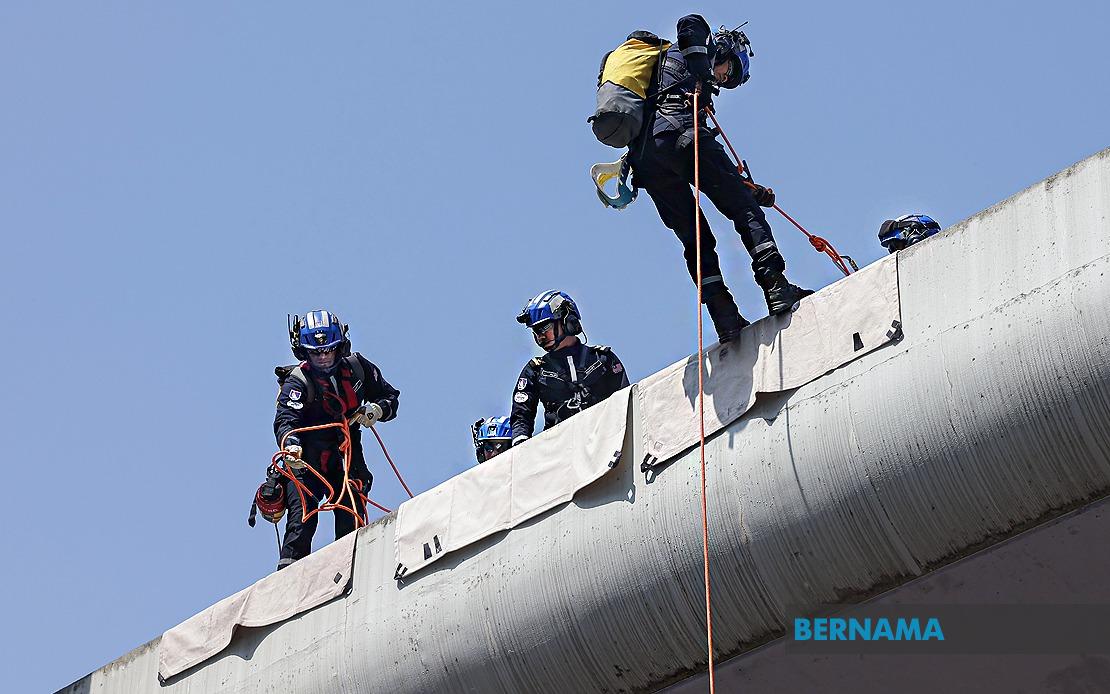
The Malaysian Special Search and Rescue Team (SMART) remains positioned for immediate deployment to Nepal to support ongoing search and rescue operations triggered by severe flooding across the country, according to an announcement by the National Disaster Management Agency (NADMA) issued from Putrajaya on August 30. The readiness of SMART represents Malaysia's swift mobilisation of its specialized disaster response capabilities, though the actual movement of personnel and equipment hinges entirely on formal acceptance from the Nepali Government and an assessment of immediate operational requirements on the ground.
NADMA clarified that while SMART has achieved full operational readiness and could be dispatched at short notice, the decision to proceed remains contingent on Nepal's official invitation for Malaysian assistance. This diplomatic protocol, though procedurally necessary, underscores the structured approach Malaysia takes toward international humanitarian intervention. The agency emphasized that coordination across multiple government departments, particularly the Foreign Ministry, is proceeding in parallel to ensure seamless deployment logistics should Nepal formally extend its acceptance.
The commitment to potential deployment demonstrates Malaysia's established role within the broader Southeast Asian humanitarian architecture. SMART, a specialized unit drawn from Malaysia's fire and rescue services, has earned recognition through previous regional deployments during natural disasters. The team's composition typically includes paramedics, engineers, and search specialists trained specifically for complex rescue scenarios in collapsed structures and challenging terrain. Nepal's mountainous geography and the variable accessibility of affected regions would require exactly the skill sets that SMART personnel possess.
Senior Fire Superintendent I Abdul Manaf Che Isa, who commands SMART operations, conveyed the team's psychological readiness despite competing national obligations. Even as SMART contingents prepared to participate in Malaysia's 69th National Day parade scheduled for August 31, the commander stressed that personnel maintained heightened preparedness for immediate redeployment abroad. This dual-readiness posture reflects the professional discipline embedded within Malaysia's disaster response framework, where ceremonial obligations do not diminish operational alertness.
Prime Minister Anwar Ibrahim formally announced that the MADANI Government had taken the decision to activate SMART deployment to Nepal, positioning the mission around three interconnected objectives. Beyond conducting search and rescue operations in affected areas, SMART has been specifically tasked with locating Malaysian nationals impacted by the disaster and facilitating their safe return. Additionally, the team would coordinate closely with the Malaysian Embassy in Nepal to enhance the effectiveness of broader assistance efforts and monitor the welfare of any affected Malaysian citizens across the region.
Malaysia's financial commitment strengthens the humanitarian dimension of its response. By pledging US$1 million (equivalent to approximately RM4.03 million) to Nepal, Malaysia moves beyond operational assistance to address immediate victim needs and longer-term recovery infrastructure. This combination of specialized personnel deployment alongside substantial financial contribution reflects a comprehensive understanding that effective disaster response requires both technical expertise and material resources. For Nepal, which faces massive displacement and economic disruption from flooding, such multilateral support proves crucial for recovery trajectories.
The Nepal flooding represents a humanitarian crisis of significant scale within South Asia, with implications that extend across the region. Climate change patterns increasingly generate extreme precipitation events in the Himalayan region, with downstream consequences affecting densely populated areas. Malaysia's proactive positioning of SMART reflects recognition that such disasters transcend national boundaries and demand coordinated international response architectures. The region's interconnectedness means that instability or humanitarian crises in one country inevitably resonate across neighboring nations through refugee flows, economic disruption, and disease vectors.
For Malaysian observers, this deployment scenario illustrates the tangible deployment of national capabilities toward regional stability. SMART operations abroad generate valuable professional exchange, with personnel gaining experience in diverse disaster scenarios. These deployments simultaneously build diplomatic goodwill and reinforce Malaysia's positioning as a responsible regional actor capable of material contribution to international humanitarian efforts. The precedent of Malaysian rescue teams operating in other countries' territories also establishes reciprocal expectations that Malaysia can similarly expect international assistance should domestic disasters overwhelm local capabilities.
The diplomatic framework governing such deployments carries nuance often overlooked in simplified media narratives. While Malaysia extends assistance proactively, ultimate control remains with the receiving nation's sovereignty. Nepal's government must weigh various factors before formally accepting—including security assurances, coordination complexity, and political considerations around foreign presence during crisis situations. This procedural requirement, though sometimes administratively cumbersome, represents appropriate respect for national autonomy even during humanitarian emergencies.
As SMART personnel maintained their dual readiness throughout August 30, the international dimension of modern disaster management became apparent. Rescue operations in Nepal would likely involve coordination between multiple national teams, UN agencies, and local Nepali authorities. Malaysia's presence within this multilateral response structure positions the country alongside other capable nations offering specialized expertise. Such operations have become standard components of global humanitarian architecture, with countries recognizing that specialized rescue capabilities concentrate in wealthy nations possessing advanced training infrastructure and equipment stocks.
The timeline for Nepal's formal response to Malaysia's conditional offer remained uncertain at the announcement date. Weather patterns, accessibility of affected regions, and assessment of rescue operation viability would all influence Nepal's decision-making process. Should approval materialize, SMART would require rapid mobilization logistics including transport coordination, equipment clearance, and personnel briefings on specific Nepali conditions. The standby posture adopted by SMART represented the most efficient response configuration, maintaining readiness without consuming operational resources unnecessarily.
Malaysia's response to the Nepal crisis reflects institutional learning accumulated through previous regional disasters. The 2004 Indian Ocean tsunami, the 2015 Nepal earthquake, and numerous other regional incidents have shaped Malaysian approaches toward humanitarian deployment. Institutions like NADMA have developed protocols and interagency coordination mechanisms that enable rapid decision-making and resource mobilization. For contemporary Southeast Asian governance, such disaster response capacities increasingly define national reliability and regional standing, with capability in humanitarianism becoming an essential component of soft power projection.

