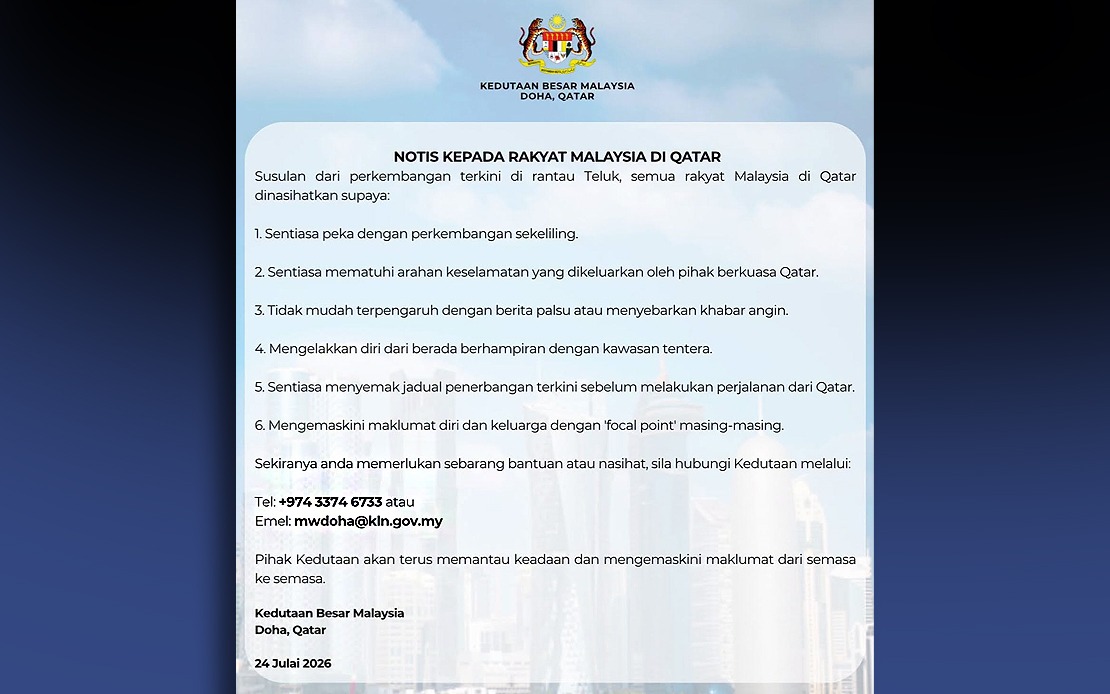
The Malaysian embassy in Qatar has issued a comprehensive security advisory to its citizens residing in the Gulf nation, instructing them to comply with safety directives from Qatari authorities and steer clear of military installations following recent regional developments. The guidance, disseminated through official channels on Saturday, underscores growing concerns about the fluid security environment affecting the broader Gulf region and reflects the embassy's commitment to safeguarding Malaysian interests abroad.
Beyond basic compliance measures, the embassy has emphasized the importance of situational awareness, asking Malaysians to remain observant of their immediate environment and exercise caution in daily activities. This broader call for vigilance reflects international best practices for managing risk in zones of geopolitical uncertainty, where conditions can shift with minimal warning. The advisory effectively translates formal security protocols into practical behaviour that Malaysian nationals can implement in their personal and professional lives.
A significant component of the embassy's notice addresses the spread of misinformation, which has become an increasingly serious concern in conflict-adjacent regions. Officials have explicitly cautioned Malaysians against both consuming and sharing unverified claims or rumours, recognizing that false narratives can distort public perception, fuel unnecessary panic, and sometimes complicate official response efforts. In an era of rapid social media dissemination, this warning carries particular weight for diaspora communities that often rely heavily on messaging apps and online platforms for news and community communication.
The embassy has committed to continuous monitoring of the security landscape and pledged to furnish regular updates as circumstances evolve. This promise of ongoing communication is designed to provide Malaysian nationals with actionable intelligence rather than leaving them to piece together information from fragmented or potentially unreliable sources. Regular updates also serve a reassurance function, demonstrating official engagement and reducing anxiety within the community.
Practical measures outlined in the advisory include checking flight schedules before departure from Qatar, a recommendation that addresses the tangible risk of route disruptions or airline suspensions that sometimes accompany regional instability. Malaysians planning to return home or travel onward are advised to verify current schedules with carriers directly rather than relying on outdated information, ensuring they do not find themselves stranded at airports or unable to execute planned departures.
The embassy has further instructed Malaysians to maintain current personal and family information on official registers, a step that facilitates rapid communication in emergencies and ensures consular staff can reach nationals quickly should evacuation or emergency assistance become necessary. This administrative measure, while seemingly routine, forms the backbone of consular protection during crises and enables the embassy to provide targeted support to those in greatest need.
The security environment in the Gulf has experienced periodic fluctuations driven by geopolitical tensions, proxy conflicts, and occasional direct military confrontations between regional powers. Qatar, as a wealthy and strategically significant nation hosting major international events and serving as a financial and diplomatic hub, has generally maintained strong security protocols, yet it remains embedded within a region where larger power struggles and disputes between neighbouring states create underlying instability. Malaysian nationals, representing a significant expatriate community engaged in commerce, education, and professional services, are potentially vulnerable to disruptions flowing from these broader regional dynamics.
Malaysian workers and residents in Qatar contribute substantially to the nation's economy and represent important human capital for Malaysian enterprises operating in the Gulf. The embassy's proactive advisory reflects recognition that protecting this population requires not merely reactive crisis management but also preventive guidance that helps individuals avoid situations of heightened risk. By issuing clear, actionable guidance, the embassy positions itself as a trusted source of information and demonstrates responsiveness to community needs.
For Malaysians contemplating relocation to Qatar or planning extended stays, these advisories introduce an additional consideration into their cost-benefit analysis. While Qatar offers significant employment and business opportunities, the security advisory serves as a reminder that Gulf-based assignments carry certain risks that differ from those in more stable jurisdictions. Employers and individuals weighing such decisions should factor in both the likelihood and potential impact of regional disruptions on their operations and family circumstances.
The broader context of this advisory reflects evolving patterns in how Malaysia's foreign service engages with diaspora communities in volatile regions. Rather than adopting a minimalist approach that communicates only in response to acute crises, the embassy has adopted a more proactive posture, providing continuous guidance that enables nationals to make informed decisions. This approach aligns with international best practices among developed nations' diplomatic services and reflects Malaysia's growing sophistication in consular affairs.
Malaysians seeking additional information or requiring direct assistance can contact the embassy through established channels, ensuring that community members have clear pathways to official support should circumstances warrant intervention. The availability of direct consular assistance provides an important safety net for nationals facing difficulties, whether security-related, legal, or logistical in nature. For those in Qatar, maintaining awareness of these contact mechanisms represents a prudent precaution alongside adherence to the broader security guidance.

