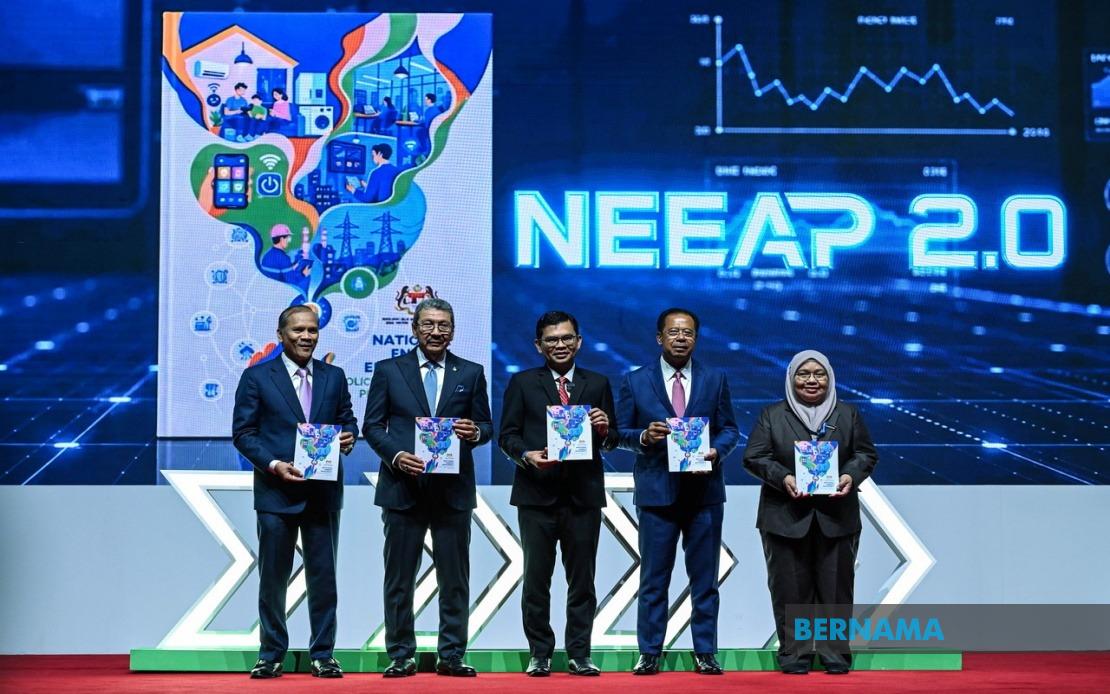
Malaysia has unveiled an ambitious energy efficiency blueprint expected to reshape the country's industrial and commercial landscape while advancing its net-zero emissions target for 2050. The National Energy Efficiency Policy and Action Plan 2026-2035, commonly referred to as NEEAP 2.0, was formally launched during the 7th International Sustainable Energy Summit in Putrajaya, introducing a comprehensive decade-long strategy that the Ministry of Energy Transition and Water Transformation (PETRA) says will unlock RM85 billion in net energy savings across the economy.
Beyond financial gains, the initiative carries significant employment implications for Malaysia's energy transition workforce. PETRA's projections indicate that NEEAP 2.0 will generate approximately 29,000 new job opportunities, a substantial figure that reflects the scale of economic transformation embedded within the policy framework. These positions will span installation, maintenance, auditing, and management roles across industrial facilities, commercial buildings, and residential properties, potentially creating a competitive advantage for workers acquiring green skills at a critical moment when Southeast Asia is accelerating its shift toward sustainable energy systems.
The financial dimension extends beyond domestic savings. PETRA forecasts that implementation will attract RM36 billion in private investment over the ten-year period, signalling investor confidence in Malaysia's energy efficiency market and positioning the country as an attractive hub for green technology deployment in the region. This injection of capital could strengthen Malaysia's manufacturing base by upgrading existing industrial facilities to meet international energy standards, enhancing competitiveness in export-oriented sectors while simultaneously reducing operational costs for domestic businesses.
Environmental targets form the cornerstone of the strategy's legitimacy and urgency. The policy aims to reduce carbon emissions by an amount equivalent to 26 million tonnes of carbon dioxide by 2035, a reduction that contributes materially to Malaysia's broader climate commitments. For context, this carbon savings trajectory aligns with the country's commitment under international climate frameworks, demonstrating that energy efficiency—rather than renewable energy alone—represents a pragmatic pathway toward decarbonisation that leverages existing infrastructure and proven technologies.
The core efficiency objective centres on improving electricity and thermal energy consumption by 11.6 percent relative to business-as-usual projections. While this percentage may appear modest, PETRA calculates the cumulative impact as 815,000 terajoules in saved energy—a volume equivalent to satisfying the entire electricity requirements of Peninsular Malaysia for nearly two years. This measurement underscores how incremental efficiency improvements across millions of devices, appliances, and industrial systems compound into economically and environmentally transformative outcomes at the national scale.
NEEAP 2.0 represents a continuation of Malaysia's energy efficiency trajectory rather than a radical departure. The preceding action plan established institutional frameworks and demonstrated feasibility across multiple sectors, allowing PETRA to refine targeting and accelerate implementation timelines. This evolutionary approach reduces policy uncertainty while building on existing stakeholder relationships with industry associations, building operators, and manufacturers who have already begun adopting efficiency standards under previous iterations.
The policy's sectoral approach acknowledges that efficiency opportunities vary significantly across industrial, commercial, and residential domains. Heavy manufacturing, petrochemical facilities, and semiconductor plants represent distinct technical challenges compared to air-conditioning loads in shopping centres or lighting systems in residential developments. PETRA's framework presumably establishes differentiated incentive structures and regulatory requirements tailored to these varying contexts, recognising that one-size-fits-all mandates often generate unintended consequences and implementation barriers.
Alignment with Malaysia MADANI represents both a political positioning strategy and a substantive policy commitment. The aspiration to promote efficient and sustainable energy use while supporting citizen well-being indicates that energy policy is being integrated into broader social objectives—a recognition that energy costs disproportionately affect lower-income households and that efficiency improvements in subsidised sectors could free government resources for other priorities. This framing may facilitate public support and parliamentary approval for measures that might otherwise face resistance from cost-conscious constituencies.
Regional implications merit consideration as Southeast Asia collectively grapples with rising electricity demand driven by industrialisation and urbanisation. Malaysia's NEEAP 2.0 could establish demonstration effects that inform energy policy in neighbouring countries confronting similar pressures. If implementation proves successful, the policy framework and financing mechanisms could become reference models for Vietnam, Thailand, and Indonesia as they contemplate their own efficiency commitments under climate pledges and sustainability targets.
Implementation challenges will largely determine whether projections materialise or inflate expectations. Achieving 11.6 percent efficiency gains requires sustained engagement from thousands of building owners, facility managers, and industrial operators—constituencies with competing priorities and limited technical expertise. PETRA will need to develop robust financing mechanisms, such as energy service agreements or tax incentives, to overcome upfront capital barriers that deter efficiency investments even when long-term returns appear attractive. Monitoring and verification systems must credibly document savings to maintain investor confidence and inform policy adjustments.
The investment attraction component signals confidence in market viability but also hints at government expectations that private capital will supplement public funding. This mixed financing approach mirrors global best practices in energy efficiency deployment, where private equity finds attractive risk-return profiles in diversified efficiency portfolios. Malaysian institutional investors, insurance companies, and development finance institutions may identify NEEAP 2.0 as an opportunity to deploy capital in assets generating predictable energy savings flows while supporting national climate objectives.
Sector-specific opportunities within NEEAP 2.0 will likely favour businesses and investors capable of navigating technical and regulatory complexity. Renewable energy equipment suppliers, energy auditing firms, smart building technology providers, and construction companies specialising in retrofits should experience demand growth. Small and medium enterprises, conversely, may struggle to access financing and technical expertise unless government establishes targeted support programs—an equity consideration that will influence whether efficiency gains concentrate among large corporations or distribute across the broader business ecosystem.
The 2026-2035 timeframe positions NEEAP 2.0 as a bridge policy linking near-term emissions reductions to Malaysia's 2050 net-zero target. The efficiency gains realised through this decade establish foundational improvements that reduce energy demand, subsequently lowering the renewable energy capacity required to achieve full decarbonisation by mid-century. This sequential logic suggests that PETRA views energy efficiency as foundational infrastructure for climate transition, complementary to but ultimately distinct from renewable energy expansion and electrification initiatives.

