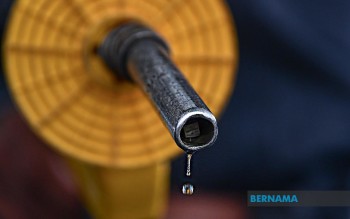
Malaysia's position as a net energy exporter masks a fundamental imbalance in the country's petroleum accounts that leaves the federal budget exposed to crude oil price swings, according to research from Kenanga Investment Bank. While liquefied natural gas exports have historically cushioned Malaysia against commodity volatility, the composition of the nation's energy trade reveals structural vulnerabilities that policymakers cannot ignore, particularly as global oil markets remain unsettled.
The numbers paint a stark picture of this energy dependency. In 2025, Malaysia posted a RM30.4 billion deficit in crude and condensate imports, offset only partially by a modest RM3.2 billion surplus in refined petroleum products. This combined petroleum deficit of RM27.2 billion would entirely eliminate Malaysia's energy export credentials without the counterbalancing strength of LNG operations. The RM45.4 billion surplus generated by liquefied gas exports represents the sole reason Malaysia maintains its cherished status as a net energy exporter, transforming what would otherwise be a significant trade liability into a manageable asset.
This structural dependency on a single commodity stream creates a fiscal trap that most observers overlook. The government's fuel subsidy obligations tie directly to crude and refined product prices, fluctuating immediately when international benchmarks move. Conversely, LNG export revenues accrue through separate fiscal channels and arrive with significant time lags, meaning the budget cannot automatically offset higher oil subsidies with corresponding increases in gas export receipts. When crude prices spike, the government faces immediate pressure on its subsidy budget, while LNG revenues may not increase for months. This asynchronous relationship between costs and revenues amplifies Malaysia's vulnerability to sudden energy market dislocations.
The Ministry of Finance has long estimated that each US$1 per barrel increase in crude prices generates RM300 million in additional annual petroleum revenue for the federal budget, excluding dividends from Petronas. However, Kenanga's independent modelling suggests the actual exposure runs considerably deeper, with the investment bank calculating that each US$1 per barrel movement produces approximately RM1.05 billion in annual fiscal impact. This threefold discrepancy between official estimates and market-based calculations underscores how significantly conventional wisdom may underestimate Malaysia's true energy vulnerability.
The subsidy structure itself amplifies this exposure through what Kenanga terms relatively modest "strike" prices—the crude price thresholds at which government support obligations trigger or intensify. The bank estimates that RON95 petrol subsidies activate around US$44 per barrel Brent crude, while diesel support kicks in near US$48 per barrel following the RM2.10 BUDI Diesel pricing mechanism. Given that the bank's house view for 2026 averages US$80 per barrel, these strike prices remain comfortably below anticipated market levels, meaning Malaysia's subsidy exposure persists even in normal market conditions. A fresh oil shock comparable to recent disruptions would rapidly overwhelm government finances dedicated to containing fuel costs.
The targeted subsidy programs introduced in recent years have provided meaningful relief, demonstrating that Malaysia's policymakers understand this vulnerability. The BUDI95 initiative, which restricts subsidies to vehicles below 1,500 cubic centimetres, delivers estimated annual savings ranging from RM2.5 billion to RM4.0 billion by excluding higher-consumption vehicles from full government support. BUDI Diesel, implemented from July, contributes a further RM2.0 billion in annual savings through similar targeting mechanisms. Combined, these means-tested approaches could preserve between RM4.5 billion and RM6.0 billion annually, representing substantial fiscal space that the Ministry of Finance has explicitly committed to redirecting toward education, healthcare, and public transport infrastructure development.
Yet even these significant savings prove insufficient to eliminate Malaysia's fundamental energy trade imbalance. The targeted subsidies address symptoms rather than root causes, managing the fiscal burden of fuel support without resolving the underlying fact that Malaysia consumes more crude oil than it produces domestically. Regional peer nations facing comparable energy transitions have pursued aggressive domestic production expansion, renewable energy development, and industrial energy efficiency initiatives. Malaysia's current policy framework relies primarily on subsidy restructuring rather than supply-side solutions, leaving the country structurally dependent on stable crude prices and robust LNG markets simultaneously.
For Malaysian businesses and investors, this policy reality carries significant implications. Companies operating in energy-intensive sectors face potential cost shocks if crude prices breach subsidy strike levels, as government support may not expand proportionally. The transportation and logistics sectors, already constrained by narrow margins, remain particularly vulnerable to sudden fuel cost increases if subsidies fail to keep pace with international price movements. Agricultural producers and manufacturers competing on regional markets cannot easily pass through higher energy costs without losing competitiveness, creating pressure on profit margins during commodity price upswings.
The Southeast Asian context further complicates Malaysia's position. Regional competitors including Vietnam and Thailand have pursued more aggressive energy diversification strategies, expanding renewable capacity and reducing fossil fuel import dependencies. Indonesia, despite its energy wealth, has similarly moved toward subsidy rationalization to preserve fiscal space for infrastructure and social spending. Malaysia's continued reliance on hydrocarbon revenues and subsidy management places the country at a relative disadvantage as regional energy policies evolve toward sustainability and fiscal resilience.
Kenanga's analysis suggests that Malaysia requires more comprehensive energy strategy adjustments beyond current subsidy reforms. The gap between official government estimates of fiscal exposure and market-derived calculations indicates that budget planning may underestimate risks when constructing multi-year fiscal forecasts. Policymakers should consider scenarios incorporating more volatile crude price assumptions than historical averages, ensuring that contingency plans exist for sudden energy market disruptions comparable to those experienced in recent years.
Longer-term, Malaysia's energy security depends on gradually reducing the crude oil deficit through enhanced domestic production from aging fields, accelerating renewables deployment to displace fossil fuels in power generation, and improving industrial energy efficiency to moderate consumption growth. Without such supply-side measures, the country risks perpetual exposure to international crude price swings, regardless of LNG export strength. The paradox of being a net energy exporter while remaining vulnerable to oil price shocks reflects a temporary competitive advantage that cannot endure indefinitely as global energy transitions accelerate.
Immediate priorities should include stress-testing budget assumptions against crude price scenarios, ensuring subsidy formulas automatically adjust when international benchmarks exceed defined thresholds, and accelerating investments in non-hydrocarbon energy sectors. Malaysia's energy sector has delivered substantial national wealth, but the composition of that wealth—increasingly dependent on LNG while importing crude—demands strategic recalibration to ensure long-term fiscal and economic stability.

