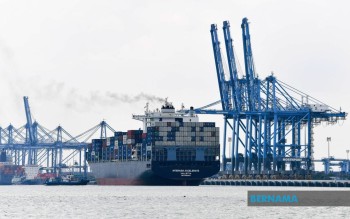
Investment analysts have significantly raised their confidence in Malaysia's trade trajectory for 2026, with major forecasters now predicting export expansion will substantially outpace earlier expectations. RHB Investment Bank Bhd has elevated its 2026 export growth projection to 21.7 per cent, representing a considerable upward revision from its prior estimate of 15.3 per cent. This upgrade stems largely from the country's impressive actual export performance during the first half of 2026, when shipments expanded by 27.5 per cent year-on-year, demonstrating that underlying demand for Malaysian products remains considerably stronger than many analysts had anticipated.
The revision reflects a fundamental shift in how investment professionals view Malaysia's position within global supply chains and emerging technology sectors. Year-to-date export numbers have substantially exceeded baseline forecasts, signalling robust international appetite for Malaysian goods despite broader economic uncertainties affecting many trading partners. This performance suggests that Malaysia's diversified manufacturing base, particularly its deep integration into semiconductor and electronics production networks, is capturing outsized benefits from the global technology upgrade cycle. The stronger-than-projected results provide a tangible foundation for the upgraded forecast rather than purely optimistic assumptions about future conditions.
Electrical and electronics exports constitute the primary driver underpinning analyst optimism about Malaysia's 2026 trajectory. The sector continues benefiting from an exceptional global technology upcycle, with artificial intelligence investments and related infrastructure projects spurring demand for semiconductors, components, and manufacturing services in which Malaysia holds substantial capabilities. Cloud computing expansions, data centre buildouts, electric vehicle production, and industrial automation initiatives worldwide are each creating new demand vectors for Malaysian manufacturers. This technological transformation extends beyond temporary cyclical factors, suggesting structural tailwinds that could persist well into 2027 and beyond.
Trading data from the second quarter of 2026 provides additional evidence supporting forecasters' upgraded projections. Malaysia achieved a trade surplus of RM83.9 billion during the April-June period, representing a dramatic expansion from the RM15.3 billion surplus recorded during the same quarter in 2025. This more-than-five-fold increase in the trade surplus directly boosts gross domestic product calculations, as net exports contribute significantly to GDP growth under national accounting methodologies. The surplus expansion reflects not merely rising exports but also indicates Malaysia is increasingly capturing value-added activities in manufacturing and services, fundamental to sustained economic expansion.
MBSB Investment Bank Bhd has similarly upgraded its outlook, now projecting 2026 export growth at 18.9 per cent compared with 2025's 6.6 per cent performance. While marginally more conservative than RHB's forecast, this projection still indicates confidence in Malaysia's trade performance doubling its 2025 pace. MBSB particularly emphasizes that technology product demand will drive growth, alongside increased demand for commodity-linked exports including petroleum products and liquefied natural gas. For an economy heavily dependent on commodity exports alongside manufactured goods, this dual growth source provides substantial resilience against isolated sectoral downturns.
June 2026 statistics released by the Department of Statistics Malaysia provide the most recent evidence of sustained momentum across Malaysia's trade account. Total trade grew 44.7 per cent to RM340.9 billion, with exports specifically expanding 45.4 per cent to RM177.9 billion and imports rising 43.9 per cent to RM163.0 billion. The trade surplus during June surged 64.9 per cent to RM14.9 billion, demonstrating that Malaysia maintains consistent month-to-month strength rather than relying on isolated quarterly spikes. This consistency suggests underlying demand factors are genuine rather than representing temporary statistical anomalies.
Despite the upgraded outlooks, investment analysts caution that Malaysia's export growth remains vulnerable to multiple external risks requiring close monitoring. Geopolitical tensions and persistently elevated oil prices present significant downside scenarios that could simultaneously increase production costs, transportation expenses, and general operating overheads for Malaysian manufacturers. These cost pressures, if sustained, could compress profit margins and potentially weaken international competitiveness, particularly for export-oriented manufacturers operating on relatively thin margins within highly competitive global supply chains. Manufacturing sectors deeply embedded in cross-border production networks face particular vulnerability to disruptions originating anywhere within these complex chains.
Trade policy uncertainty, particularly involving the United States, represents another material risk factor that analysts highlight. Potential tightening of trade regulations, tariffs, or supply chain restrictions could substantially disrupt Malaysia's current growth trajectory. The country's manufacturing competitiveness depends significantly on unfettered access to global markets and seamless supply chain integration; sudden policy shifts could force costly reorganizations of production networks or market reorientation. Additionally, supply-side disruptions anywhere within global semiconductor networks or other critical sectors could reduce demand for Malaysian inputs, while price pressures in commodity exports could compress margins even as volumes increase.
Malaysia's structural economic advantages provide important counterweights to these downside risks. The country maintains substantially diversified economic activities across manufacturing, services, agriculture, and tourism sectors, reducing dependence on any single export category. Geographic positioning within Southeast Asia provides access to dynamic regional markets alongside global customers, offering trade route flexibility if specific international routes become disrupted. Ongoing government efforts to diversify export destinations beyond traditional partners and expand product offerings into higher-value-added categories further strengthen Malaysia's capacity to navigate external challenges. Regional supply chain integration, particularly within Southeast Asia, creates local alternatives that reduce extreme exposure to distant geopolitical disruptions.
The upgraded growth forecasts carry significant implications for Malaysian policymakers and investors planning 2026 activities. Strong export growth directly supports government revenue through corporate taxation and provides foreign currency inflows essential for maintaining external account stability. Export sector expansion creates employment opportunities across manufacturing regions and related service industries, contributing to household income growth and domestic consumption. However, sustained export competitiveness requires continued investment in infrastructure, workforce skills, and research capabilities to maintain Malaysia's position as a preferred manufacturing destination within competitive global supply chains.
For regional observers, Malaysia's strengthening trade performance reflects broader Southeast Asian integration into global technology supply chains. As major electronics manufacturers increasingly diversify production locations away from China, Southeast Asian countries including Malaysia capture augmented manufacturing activity. This regional trend suggests that export-oriented manufacturing growth may be partially structural rather than purely cyclical, potentially supporting extended growth periods across multiple Southeast Asian economies. Malaysia's performance therefore provides a useful regional barometer for assessing how effectively Southeast Asian nations are capturing opportunities within evolving global supply chain architectures.
Looking forward, the investment banking consensus suggests Malaysia should maintain robust export growth throughout 2026 barring major disruptions. The combination of strong near-term performance, structural advantages in technology sectors, and diversified economic foundations creates a credible basis for the upgraded forecasts. However, geopolitical and policy uncertainties warrant prudent risk management strategies. Companies dependent on Malaysian exports or those planning substantial regional investments should monitor developments in trade policy, technology demand, and supply chain health while building flexibility into long-term strategies. Malaysia's continued successful navigation of external challenges will partly determine not only its 2026 performance but also regional investor confidence in Southeast Asia's medium-term economic trajectory.

