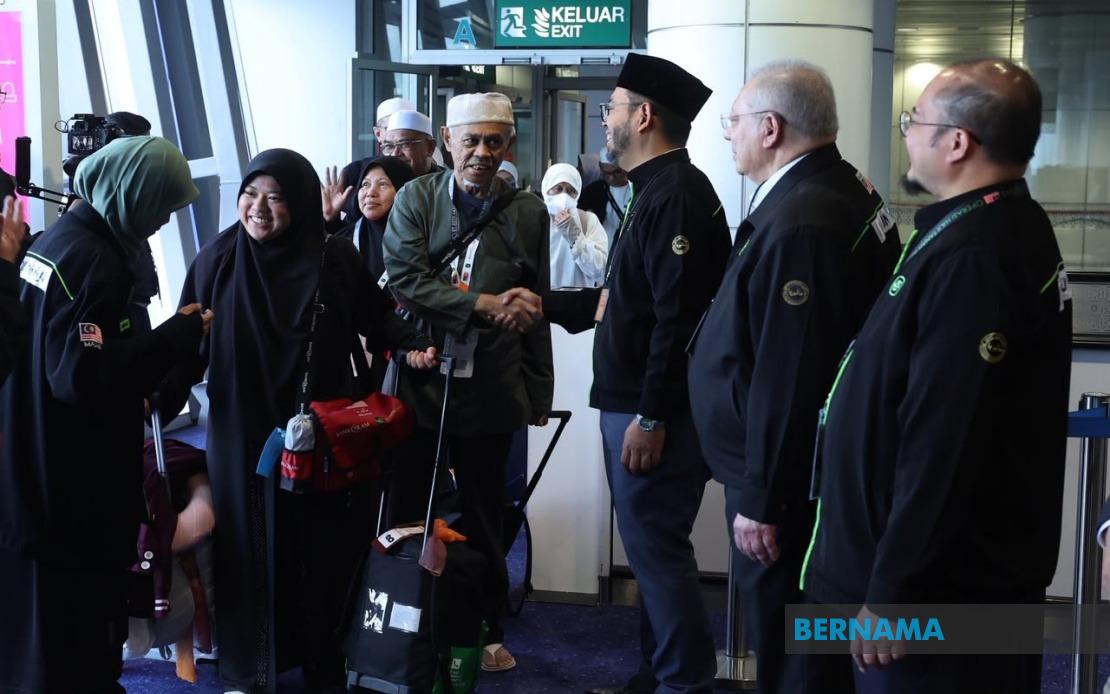
Malaysia's 1447 Hijrah haj season came to a ceremonial close on Tuesday when the final contingent of 258 pilgrims touched down at Kuala Lumpur International Airport at 12.10 pm, having departed Madinah the previous evening aboard Malaysia Airlines flight MH 8385. The completion of this year's operations represented not merely a logistical milestone but a demonstration of Malaysia's capacity to deliver seamless religious and administrative services in an increasingly complex geopolitical environment.
Dr Zulkifli Hasan, the Minister in the Prime Minister's Department handling religious affairs, presided over the welcoming ceremony and hailed the safe return of all participants as a significant achievement for the nation. His remarks underscored the particular gravity of concluding the season successfully given the ongoing tensions affecting the broader West Asian region, an area encompassing both the pilgrimage destinations and the route corridors through which Malaysian travellers moved. The minister's emphasis on pilgrims returning in good health and the absence of major incidents throughout the season reflected the multifaceted nature of modern haj management, which extends far beyond the spiritual dimensions of the pilgrimage itself.
The recognition Malaysia received from Saudi Arabia's Ministry of Haj and Umrah proved especially noteworthy. The awarding of the Labbaikum Diamond Award—positioned as the highest international accolade for haj management and services—demonstrated that Malaysian authorities had successfully navigated the twin demands of maintaining spiritual authenticity while modernising operational infrastructure. Such international validation carries weight not only for national prestige but also for Malaysia's standing among Muslim-majority nations and within the Organisation of Islamic Cooperation, where haj management capability functions as a soft power indicator.
Dr Zulkifli's acknowledgment of the various stakeholders who contributed to the season's success painted a picture of the ecosystem required to facilitate haj operations. Tabung Haji, the dedicated national pilgrimage fund institution, coordinated with the Health Ministry to ensure medical readiness, collaborated with Malaysia Airlines and international carriers on transport logistics, and worked alongside the Immigration Department to manage the substantial documentation and visa requirements. This institutional machinery, often invisible to the public, represents decades of accumulated experience and represents a significant national asset in religious tourism and services delivery.
The disciplined conduct of Malaysian pilgrims themselves emerged as a crucial variable in the season's success. Rather than attributing smooth operations solely to bureaucratic efficiency, Dr Zulkifli highlighted the intensive preparation programmes that Tabung Haji had implemented before departure. These courses, extending beyond ritual instruction to encompass behavioural expectations, health protocols, and crisis management, reflect evolving approaches to pilgrimage management that recognise the heterogeneity of modern pilgrim cohorts—elderly participants, first-time visitors, families with children, and varying health profiles all requiring tailored guidance.
The technological infrastructure deployed during the 2026 season signalled Malaysia's commitment to digital-age haj management. The MyNIISe system, developed to streamline visa processing and reduce administrative bottlenecks, exemplified how emerging technologies could enhance rather than detract from the spiritual purpose of the pilgrimage. Similarly, the practical improvements—sofa beds replacing mats in accommodation, upgraded tent facilities, round-the-clock bus services linking mosques to lodgings—demonstrated that enhancing comfort did not compromise the pilgrims' experience of sacrifice and devotion that forms the theological core of the haj.
The deployment of Tabung Haji's own personnel in the Holy Land represented another dimension of Malaysia's approach, distinguishing it from some other nations that relied more heavily on external service providers. This institutional presence enabled more rapid problem-solving, cultural mediation, and real-time adaptation to emerging circumstances. For Malaysian readers, this presence also meant that support systems remained staffed by people familiar with local context and Malaysian pilgrims' specific needs.
Looking forward, the announcement that post-mortem evaluations were already underway demonstrated institutional commitment to continuous improvement rather than complacency. The decision to convene the National Haj Muzakarah in August would provide a structured forum for deliberating on challenges encountered during the season and formulating refinements for future cycles. Given that haj quotas are finite and demand persistently exceeds available slots, improving efficiency and experience per pilgrim remains an ongoing priority.
For Malaysian readers, the safe completion of the 2026 haj season carries implications extending beyond religious observance. The ability to manage complex international operations involving thousands of citizens, multiple government agencies, and coordination with foreign governments demonstrates state capacity that reassures the broader public. The investment in Tabung Haji and the haj infrastructure thus functions not only as a religious service but as institutional infrastructure reflecting Malaysia's commitment to serving the spiritual needs of its Muslim majority population—a responsibility that successive governments have treated as central to legitimacy and national identity.

