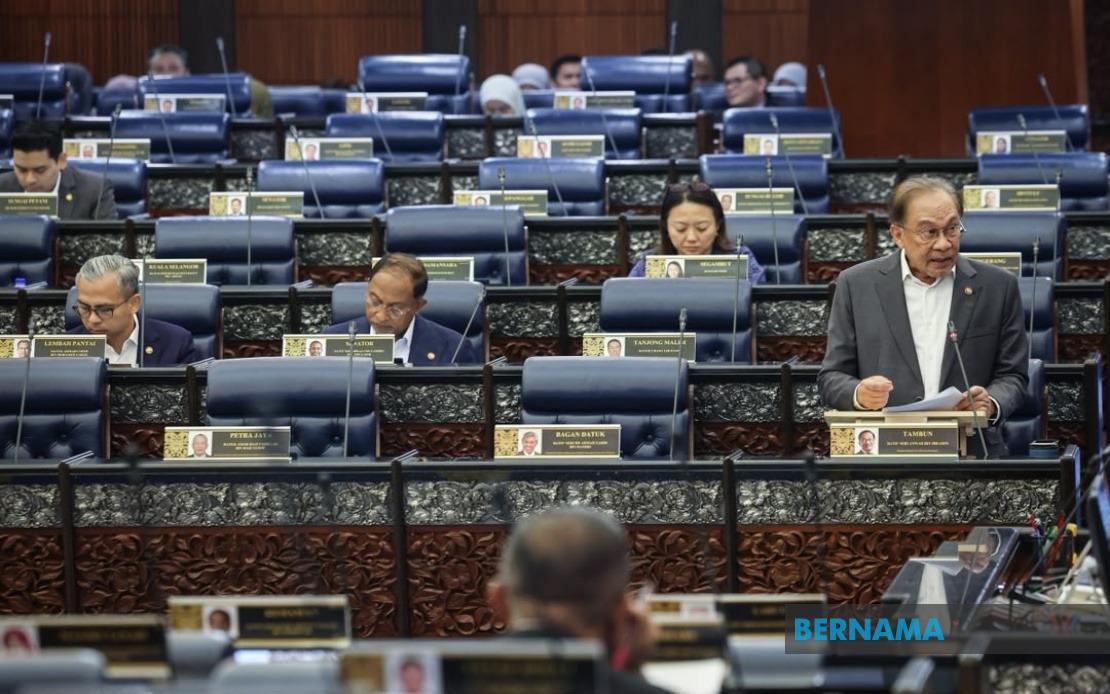
Prime Minister Datuk Seri Anwar Ibrahim has moved to counter criticism of Malaysia's fuel pricing, asserting that domestic petrol costs remain more competitive than those in leading oil-producing states such as Saudi Arabia and Qatar. Speaking in Parliament on July 14, Anwar highlighted the continuing stability of subsidised RON95 petrol under the BUDI MADANI initiative at RM1.99 per litre, positioning this rate as evidence of the government's resolve to preserve fuel affordability for Malaysian consumers despite international price volatility.
The Prime Minister's remarks were framed as a direct rebuttal to suggestions that Malaysia's fuel prices have become uncompetitive relative to other petroleum-exporting nations. Anwar provided specific comparisons, noting that Saudi Arabian petrol prices currently exceed RM2.40 per litre—a figure substantially higher than Malaysia's retail rate. This gap underscores a critical distinction: while Malaysia is a hydrocarbon-producing country, it maintains lower pump prices than some of the world's most established oil exporters, a circumstance that reflects deliberate policy rather than market anomaly.
Anwar's intervention came in response to a supplementary parliamentary question from Datuk Rosol Wahid (PN-Hulu Terengganu), who had sought clarification on fuel price differentials under the previous administration led by Datuk Seri Najib Razak. The opposition parliamentarian's query implicitly referenced campaign pledges Anwar had made while serving in opposition to reduce petrol costs, creating an opportunity for the government to demonstrate the consistency between electoral promises and current implementation.
The Prime Minister elaborated on the comparative pricing landscape, revealing that Qatar and the United Arab Emirates similarly charge higher rates than Malaysia. He specifically noted that the UAE, despite its status as a major oil producer, had increased fuel prices merely two months prior to his statement, a development that further validates Malaysia's approach of maintaining relatively stable, affordable pricing. This regional context provides Malaysian policymakers with substantial cover against domestic criticism regarding the viability of current subsidy arrangements.
Central to Anwar's argument is the BUDI MADANI subsidy programme, which functions as the mechanism through which Malaysia sustains its competitive pricing advantage. By capping RON95 petrol at RM1.99 per litre, the initiative deliberately absorbs the differential between global crude oil costs and domestic retail prices, thereby insulating Malaysian consumers from full exposure to international market volatility. This policy intervention represents a significant fiscal commitment, as the government effectively bears the cost of maintaining pump prices below what market forces alone would dictate.
The broader strategic rationale for maintaining fuel affordability connects to several interconnected policy objectives. Lower petrol prices support purchasing power across the broader economy, particularly benefiting lower-income households and transport-dependent sectors such as logistics and agriculture. By contrast, allowing fuel costs to rise toward levels seen in Saudi Arabia or Qatar would generate inflationary pressures that could cascade through supply chains and erode real wages. The government's commitment to the BUDI MADANI framework therefore represents not merely a consumer subsidy, but an instrument of macroeconomic stabilization.
Anwar's parliamentary statement also served to address perceptions of inconsistency or unfulfilled promises from his opposition period. When the opposition coalition had called for fuel prices to be reduced to RM1.50 per litre, international benchmarks told a markedly different story—Saudi Arabian petrol at that time traded at approximately 50 sen per litre. The dramatic shift in global energy markets since that period makes direct comparison problematic, yet Anwar's framing suggests that Malaysia has in fact exceeded those earlier ambitions by maintaining prices substantially below regional peers. This rhetorical maneuver reframes the policy debate from a question of absolute price reduction to one of relative competitiveness.
Malaysian policymakers must nonetheless navigate genuine tensions embedded within this strategy. Sustaining below-market fuel prices through subsidy programmes creates fiscal drag that constrains resources available for other governmental priorities. Additionally, prolonged price suppression can distort consumer behaviour and energy consumption patterns, potentially encouraging inefficient usage. Regional peers that have opted for deregulated or gradually liberalised pricing frameworks argue that transparent cost signals encourage conservation and facilitate investment in alternative energy sources. The sustainability of Malaysia's subsidy approach therefore remains contingent upon global crude oil dynamics and domestic fiscal capacity.
For Malaysian consumers and businesses, Anwar's parliamentary assurance carries immediate practical significance. The stability of fuel pricing at RM1.99 per litre provides visibility for transport operators, manufacturers, and ordinary commuters to plan expenditures with greater certainty. This predictability generates economic benefits that extend beyond simple price comparisons, affecting investment decisions and business viability across sectors dependent upon consistent energy costs. Small and medium enterprises, particularly those in logistics and rural services, derive particular advantage from this pricing stability.
The international context shapes Malaysia's positioning within ASEAN and broader regional energy discussions. As fuel-producing nations pursue different pricing philosophies, Malaysia's commitment to affordability through subsidisation reflects deliberate choices about social policy and economic distribution. Neighbouring Thailand, Indonesia, and Philippines have experienced periodic fuel subsidy debates, suggesting that Malaysia's approach resonates with broader Southeast Asian concerns about energy access and cost-of-living pressures. Anwar's parliamentary articulation of these priorities potentially influences regional policy conversations about petroleum pricing mechanisms.
Looking forward, the sustainability of current pricing depends upon stabilising global crude markets and maintaining domestic fiscal discipline. Should international oil prices resume their upward trajectory witnessed in previous years, the fiscal burden of maintaining the RM1.99 price point could escalate dramatically, forcing difficult policy recalibrations. Conversely, sustained lower global crude prices would ease the subsidy burden and improve budgetary flexibility. The government's ability to deliver on BUDI MADANI commitments therefore remains partially hostage to factors beyond Malaysian control, a vulnerability that underpins the importance of developing longer-term energy policy frameworks that balance affordability with fiscal sustainability.

