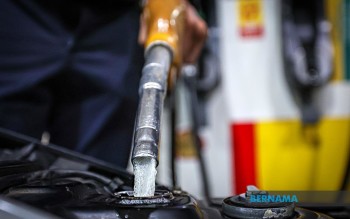
The Malaysian government is bracing for substantial subsidy commitments if global crude oil prices remain elevated, with projections showing that support for RON95 petrol and diesel could collectively cost the treasury RM3.5 billion monthly. Deputy Finance Minister Liew Chin Tong disclosed these figures during parliamentary proceedings in Kuala Lumpur this week, breaking down the anticipated burden into approximately RM2 billion monthly for RON95 subsidies and RM1.5 billion for diesel support, contingent on crude holding steady around US$90 per barrel based on current economic forecasts.
Despite the substantial subsidy obligations, Malaysia's fiscal position remains comparatively resilient, according to government assessments. Liew emphasised that the nation's overall budgetary health has not deteriorated significantly in light of climbing petroleum costs, and the government maintains confidence in its existing fiscal frameworks. This stability stems partly from a crucial offset: the Malaysian government generates substantial petroleum revenue as an oil-producing nation, which helps counterbalance the expenses incurred through fuel price support mechanisms. The deputy minister highlighted that every US$1 rise in crude prices translates to approximately RM300 million in additional government income, creating a natural hedge against escalating subsidy costs.
The timing of these subsidy projections carries particular significance for Malaysia's medium-term financial planning. Prime Minister Datuk Seri Anwar Ibrahim is scheduled to present the 2027 Budget in October, at which point the government intends to unveil revised fiscal projections that reflect the economic conditions prevailing at that moment. This planned announcement suggests that policymakers are adopting a flexible approach to budgetary forecasting, recognising that oil market volatility could substantially alter revenue and expenditure calculations before formal budget submissions occur. The quarterly reassessment of fiscal assumptions represents standard prudent governance, though the scale of potential subsidy exposure makes these October projections particularly consequential for Malaysia's medium-term economic trajectory.
For Malaysian consumers and businesses, these subsidy dynamics carry significant implications. The commitment to maintain fuel price supports at current levels insulates domestic consumers from the full impact of global crude volatility, a policy that has proven politically durable across multiple administrations. However, the fiscal costs of maintaining this insulation are becoming increasingly apparent as sustained higher oil prices extend subsidy obligations. The RM3.5 billion monthly figure represents a meaningful proportion of government spending capacity, competing for resources that might otherwise fund infrastructure, education, healthcare, or debt reduction initiatives.
Regional energy markets add further context to Malaysia's subsidy challenge. Across Southeast Asia, fuel pricing policies vary considerably, with some neighbours allowing more market-responsive pricing while others maintain subsidies comparable to Malaysia's approach. Thailand, Indonesia, and Vietnam have all grappled with similar subsidy pressures when crude prices surge, creating a regional pattern of fiscal pressure that extends beyond Malaysia alone. The coordination of regional responses to petroleum market shocks remains limited, however, leaving individual governments to manage subsidy burdens through their own fiscal mechanisms and policy choices.
The government has demonstrated willingness to explore targeted adjustments to subsidy programmes rather than wholesale elimination of price support mechanisms. During parliamentary questioning, Liew addressed proposals to expand the BUDI Diesel quota programme for Sabah and Sarawak, reflecting ongoing refinement of subsidy architecture. The government indicated preparedness to evaluate applications from specific constituencies that can demonstrate particular need, citing the recent expansion of diesel allocations for pickup truck operators through streamlined application procedures. This incremental approach suggests policymakers favour targeted interventions over blanket policy changes, potentially allowing the government to optimise subsidy distribution while managing overall fiscal exposure.
The expansion of support schemes like the BUDI Diesel quota illustrates the complexity of subsidy administration in a federal system with distinct regional economies. Sabah and Sarawak, where commercial agriculture and resource extraction depend heavily on diesel-powered vehicles and equipment, may face different subsidy pressures than peninsular states. The government's flexibility in considering expanded quotas for regions with demonstrable commercial reliance on subsidised fuel reflects recognition that subsidy policies produce differentiated economic effects across Malaysia's diverse geography. However, this targeted expansion simultaneously raises fiscal costs and creates administrative complexity in subsidy programme management.
The petroleum revenue windfall that partially offsets subsidy costs introduces its own analytical dimension. Malaysia's dual position as a fuel-subsidising government and a petroleum-revenue-earning nation creates a natural policy complexity that few countries navigate simultaneously. While higher crude prices increase subsidy obligations, they simultaneously boost government income from petroleum sales, creating internal fiscal compensation mechanisms unavailable to net energy-importing nations. This structural advantage provides Malaysia with more flexibility in subsidy policy than countries without significant oil production, though it also creates potential complacency about long-term fiscal sustainability if policymakers assume petroleum revenues will indefinitely offset subsidy expansion.
Looking forward, the sustainability of Malaysia's current subsidy framework depends substantially on assumptions regarding crude price trajectories beyond the medium term. The US$90-per-barrel baseline used in current projections represents a significant elevation from pre-pandemic norms, raising questions about whether this level represents a temporary spike or a more durable new floor for energy markets. Geopolitical tensions, supply disruptions, demand recovery in major economies, and energy transition dynamics all influence crude trajectories, creating genuine forecasting uncertainty for Malaysian budgetary planners. The government's decision to revise fiscal projections quarterly rather than adhering to static assumptions reflects appropriate acknowledgment of this uncertainty.
The October 2027 Budget presentation will therefore carry outsized importance for Malaysia's economic outlook, as it will formally incorporate revised fuel subsidy estimates and broader fiscal assumptions into the government's planning framework. The numbers currently circulating—RM2 billion for petrol subsidies and RM1.5 billion for diesel support—represent significant fiscal commitments that shape priorities across the entire budgetary spectrum. Whether these figures ultimately prove conservative, accurate, or optimistic will depend substantially on crude market developments between now and October, creating an extended period of fiscal uncertainty for planning purposes. Policymakers and citizens alike will closely monitor petroleum markets and await the government's updated projections before assessing Malaysia's true fiscal position and policy flexibility in coming years.

