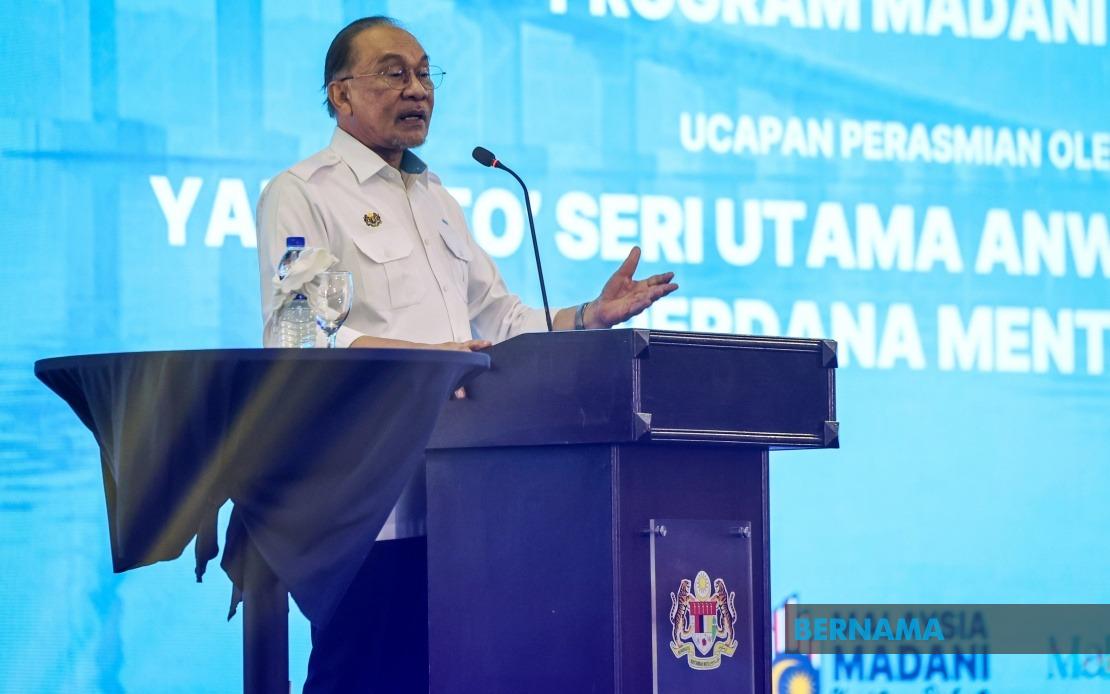
Prime Minister Datuk Seri Anwar Ibrahim has stressed that Malaysia possesses the foundational elements to establish itself as a leading international halal industry centre, but only if the country's internationally respected halal certification framework is underpinned by substantive manufacturing and service sector capabilities. Speaking at the opening of the Penang International Halal Expo (PIHEX) 2026 and the Penang Bumiputera Entrepreneurs Gathering (HUBPP) at Politeknik Seberang Perai in Permatang Pauh on July 25, Anwar outlined the conditions necessary for Malaysia to transform its certification expertise into sustained economic advantage across the Muslim world and beyond.
The Prime Minister's remarks reflect a strategic recognition that global perception of Malaysia's halal standards has created unprecedented diplomatic and commercial opportunities. Multiple world leaders have signalled their governments' intention to work with Malaysia in developing halal sectors within their own economies, seeking both the credibility of Malaysia's certification mark and knowledge transfer in production methodologies. This international appetite underscores the premium value attached to Malaysian halal endorsement in an increasingly conscious global consumer marketplace.
Among the notable figures who have expressed interest in deepening halal cooperation with Malaysia are Chinese President Xi Jinping, Brazilian President Luiz Inacio Lula da Silva, and South African President Matamela Cyril Ramaphosa. Each has independently conveyed to Anwar that their respective nations recognise Malaysia's demonstrated excellence in halal industry development and wish to establish frameworks for obtaining Malaysia's halal certification and international recognition. The breadth of this interest across three continents—Asia, South America, and Africa—illustrates the geographic reach of Malaysia's halal soft power and the diversity of markets seeking to tap into halal commerce.
The timing of Anwar's emphasis on matching certification credentials with industrial capacity reflects broader concerns within Malaysia's halal sector. While the country has successfully positioned itself as a standard-setter and certifier, stakeholders have long recognised that true competitive advantage requires a thriving ecosystem of manufacturers, processors, and service providers capable of meeting international specifications. Without this foundational strength, Malaysia risks becoming a mere gatekeeper rather than a comprehensive supplier to global halal markets.
Penang's selection as the venue for the 2026 halal expo demonstrates the state's growing importance in Malaysia's halal economy. The northern region has developed significant food processing and manufacturing clusters, and the expo represents an opportunity to showcase these capabilities to international buyers and partners. The accompanying Bumiputera entrepreneurs' gathering signals the government's commitment to ensuring that Malay and bumiputera business owners are active participants in halal industry growth, rather than passive beneficiaries.
The strategic partnership approach outlined by Anwar carries implications for Malaysia's broader foreign policy objectives. By positioning itself as a technology and certification provider to developing halal industries, Malaysia can strengthen diplomatic ties with Muslim-majority nations whilst simultaneously creating export opportunities for consulting services, training programmes, and equipment supplies. This model allows Malaysia to leverage its early-mover advantage in halal standardisation without requiring massive new capital investments in manufacturing capacity.
For Malaysian entrepreneurs and small-to-medium enterprises, Anwar's statement carries both opportunity and warning. The global demand for halal-certified products and services presents genuine expansion possibilities, but only for those enterprises capable of meeting rigorous standards. The Prime Minister's emphasis on industry capabilities suggests that government support will increasingly flow towards businesses demonstrating genuine competitiveness rather than those seeking protection or preferential treatment based on certification alone.
The halal industry's growing importance to Malaysia's economic strategy reflects both religious principle and commercial pragmatism. With an estimated 1.8 billion Muslims globally and rising middle-class consumption of halal-certified products among non-Muslim consumers seeking ethical production standards, the market opportunity extends well beyond religious considerations. Malaysia's early investment in halal standardisation has positioned the country to capture value across this expanding global sector.
International collaboration frameworks will prove critical to translating current interest into sustained commercial relationships. Establishing bilateral arrangements with China, Brazil, and South Africa for halal certification reciprocity, training exchange programmes, and joint ventures in third countries could generate long-term revenue streams. Such arrangements would also strengthen Malaysia's diplomatic influence within these important economies.
For Southeast Asian neighbours, Malaysia's halal leadership creates both competitive challenges and partnership opportunities. Countries like Indonesia and Brunei also possess halal credentials, yet Malaysia's certification system has achieved particular international recognition. Regional cooperation on halal standards rather than competition could amplify Southeast Asia's collective influence in global markets, though questions of market share and leadership will inevitably complicate such arrangements.
The success of Malaysia's halal ambitions ultimately hinges on execution at the enterprise level. Anwar's call for matched industry capabilities signals that policy support alone will not suffice. Companies must invest in quality infrastructure, skilled workforce development, and research capabilities to compete effectively internationally. Government backing should facilitate these investments through strategic subsidies, loan guarantees, and technological support rather than blanket protection.
Looking ahead, Malaysia's halal sector presents a distinctive development pathway that harnesses the country's Islamic heritage, geographic positioning, and existing manufacturing expertise into a globally competitive industry. By maintaining rigorous standards whilst supporting domestic enterprise capacity-building and nurturing international partnerships, Malaysia can transition from certification provider to integrated halal industry leader. The next phase requires translating diplomatic interest from world leaders into concrete commercial frameworks that benefit Malaysian businesses and workers.

