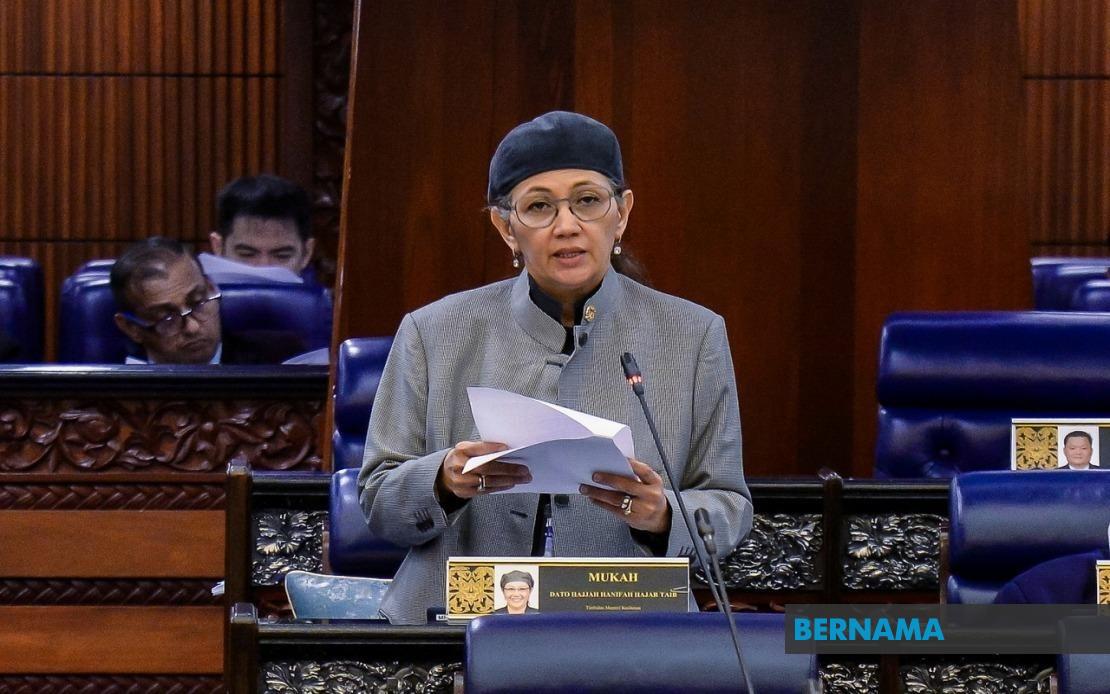
The Ministry of Health has unveiled an ambitious plan to inject 560 permanent medical officers into Sabah's healthcare system beginning in October 2026, addressing one of the nation's most pressing regional health inequities. Deputy Health Minister Datuk Hanifah Hajar Taib disclosed the initiative during parliamentary proceedings, framing it as essential action to resolve workforce deficiencies that have long hampered service delivery across Malaysia's easternmost state.
Sabah's medical workforce crisis runs deeper than headline figures initially suggest. The state currently maintains 2,803 established medical officer positions, yet structural gaps undermine operational capacity. Of these posts, only 1,863 are actively staffed—representing a concerning 66.5 per cent occupancy rate. A further 366 officers (13.1 per cent) are absent on study leave, whilst 570 positions (20.3 per cent) remain entirely vacant. To mitigate these shortfalls, the Ministry has deployed 680 contract doctors throughout Sabah, effectively creating a two-tiered workforce model that raises sustainability questions about long-term service quality and staff continuity.
The recruitment strategy reflects sobering institutional lessons. In the first acceleration phase, the Ministry offered permanent positions to 328 medical officers nationwide in June 2026, with 39 allocated to Sabah. Yet only 20 accepted their assignments; 19 rejected offers outright. This 51 per cent acceptance rate—considerably below administrative projections—prompted downward revision of expectations. Hanifah Hajar candidly acknowledged that despite offering 560 Sabah placements in the second phase, historical reporting patterns suggest merely 280 officers will ultimately report for duty. Even this modestly optimistic projection falls short of Sabah's documented shortfall of 256 medical officers, indicating that current interventions, whilst significant, remain insufficient to fully close the gap.
Sabah's underperformance against national benchmarks reflects broader regional disparities that complicate healthcare equity. According to 2024 Health Indicators data, eight Malaysian states—including Sabah—trail the national average doctor-to-population ratio. This geographic maldistribution concentrates medical expertise in developed urban centres, leaving peripheral regions dependent on contract arrangements that typically carry higher turnover and reduced continuity of care. Yet the narrative is not entirely bleak. Sabah demonstrated a 25.1 per cent improvement in its doctor-to-population ratio between 2020 and 2023, suggesting that targeted intervention does produce measurable gains within realistic timeframes.
The nationwide recruitment architecture underpinning Sabah's initiative reveals ambition at the federal level. Across Malaysia, the Ministry is mobilising to fill 4,500 permanent medical officer positions through two coordinated phases. This represents substantial structural investment in human resources, though the challenge of translating offers into actual deployments remains formidable. The first phase's 328 placements have already exposed acceptance vulnerabilities; the second phase will test whether systemic reforms can improve uptake significantly beyond the current 50 per cent range.
To incentivise deployment to underserved regions, the Ministry introduced regulatory mechanisms within its e-Placement system launched in 2025. Contract officers transitioning to permanent status must now designate at least one placement preference for either Sabah, Sarawak, or Labuan—territories historically disadvantaged in competitive recruitment environments. This mandatory geographic consideration represents pragmatic recognition that market forces alone will not distribute medical talent equitably across Malaysia's diverse geography.
The placement quota framework further illustrates federal commitment to regional rebalancing. Sarawak receives 650 permanent positions and Sabah 310 through the e-Placement system, collectively absorbing 42.7 per cent of the nationwide placement quota of 2,248. This proportional weighting reflects acknowledgement that East Malaysia's healthcare systems require substantial infusions of qualified personnel to approach peninsular standards. Yet the quota's adequacy hinges on whether the Ministry can sustain recruitment pipelines and, critically, convince appointed officers to actually assume posted positions rather than seeking reassignments or declining offers.
The underlying economic and career dynamics driving officer rejection demand examination. Young medical professionals often prioritise urban postings for personal advancement, spousal employment opportunities, and educational access for their children. Sabah, though economically developing, cannot compete with Kuala Lumpur's professional ecosystem or established healthcare institution networks. Contract arrangements—whilst providing financial flexibility—also insulate officers from permanence commitments, enabling mobility when better options emerge. The Ministry's structural constraints thus extend beyond recruitment budgets into the realm of lifestyle calculations that individual doctors make when confronted with regional postings.
Historical institutional memory clearly influenced Hanifah Hajar's conservative projections. By publicly acknowledging that approximately 50 per cent of offered positions will be rejected or unfilled, the Ministry established realistic baseline expectations and reduced likelihood of parliamentary disappointment when actual reporting figures emerge. This transparent calibration of expectations, whilst intellectually honest, simultaneously highlights systemic dysfunction: the gap between positions offered and positions actually filled represents substantial administrative inefficiency and wasted recruitment resources.
Sabah's specific challenges merit contextualisation within Southeast Asian health workforce patterns. Across the region, rural and peripheral areas consistently struggle to attract and retain qualified medical personnel. Regional competition for healthcare professionals intensifies as Singapore, Thailand, and Indonesia pursue similar recruitment strategies. Malaysian state governments in East Malaysia therefore face not only internal labour market pressures but also regional brain drain dynamics that siphon talent across borders.
Looking forward, the Ministry's success will be measured not merely by job offers extended but by officers who remain in position beyond initial contract terms. Retention emerges as the more intractable challenge than recruitment. Supporting infrastructure—continuing professional development, specialist facilities, accommodation, and social amenities—must accompany physician deployment if Sabah is to build sustainable medical workforce depth rather than cycling through temporary assignments.
The initiative represents tangible federal response to persistent regional healthcare inequities that have constrained Sabah's development and contributed to health outcomes disparities. Yet the modest expected net gain of approximately 280 physicians, against a documented 256-officer shortfall, leaves minimal margin for institutional error or unexpected rejections. The Ministry's strategy demonstrates earnest engagement with regional needs whilst simultaneously exposing structural limitations that policy mechanisms alone cannot fully resolve without addressing underlying career incentives and lifestyle considerations that shape individual physician deployment choices.

