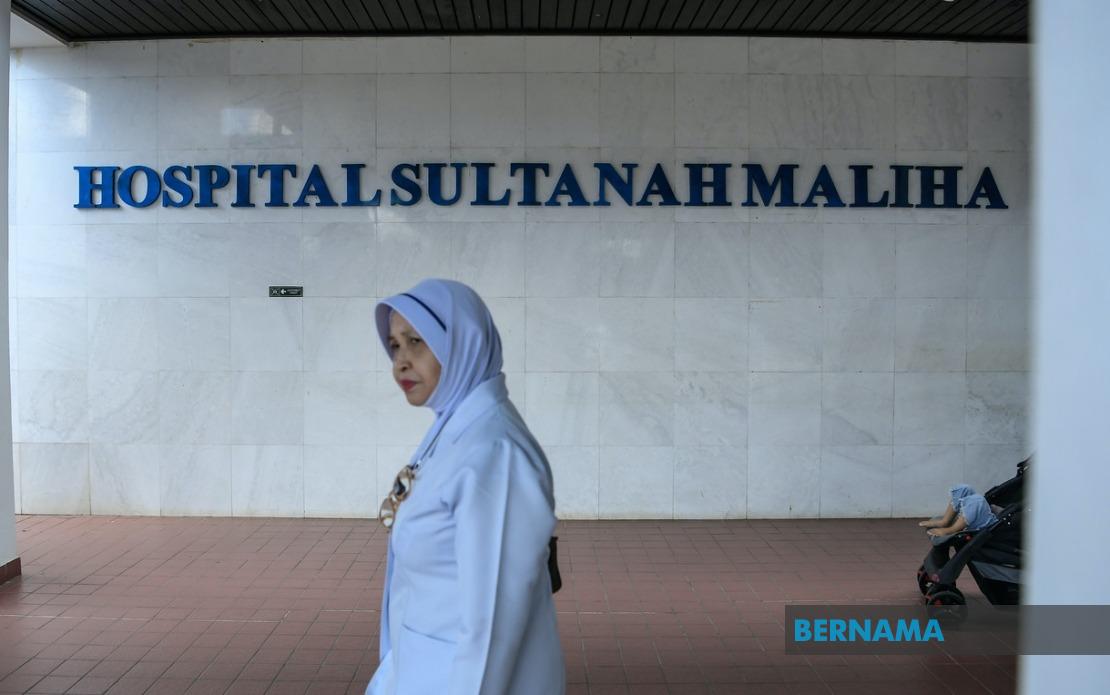
The Ministry of Health has substantially strengthened its emergency medical infrastructure on Pulau Tuba with the deployment of a RM1.45 million sea ambulance and a newly established Emergency Birthing Unit, addressing critical gaps in healthcare access for the island's population of over 5,000 residents. The announcement came during a visit by Health Minister Datuk Seri Dr Dzulkefly Ahmad to Klinik Kesihatan Pulau Tuba in Langkawi, underscoring the government's commitment to extending comprehensive health services to remote communities across Malaysia.
The 48-foot sea ambulance commenced operations on May 20, representing a significant technological advancement for island-based emergency response. Engineered specifically for the demands of patient transportation in maritime conditions, the vessel incorporates contemporary medical equipment and emergency care capabilities that previously necessitated lengthy transfers to mainland facilities. The project's accelerated completion—delivered 18 weeks ahead of schedule—reflects efficient execution by the health ministry's procurement and construction teams, demonstrating improved administrative coordination in delivering critical public health infrastructure.
Data provided by the MOH illustrates the operational necessity for such a service, with an average of seven to ten emergency referrals requiring sea transport to Langkawi's health facilities occurring monthly. These figures underscore a consistent demand for rapid maritime medical intervention that the new ambulance is positioned to address. The vessel's introduction has enabled substantially faster, more secure, and operationally efficient patient transfers compared to previous arrangements, which often relied on ad-hoc maritime coordination or costly helicopter deployments during emergencies.
Beyond emergency transport capacity, the sea ambulance strengthens the entire island's emergency response ecosystem. The availability of dedicated marine medical evacuation infrastructure reduces response times and eliminates delays caused by weather-dependent scheduling or vessel unavailability. For residents living on Pulau Tuba, this accessibility improvement represents a tangible enhancement to personal security in health crises, particularly for those experiencing acute cardiac events, severe trauma, or other time-critical medical emergencies where minutes significantly influence survival outcomes.
Complementing maritime emergency transport, the Ministry of Health has rebranded and upgraded the Alternative Birthing Centre as an Emergency Birthing Unit, supported by RM50,000 in facility enhancements and medical equipment. This transition reflects a strategic repositioning of the facility's role within maternal healthcare delivery on the island. The EBU functions as the primary intervention point for pregnant women confronting obstetric emergencies, particularly circumstances where hospital transfer proves logistically unfeasible due to inclement weather conditions or turbulent seas that render maritime transport inadvisable.
Maternal health outcomes on remote islands present distinct clinical challenges, with pregnancy complications requiring specialized hospital interventions becoming genuinely hazardous when transportation barriers emerge unexpectedly. The EBU addresses this vulnerability by providing immediate clinical assessment, stabilization protocols, and early intervention capability at the community level. Since its operational commencement, the facility has processed an average of six maternal referral cases annually, demonstrating consistent utilization of the facility's risk-stratification and referral coordination functions.
Notably, the EBU has recorded no emergency deliveries on the island since becoming operational, a clinical indicator that the MOH attributes to rigorous antenatal screening, systematic risk identification, and expedited referral protocols implemented by the island's health team. This outcome reflects not facility underutilization but rather successful preventative medicine—pregnant women identified as moderate-to-high-risk are transferred to tertiary obstetric facilities before labour onset, eliminating circumstances forcing emergency delivery in sub-optimal settings. The achievement represents professional clinical management coordinating risk prediction with timely patient movement.
These complementary infrastructure developments address interconnected healthcare vulnerabilities affecting island communities throughout Malaysia. Pulau Tuba's situation exemplifies challenges confronting residents of remote territories where geographic isolation traditionally creates preventable mortality risks. The dual initiative—maritime emergency transport and localized obstetric intervention capacity—creates a graduated response system appropriate to island conditions, where some emergencies require rapid mainland hospital transfer while others benefit from initial stabilization and risk assessment before transportation decisions occur.
The timing of these deployments reflects broader Malaysian health policy emphasizing equity in healthcare access across diverse geographic contexts. Remote island populations, often representing vulnerable demographic groups with constrained economic resources, have historically experienced disproportionate barriers to emergency medical services compared to urban populations. By investing in specialized maritime infrastructure and community-level clinical capacity, the MOH demonstrates commitment to reducing geographic disparities in health outcomes—a priority increasingly prominent in regional health policy discussions throughout Southeast Asia.
For Malaysian healthcare administration, the Pulau Tuba initiative provides practical evidence regarding infrastructure priorities for archipelagic nation health systems. The necessity of dedicated maritime medical transport and community-based obstetric emergency management applies across Malaysia's extensive island territories, suggesting potential for broader replication of this integrated model. The accelerated project timeline additionally offers administrative lessons regarding procurement efficiency and infrastructure delivery that might inform future health facility expansion beyond island communities.
The Emergency Birthing Unit's functionality particularly addresses Southeast Asian maternal health priorities. Across the region, geographic barriers continue contributing to preventable pregnancy-related mortality, particularly in archipelagic nations where scattered island populations struggle accessing specialized obstetric services. Malaysia's approach—combining community-level risk management with rapid transport capacity—represents a transferable model potentially applicable to similar demographic contexts throughout Indonesia, the Philippines, and other regional nations with substantial island populations.
Moving forward, operational performance monitoring will determine whether these facilities require expansion or adaptation. Data on response times, patient outcomes, and utilization patterns will guide future investment decisions regarding additional maritime ambulances or equipment enhancements. The Ministry's commitment to evidence-based infrastructure planning suggests ongoing assessment of whether current capacity suffices for Pulau Tuba's population or whether demographic growth or changing epidemiological patterns necessitate resource augmentation.
The Pulau Tuba project ultimately illustrates healthcare infrastructure as fundamental governance responsibility, particularly for vulnerable populations in geographically challenging environments. Residents of remote islands possess equivalent rights to emergency medical services as urban citizens, yet achieving this equality requires deliberately designed, appropriately resourced systems acknowledging unique operational constraints. By deploying maritime ambulance transport and specialized community health facilities, Malaysia's health ministry addresses concrete healthcare inequities affecting island communities, substantiating public commitment to equitable health service distribution across the nation's diverse geography.

