Malaysia's Ministry of Higher Education (KPT) is moving swiftly to implement Prime Minister Datuk Seri Anwar Ibrahim's recent instruction regarding the handling of student disciplinary matters, signalling a significant shift in how universities manage cases involving political expression and government criticism. The directive represents a tangible step towards fulfilling the government's commitment to reform university governance structures, particularly following the announcement of plans to repeal the Universities and University Colleges Act (AUKU) 1971, a legislation long criticised for restricting campus freedoms.
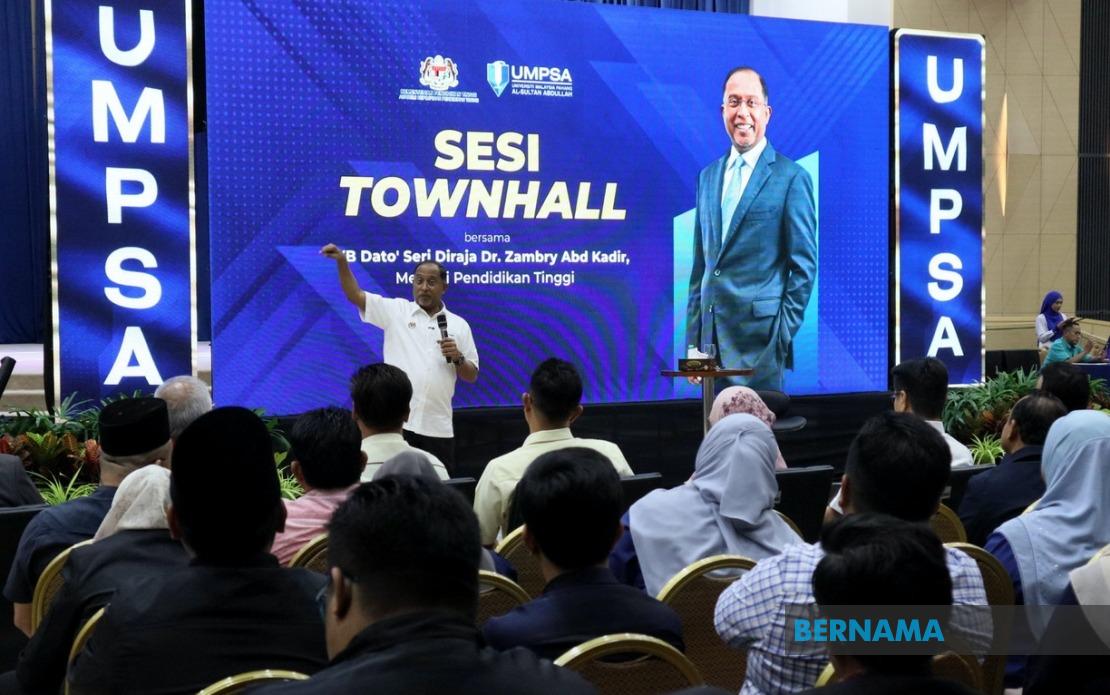
Minister Datuk Seri Dr. Zambry Abd Kadir outlined the scope of the follow-up measures during a visit to Universiti Malaysia Pahang Al-Sultan Abdullah (UMPSA) in Pekan. The minister emphasised that the implementation involves careful consideration of legislative requirements and existing university regulations, particularly those addressing student rights and academic freedom. This measured approach reflects the complexity of institutional reform, balancing administrative requirements with the broader agenda of enhancing democratic values in higher education spaces.
The coordination process has already commenced at the administrative level, with Zambry indicating that vice-chancellors across Malaysia's public universities have engaged directly with the director-general of Higher Education to discuss implementation frameworks. The minister confirmed that a formal statement outlining the specific measures would be released subsequently, suggesting a systematic and transparent rollout rather than ad-hoc adjustments. This procedural rigour underscores the government's intention to establish coherent standards across the university sector.
Prime Minister Anwar Ibrahim's directive specifically addresses the situation of students who faced disciplinary action solely for criticising government policies or leadership. Speaking at the Malaysia Madani Intellectual Forum Series 13, Anwar indicated that all such students should be immediately cleared of related disciplinary offences, reflecting his administration's stated commitment to fostering greater political pluralism within educational institutions. This intervention represents a notable departure from historical patterns where campus dissent was frequently suppressed through institutional mechanisms.
Crucially, the Prime Minister clarified that the absolution of students from disciplinary charges would not extend to cases involving criminal law violations. This delineation is significant, as it preserves law enforcement authority for genuinely unlawful conduct whilst removing purely administrative barriers to political expression. The distinction suggests a deliberate effort to distinguish between legitimate campus speech and behaviour that violates broader societal laws, a nuance that may help Malaysian universities navigate the transition to greater openness without apparent abandonment of basic institutional order.
The timing of these measures reflects an interim approach while more comprehensive legislative reform proceeds. The AUKU repeal, which would fundamentally restructure campus governance frameworks, is expected to require extended parliamentary consideration and implementation timeframes. Rather than awaiting these formal amendments, the government has chosen to pursue immediate administrative remedies within existing institutional structures, demonstrating urgency in addressing what Anwar's administration views as a pressing democratic issue.
However, the application of these new guidelines remains uncertain for Malaysia's extensive private higher education sector. Zambry acknowledged that private universities operate under distinct legal frameworks, particularly the Private Higher Educational Institutions Act 1996, which creates different regulatory terrain. While the minister expressed hope that private institutions, especially state-owned or state-linked educational providers, would voluntarily adopt equivalent measures, the absence of binding directive authority creates potential for inconsistency across Malaysia's diverse university landscape.
The broader context for this initiative extends beyond individual student cases. The concentration of young academics and administrators gathered at the UMPSA event—500 personnel aged 40 and below from Pahang, Terengganu and Kelantan institutions—reflects the government's strategic focus on cultivating leadership cohorts sympathetic to its modernisation agenda. The Kembara KARISMA Pemimpin Muda MADANI programme targets emerging institutional leaders, suggesting deliberate efforts to embed reform momentum at lower administrative levels where policy implementation ultimately occurs.
For Malaysian students and academics, the directive signals potential expansion of intellectual space within campuses that have historically operated under considerable speech restrictions. Universities represent crucial sites for democratic development and civil society formation, and greater campus openness aligns with international norms and best practices in higher education. The initiative may encourage institutional cultures more conducive to critical thinking and genuine intellectual exchange, qualities often compromised by environments where political caution predominates.
The implementation of Anwar's directive also carries implications for Malaysia's positioning in regional higher education discourse. Neighbouring Southeast Asian nations vary considerably in campus freedoms, and Malaysia's movement towards greater openness may influence regional conversations about university autonomy and student rights. As countries across Southeast Asia grapple with tensions between institutional control and intellectual freedom, Malaysian developments could provide instructive models of managed liberalisation.
Administrative coordination challenges inevitably accompany such systemic changes. Universities must identify affected cases, notify relevant students, process administrative reversals, and potentially adjust institutional records. The involvement of vice-chancellors and the director-general suggests awareness of these logistical complexities and commitment to systematic implementation rather than fragmented responses. The promised formal statement will likely provide clarifying guidance to institutional actors navigating these adjustments.
Longer-term questions persist regarding the sustainability and depth of these reforms. Removing disciplinary consequences for political expression addresses symptoms but not underlying governance structures that enabled restrictive practices historically. The AUKU repeal, when eventually enacted, will determine whether these interim measures represent genuine philosophical reorientation or tactical accommodation of short-term political pressures. For now, the government's swift implementation of Anwar's directive demonstrates commitment to immediate relief for affected students whilst broader institutional transformation proceeds through the legislative process.

