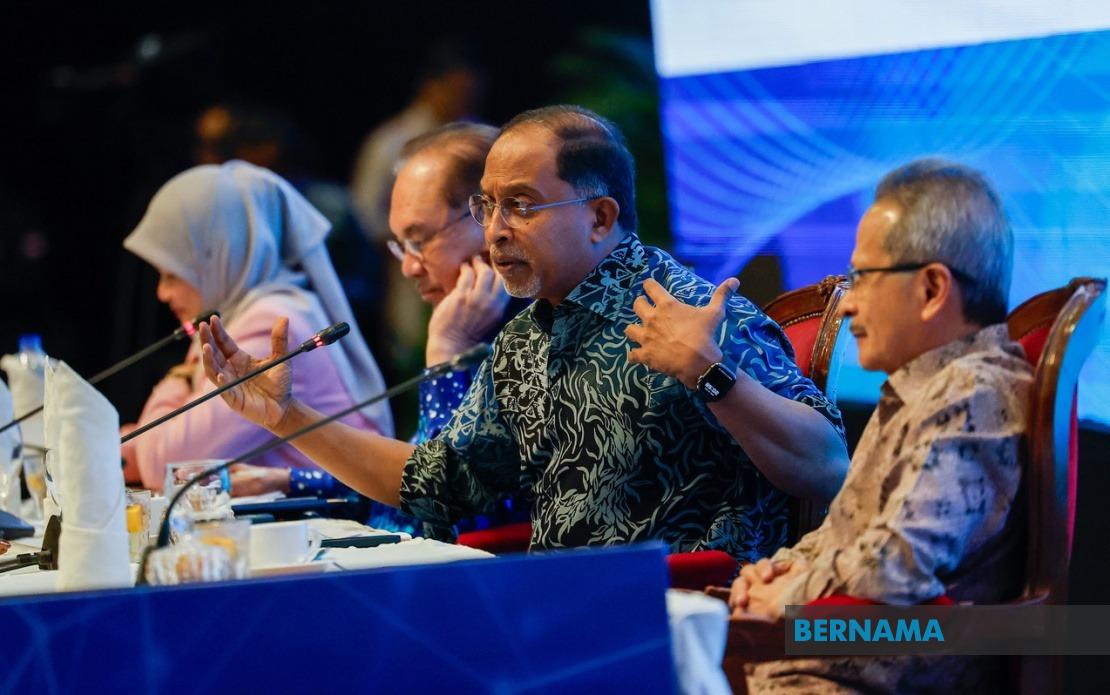
The framework governing Malaysia's university system requires fundamental modernization to reflect contemporary educational demands and global standards, according to Higher Education Minister Datuk Seri Dr Zambry Abd Kadir. Speaking at the MADANI Malaysian Scholars Forum Series 13 held at University of Malaya's Dewan Tunku Chancellor, Zambry highlighted that the existing legal architecture for higher education has become restrictive and ill-suited to present-day challenges. The Universities and University Colleges Act 1971 (AUKU), which has remained largely unchanged for over five decades, stands at the centre of this reform discussion, with policymakers increasingly convinced that its provisions constrain institutional flexibility and innovation.
The Minister emphasized that outdated legislative constraints have accumulated over decades, limiting the sector's ability to respond to evolving societal needs and international competition. By maintaining regulatory frameworks designed for a vastly different era, Malaysia risks falling behind peer nations that have modernized their higher education governance. Zambry indicated that the government recognizes these historical limitations and is actively pursuing structural reforms to liberate institutions from unnecessary bureaucratic impediments. The comprehensive review process represents an acknowledgment that incremental adjustments to AUKU will prove insufficient; instead, wholesale reconsideration of how universities operate within the Malaysian legal system has become necessary.
Among the critical areas demanding attention during this legislative refresh is the expansion of academic freedoms and student empowerment within universities. Zambry noted that protections for intellectual inquiry and free expression have been constrained by existing regulations, creating an environment where scholarly debate and creative thought may be unnecessarily restricted. These limitations extend to student activism and voice, where current legal provisions can be interpreted restrictively. The Minister's emphasis on these particular concerns reflects broader international discourse on university autonomy, where the capacity for unfettered academic discussion increasingly determines an institution's standing in global rankings and research competitiveness. By addressing these dimensions during the review process, Malaysia can position its universities as intellectual hubs that attract both domestic talent and international scholars seeking environments conducive to rigorous inquiry.
To operationalize this reform ambition, the Ministry of Higher Education has established an Independent Committee tasked with gathering comprehensive input from across the academic ecosystem. This committee is systematizing memorandums and perspectives submitted by university academics, institutional administrators, and student representatives, creating a democratic foundation for legislative change. Rather than imposing top-down solutions, the consultation-driven approach recognizes that those working within universities daily possess invaluable insights into how current regulations constrain institutional functioning. By aggregating these viewpoints, the committee aims to produce reform recommendations grounded in practical experience rather than theoretical assumptions. This inclusive methodology also builds stakeholder investment in the eventual legislative outcomes, potentially smoothing the passage of new provisions through Parliament.
Beyond AUKU itself, the Ministry is considering an even more ambitious structural initiative: consolidating Malaysia's fragmented higher education legislation into a unified One Higher Education Act. This proposed legislation would coordinate multiple existing acts regulating various aspects of university operation under a coherent, comprehensive legal framework. Such consolidation would eliminate gaps and inconsistencies that currently plague the sector, where universities navigate overlapping regulatory authorities and contradictory provisions. A single overarching act could streamline compliance procedures, clarify institutional responsibilities, and establish clearer protocols for governance and accountability. For Malaysian universities competing internationally, operating under a streamlined, modern legal framework comparable to those governing peer institutions in developed nations would represent a significant competitive advantage.
The reform initiative gained prominence during a forum attended by Prime Minister Datuk Seri Anwar Ibrahim, who moderated discussion among multiple government officials and education experts. Education Minister Datuk Seri Fadhlina Sidek participated as a panelist alongside Tengku Datuk Mohd Azzman Shariffadeen, president of the Academy of Sciences Malaysia, indicating the cross-ministerial coordination underlying education policy development. This high-level engagement signals that university reform enjoys cabinet-level support and reflects broader government priorities regarding the knowledge economy. When senior political leadership dedicates time to education governance discussions, it typically precedes substantive policy movements, suggesting that legislative action may emerge within the coming parliamentary sessions.
Complementing discussions of university-level reform, Education Minister Fadhlina articulated an alternative but related vision for Malaysia's entire education ecosystem centred on what she termed a 'humane education' philosophy. Rather than treating schooling primarily as a mechanism for producing examination scores or workforce-ready graduates, this approach emphasizes developing well-rounded individuals possessed of resilience, moral grounding, and emotional intelligence. Fadhlina rejected reductive metrics that reduce students to test scores, emphasizing instead that children arrive at schools with multifaceted needs encompassing intellectual development, emotional regulation, and moral formation. This philosophical repositioning aligns with contemporary educational research demonstrating that excessive examination pressure undermines long-term learning outcomes and mental wellbeing.
The Ministry of Education has operationalized humane education principles through various programmatic innovations designed to ensure equitable access across Malaysia's socioeconomically and geographically diverse population. Schools in Hospital serve children unable to attend conventional schools due to medical conditions, while dedicated schools operate within rehabilitation facilities. Specialized K9 and K11 school models cater specifically to Orang Asli students, recognizing that indigenous communities require culturally sensitive pedagogical approaches distinct from mainstream curricula. These initiatives reflect recognition that formal education access remains unequally distributed across Malaysia, with disadvantaged communities historically excluded from quality schooling. By actively expanding access through multiple institutional models, the Ministry acknowledges that educational equity requires differentiated approaches rather than one-size-fits-all solutions.
Pre-school expansion has also accelerated under the humane education framework, with the government eliminating fees for early childhood programs to reduce financial barriers facing low-income families. Early childhood education receives particular emphasis because research consistently demonstrates that learning foundations established in preschool years profoundly influence later academic trajectories. By removing cost barriers, the government aims to democratize access to high-quality early learning experiences that previously remained available primarily to affluent families. This policy shift recognizes that educational inequality begins early; without intervention at the pre-school stage, initial disparities calcify into insurmountable achievement gaps by primary school entry. For Malaysian families facing economic hardship, free pre-school represents both immediate financial relief and long-term investment in children's educational prospects.
The philosophical reorientation toward humane education reflects international trends emphasizing that twenty-first-century societies require graduates possessing adaptability, creativity, and interpersonal capabilities alongside traditional academic knowledge. As automation increasingly displaces workers in routine cognitive tasks, educational systems must pivot toward developing uniquely human capabilities that machines cannot replicate. Malaysian policymakers, through both higher education and pre-tertiary education reforms, appear attuned to these shifts, recognizing that maintaining competitive advantage requires fundamentally reconceiving what education should accomplish. Neither universities constrained by restrictive legislation nor schools obsessed with examination performance can adequately prepare citizens for rapidly evolving labour markets and complex social challenges.
Collectively, these reform initiatives spanning from AUKU modernization through pre-school expansion represent coherent governmental strategy toward reconstructing Malaysia's entire education architecture. Rather than isolated policy tweaks, the various initiatives address systemic constraints at multiple levels, from legislative frameworks governing university autonomy through equity considerations affecting early childhood access. This comprehensive approach acknowledges that sustainable educational excellence requires simultaneous attention to governance structures, pedagogical philosophy, and access equity. For Malaysian stakeholders observing these developments, whether academics, administrators, students, or parents, the trajectory suggests significant transformation ahead. Implementation of these reforms will determine whether Malaysia successfully positions itself as a regional education hub attracting talent and investment, or whether outdated structures continue constraining institutional innovation and limiting social mobility.

