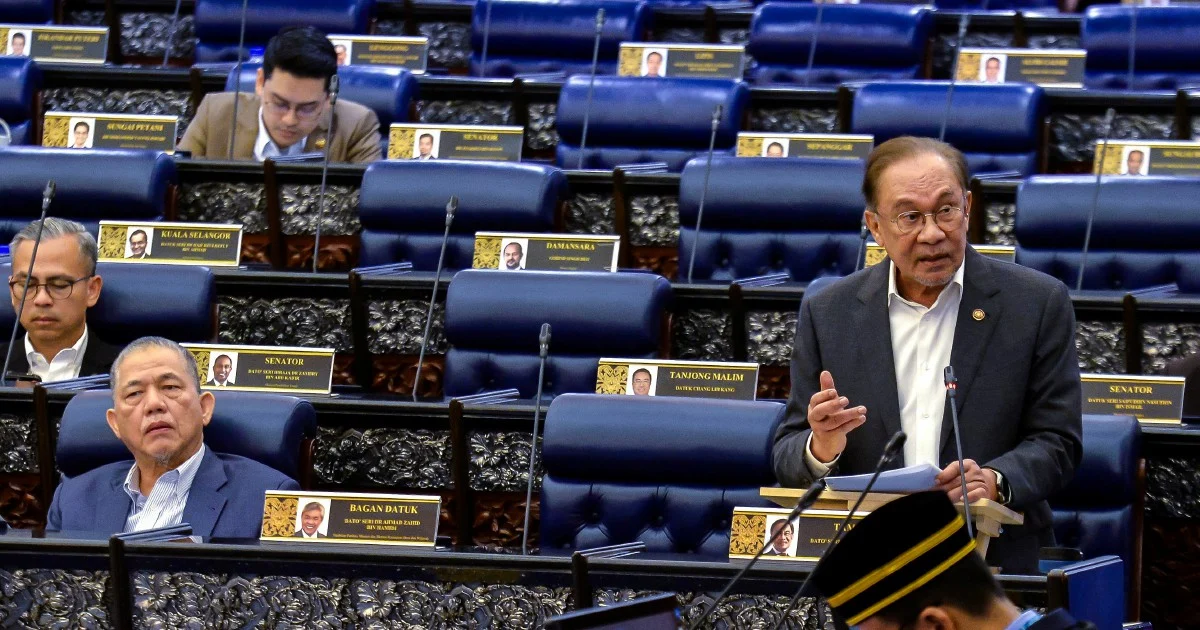
Malaysia's household sector is carrying a debt burden of RM1.73 trillion as of the end of March 2026, according to Prime Minister Datuk Seri Anwar Ibrahim, with this substantial sum equivalent to 84.4 per cent of the nation's gross domestic product. This figure captures the scale of leverage within domestic households and provides a snapshot of the financial obligations that ordinary Malaysian families have assumed across mortgages, personal loans, credit cards, and consumer financing.
The ratio of household debt to GDP serves as a key metric for assessing whether consumers are accumulating liabilities at a sustainable pace relative to their earning capacity and the broader economy's growth trajectory. An 84.4 per cent ratio indicates that total household liabilities nearly match the economic output the nation generates annually—a significant concentration of financial risk within the residential sector. For comparison, many developed economies see household debt-to-GDP ratios ranging between 60 and 80 per cent, suggesting Malaysia's household leverage sits at a moderately elevated level internationally.
The composition of Malaysia's household debt tells an important story about where families have directed their borrowing. Mortgage debt typically dominates the landscape, reflecting the prevalence of home ownership aspirations and property-driven savings patterns across the nation. However, the expansion of personal loans and hire-purchase agreements for vehicles—particularly among younger wage earners—has contributed meaningfully to the overall increase. The growth in unsecured lending represents a structural shift in how Malaysians finance consumption, moving beyond traditional housing finance toward broader lifestyle and necessity-driven borrowing.
Several economic headwinds have conspired to elevate household debt levels in recent years. Inflation has eroded real purchasing power, compelling families to borrow more simply to maintain their standard of living as prices for essentials like food, fuel, and utilities have climbed. Simultaneously, wage growth has lagged behind price increases in many sectors, creating a gap between income gains and cost-of-living expansion. This mismatch forces households into greater reliance on credit facilities to bridge the difference between what they earn and what they must spend.
The property market's sustained strength has also played a role in amplifying household indebtedness. Despite periodic slowdowns, property prices in urban centers across Kuala Lumpur, Selangor, Penang, and Johor Bahru have generally trended upward over the past decade. First-time buyers seeking to secure homes before further price appreciation have accepted larger mortgage commitments, while upgraders have taken on debt ratios that would have seemed excessive in previous generations. The cultural premium placed on property ownership as a wealth-building and investment vehicle has reinforced this borrowing pattern.
Financial resilience among Malaysian households remains mixed. High-income earners with stable employment have generally managed their debt loads competently, leveraging borrowing to build assets while maintaining manageable debt-service ratios. However, lower and middle-income households—particularly gig workers, those in precarious employment, and small-business operators—face sharper vulnerability. Economic disruptions, unexpected medical expenses, or job loss can quickly transform manageable debt into unmanageable burdens. The pandemic experience from 2020 onwards exposed these fragilities, with many households struggling to service debt when income streams dried up.
The Bank Negara Malaysia has maintained close surveillance over household credit quality and debt sustainability. Regulatory frameworks require banks to assess borrowers' capacity to repay and to maintain adequate provisions against rising non-performing loans. However, the central bank and policymakers face a delicate balancing act: tightening credit standards too aggressively risks slowing economic growth and employment, while loose lending practices could precipitate a financial stability crisis if many households simultaneously encounter distress. The continued emphasis on responsible lending guidelines reflects this tension.
Looking forward, the trajectory of household debt will depend heavily on wage growth dynamics and inflation outcomes over coming years. If nominal wages rise faster than the cost of living, households will gain breathing room and potentially reduce debt-to-income ratios organically. Conversely, if inflation remains sticky while wage growth disappoints, pressure on household finances will intensify, and debt ratios could continue climbing. The outcome carries implications not only for individual family welfare but for retail consumption, which underpins a substantial portion of Malaysian economic activity.
Policymakers have begun emphasizing financial literacy initiatives and credit counseling services to help households navigate their borrowing more strategically. Educational campaigns targeting young people entering the workforce aim to instill discipline around credit usage and savings discipline. Additionally, various government assistance programs and targeted loan moratorium schemes have been deployed periodically to support households facing genuine hardship, though debates persist regarding their design and effectiveness.
The elevated household debt figures underscore a broader challenge confronting Malaysia as it develops: ensuring that rising living standards and improved access to credit translate into genuine wealth accumulation and economic mobility rather than becoming a trap of perpetual servicing obligations. The sustainability of household debt will remain a central concern for central bankers, policymakers, and families alike as Malaysia navigates its economic path forward.

