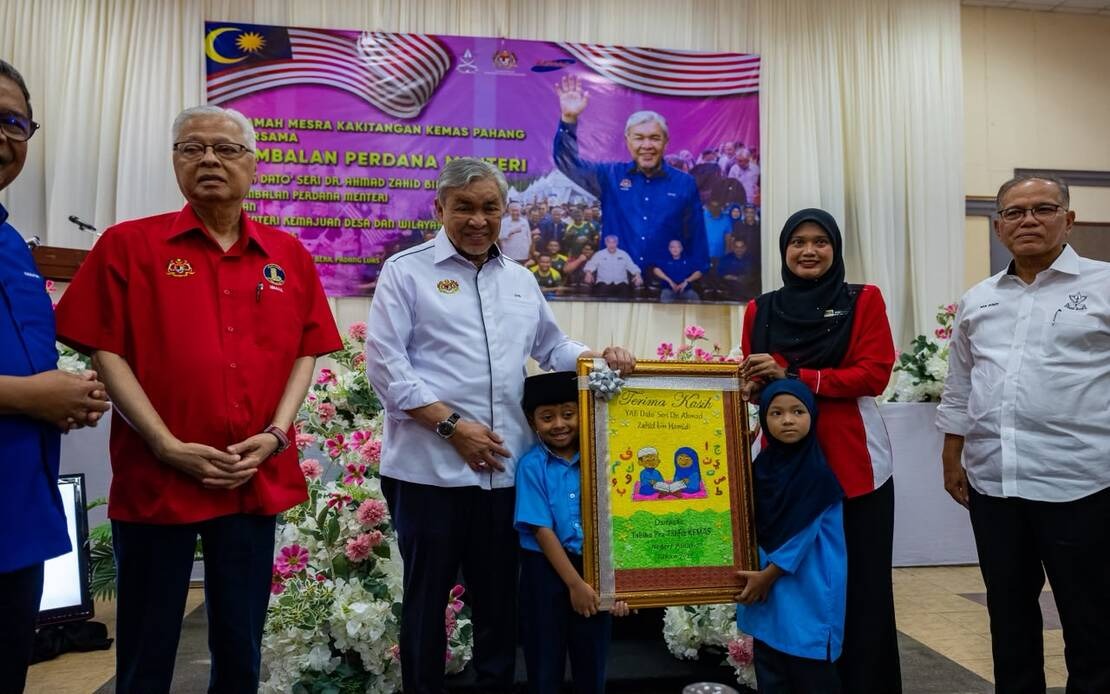
Malaysia's approach to early childhood education is undergoing a significant modernisation drive aimed at balancing technological advancement with religious and moral grounding. Deputy Prime Minister Datuk Seri Dr Ahmad Zahid Hamidi announced the intensified transformation strategy during the Pahang KEMAS Community Engagement Programme in Bera, signalling the government's commitment to evolving the Community Development Department's educational mandate beyond its traditional framework. The push comes at a critical juncture, as recent policy shifts—including lowering the school starting age from seven to six—have elevated the importance of quality early learning experiences delivered through KEMAS kindergartens and childcare facilities.
The timing of this educational pivot reflects broader regional trends in Southeast Asia, where policymakers are grappling with how to prepare young learners for digital-native futures while maintaining cultural and religious identity. For Malaysia specifically, where Islam plays a constitutionally significant role, integrating Quranic education into public early-childhood programmes represents a carefully calibrated approach to nation-building that acknowledges both modernisation pressures and values-centred development. KEMAS, which has operated for six decades serving rural and regional communities, now faces the challenge of remaining relevant to contemporary parents and guardians who increasingly expect technology-enhanced learning from even the youngest age groups.
The proposed infrastructure upgrades include systematic deployment of Smart Class technology and smartboards across KEMAS kindergartens, moving beyond sporadic technological adoption to structured digital integration. Ahmad Zahid emphasised that keeping pace with global educational benchmarks requires coordinated effort across federal and state governments, alongside commitment from elected representatives at multiple levels. This multi-tiered governance approach acknowledges a practical reality in Malaysia's federal structure: early childhood facilities often depend on a complex web of land tenure, funding approvals, and maintenance responsibilities distributed among different administrative bodies. The deputy premier's explicit call for closer collaboration suggests that previous implementation gaps may have stemmed from coordination failures rather than lack of political will.
Equally significant is the expansion of religious education through a structured Quranic memorisation initiative to commence in the new academic year. Beyond the existing practice of students memorising portions of the final part of the Quran, the programme will introduce comprehensive memorisation of Surah Yasin, Al-Waqiah, Al-Mulk, and As-Sajdah—each text carrying specific spiritual and educational significance in Islamic tradition. Critically, Ahmad Zahid flagged a capacity challenge: KEMAS educators themselves must first develop mastery of these materials to implement the programme effectively. This prerequisite highlights potential friction points in rollout, as teacher training and curriculum development cannot happen overnight, particularly in rural areas where KEMAS facilities often operate with limited resources.
The initiative reflects a conscious strategic choice to position early childhood education as foundational to national identity formation, not merely cognitive development. By introducing children to Quranic memorisation at ages three to six, the government implicitly argues that religious literacy and spiritual grounding should accompany digital and academic skills from the earliest stages. This approach differs markedly from secular-dominant models in developed nations, instead aligning more closely with how several Muslim-majority countries conceptualise public education's role in society. For Malaysian policymakers, the balance between these competing educational objectives—technological fluency and religious anchoring—remains contested terrain, and KEMAS serves as a proving ground for whether both can coexist productively.
The scale of KEMAS's historical reach cannot be understated in contextualising these reforms. Having served approximately 8.4 million children since establishment, the department operates one of Southeast Asia's largest early childhood networks, making it simultaneously a flagship programme and a logistical challenge. Any systematic change to curriculum or technology implementation must navigate this vast infrastructure while maintaining quality consistency across urban and rural settings. The statistics suggest KEMAS's foundational role in Malaysian society: nearly every child from lower-income and rural families passes through KEMAS facilities, meaning the department's educational choices ripple through multiple generations and communities.
Pahang's role in this announcement carries particular significance, as the state government has reportedly demonstrated strong financial and administrative support for KEMAS expansion. Menteri Besar Datuk Seri Wan Rosdy Wan Ismail's presence alongside Ahmad Zahid underscored state-federal alignment on early childhood priorities—a notable development given that education governance in Malaysia often reflects political tensions. The state's initiatives to secure land titles and provide grants for facility maintenance address unglamorous but essential infrastructure challenges that frequently undermine programme effectiveness. Similarly, funding dedicated to renovations ensures that KEMAS premises meet contemporary safety and accessibility standards rather than deteriorating through deferred maintenance.
The inclusion of former Prime Minister Datuk Seri Ismail Sabri Yaakob, representing Bera, signalled cross-partisan support for KEMAS strengthening, at least in optics if not always in resource allocation during different administrations. His presence carried implicit endorsement of the technology-plus-values education model as a legitimate policy direction, lending bipartisan credibility to what some might characterise as ideologically contested terrain. The gathering thus performed a political function beyond mere policy announcement: it positioned early childhood education as a unifying national priority transcending partisan divides.
Ahmad Zahid's framing of KEMAS entering a "new phase" while preserving its legacy suggests recognition that the department faces an identity question. After sixty years serving as a community development instrument in rural Malaysia, KEMAS must reconcile its historical mission—providing basic care and early learning in underserved areas—with emerging expectations that it function as a launching pad for digital citizenship and competitive global participation. The deputy premier's language emphasising "strong values and identity, technological literacy and the ability to compete in an increasingly challenging world" encapsulates this dual mandate, though the practical tensions between these objectives remain largely unaddressed.
Implementation success will depend heavily on teacher recruitment, training, and retention in KEMAS roles. Early childhood education remains a lower-status profession in Malaysia's teaching hierarchy, with compensation and career prospects trailing primary and secondary education. Asking KEMAS educators to simultaneously master Quranic memorisation, operate smartboard technology, and deliver developmentally appropriate pedagogy raises the skill bar substantially without obvious corresponding improvements to working conditions. This gap between policy ambition and ground-level capacity represents the most significant implementation risk for the announced reforms.
For Malaysian families, particularly those in rural and lower-income categories relying on KEMAS services, these reforms carry tangible implications. Enhanced technology access could narrow digital divides and better prepare children for increasingly technology-mediated schooling and work environments. Simultaneously, structured religious education aligns institutional provision with many families' own values and aspirations for their children's moral development. The risk emerges if implementation occurs unevenly, with well-resourced urban KEMAS facilities quickly adopting smartboards and memorisation curricula while rural counterparts struggle with basics. Equity in early childhood remains a persistent Malaysian challenge that policy announcements often gloss over.
Regionally, Malaysia's KEMAS reforms merit attention from other Southeast Asian nations wrestling with similar questions about early childhood education's role in national development. Countries including Indonesia and the Philippines operate analogous rural education programmes while simultaneously pursuing technological modernisation. Malaysia's attempt to synthesise religious education, technological innovation, and community development in a single institutional framework offers lessons—positive and cautionary—for neighbours seeking comparable balance. The coming years will reveal whether KEMAS can successfully navigate this trifecta or whether competing priorities create implementation bottlenecks.
Ultimately, Ahmad Zahid's announcement represents both genuine policy innovation and political ritual. The genuine elements include concrete commitments to technology deployment, expanded religious curriculum, and state-federal cooperation mechanisms. The ritual aspects involve statements about legacy, national identity, and cross-partisan harmony that may or may not translate into sustained resource allocation and institutional reform. For Malaysia's early childhood landscape, the next phase depends not on further announcements but on whether KEMAS receives the sustained funding, trained educators, and flexible governance structures required to transform policy into practice across hundreds of facilities serving hundreds of thousands of children annually.

