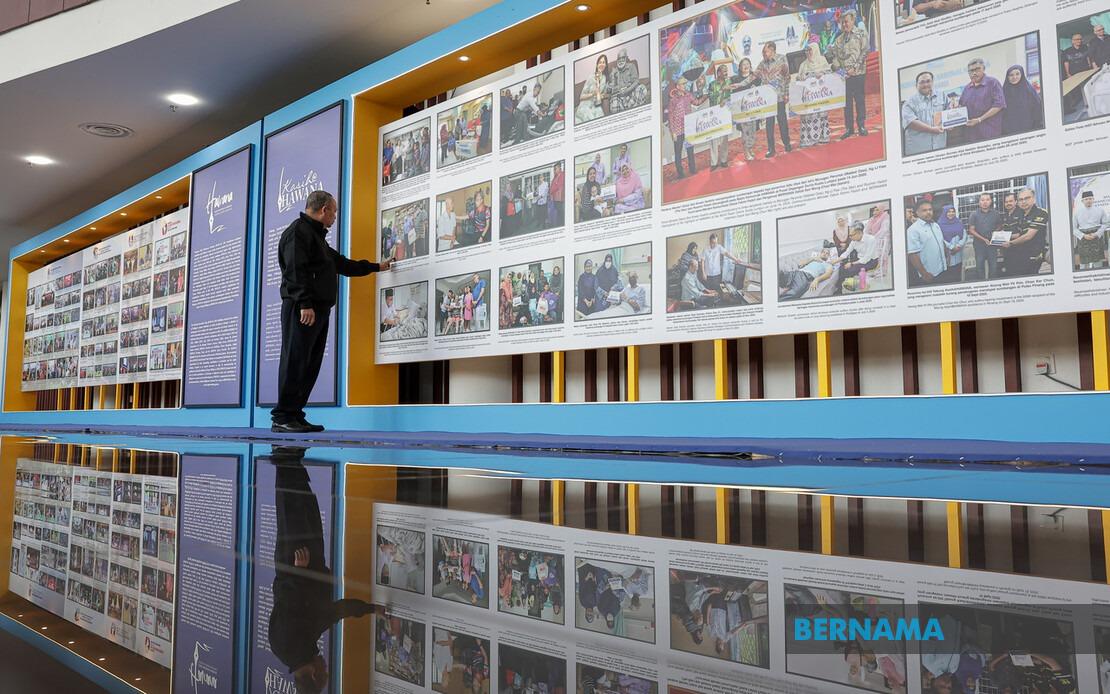
Malaysia's media industry is converging on Penang this week to confront fundamental questions about its future, with a slate of seminars, retreats, and networking events underway before the formal National Journalists' Day (HAWANA) 2026 celebration. The gathering reflects growing recognition among journalism bodies and news organisations that the profession faces existential pressures from technological disruption, changing audience behaviour, and erosion of trust in traditional news sources. Rather than marking the occasion with ceremonies alone, media leaders have designed substantive programming to address these pressing challenges head-on.
The Malaysian Federation of Media Clubs (GKMM) convened practitioners from 15 media clubs across the nation for the Malaysia Media Retreat 2.0, an event that served both immediate and strategic purposes. Beyond fostering professional camaraderie among journalists from different regional outlets, the retreat provided an opportunity to evaluate the federation's performance since its formal establishment in October 2022. GKMM president Mohamad Fauzi Ishak emphasised that the gathering allowed the organisation to consolidate its institutional gains and prepare for its third annual general meeting, scheduled during the HAWANA festivities but notably conducted without elections this year. Communications Minister Datuk Fahmi Fadzil's participation in inaugurating the retreat underscored the government's commitment to supporting professional journalism infrastructure as a public good.
More provocative programming emerged from the Malaysian Press Institute (MPI), which staged a town hall session with the deliberately unsettling title "2035: Will Journalists Still Exist?" The forum at Han Chiang University College of Communication directly engaged the profession's deepest anxieties about its viability in an age of artificial intelligence, accelerating digitalisation, and fundamental shifts in how audiences discover and consume news. The session brought together senior editors including Farrah Naz Abd Karim from New Straits Times Press and Azhari Muhidin from Media Prima, alongside MPI president Datuk Yong Soo Heong. Their discussions touched on how newsrooms might adapt editorial practices, invest in distinctly human journalistic skills, and differentiate their output in markets increasingly flooded with automated or algorithmically curated content.
These preliminary programmes establish intellectual scaffolding for the main HAWANA 2026 celebration tomorrow, when Prime Minister Datuk Seri Anwar Ibrahim will address approximately 1,000 media practitioners from Malaysia and abroad at PICCA @ Butterworth Arena. The chosen theme, "Media Integrity, Foundation of Credibility," signals that national leadership recognises the existential stakes involved in restoring public confidence in journalism at a moment when misinformation spreads rapidly and traditional gatekeepers face challenge from multiple quarters.
The emphasis on integrity reflects regional and global patterns where trust in media institutions has deteriorated significantly. For Malaysian audiences, the stakes are particularly high given the country's demographic diversity, complex political landscape, and susceptibility to coordinated disinformation campaigns. When news organisations lose credibility, the information ecosystem fragments along sectarian, ethnic, and political lines, eroding shared understanding of basic facts necessary for democratic deliberation. HAWANA 2026's thematic focus suggests media leaders understand that technical fixes and business model innovations matter less than foundational questions of whether journalists remain trusted guides through contested information landscapes.
The Malaysian Media Council (MMC) will conduct engagement sessions with practitioners during the celebration week, complementing the MPI's forward-looking seminars with direct dialogue between regulatory and professional bodies. These interactions offer practitioners opportunities to discuss evolving standards, ethical grey areas emerging from new technologies, and coordination mechanisms for addressing systemic challenges. For organisations operating across Malaysia's diverse media ecosystem, such dialogue creates space to develop industry standards that account for digital-age realities while anchoring journalism to enduring professional values.
Beyond formal programming, HAWANA 2026 features the RIUH @ HAWANA Carnival at PICCA Convention Centre, indicating that commemoration of journalists' contributions aims to reach beyond industry circles. By combining professional development sessions, town halls, and public-facing carnival activities, the week creates opportunities for journalists to reconnect with audience members, demonstrate the work involved in producing credible news, and potentially rebuild trust through direct engagement. This multimodal approach recognises that integrity cannot be proclaimed in speeches alone but must be demonstrated through transparent practices and genuine dialogue.
For Malaysian and Southeast Asian media sectors more broadly, HAWANA 2026's programming signals trends likely to dominate editorial strategy in coming years. Artificial intelligence integration in newsrooms appears inevitable, raising urgent questions about how human journalists maintain relevance and ensure AI tools serve rather than replace editorial judgment. Simultaneously, the emphasis on credibility reflects recognition that market share and influence increasingly accrue to outlets that build reputation for trustworthiness rather than sensationalism or partisan advocacy. Regional competitors are watching how Malaysian news organisations navigate these transitions.
The convergence of senior government representatives with media leadership during HAWANA 2026 also carries political significance. Minister Fahmi's participation in the GKMM retreat and the Prime Minister's keynote role signal government willingness to engage the media sector on substantive issues rather than remaining distant or adversarial. This posture could create space for constructive conversations about media freedom, editorial independence, and how journalism can contribute to national development without being instrumentalised for partisan purposes. However, such engagement works only if journalists maintain critical distance and media organisations preserve institutional autonomy.
The week's programming ultimately reflects a profession grappling with multiple simultaneous disruptions. Traditional business models that sustained newsrooms for decades have collapsed as advertising migrated online, audience trust has fragmented across ideological and generational lines, and new technologies promise both efficiency gains and editorial risks. Rather than offering easy answers, HAWANA 2026's seminars and forums tacitly acknowledge that journalism's future remains contested and contingent on choices individual organisations and the profession collectively make in coming years.