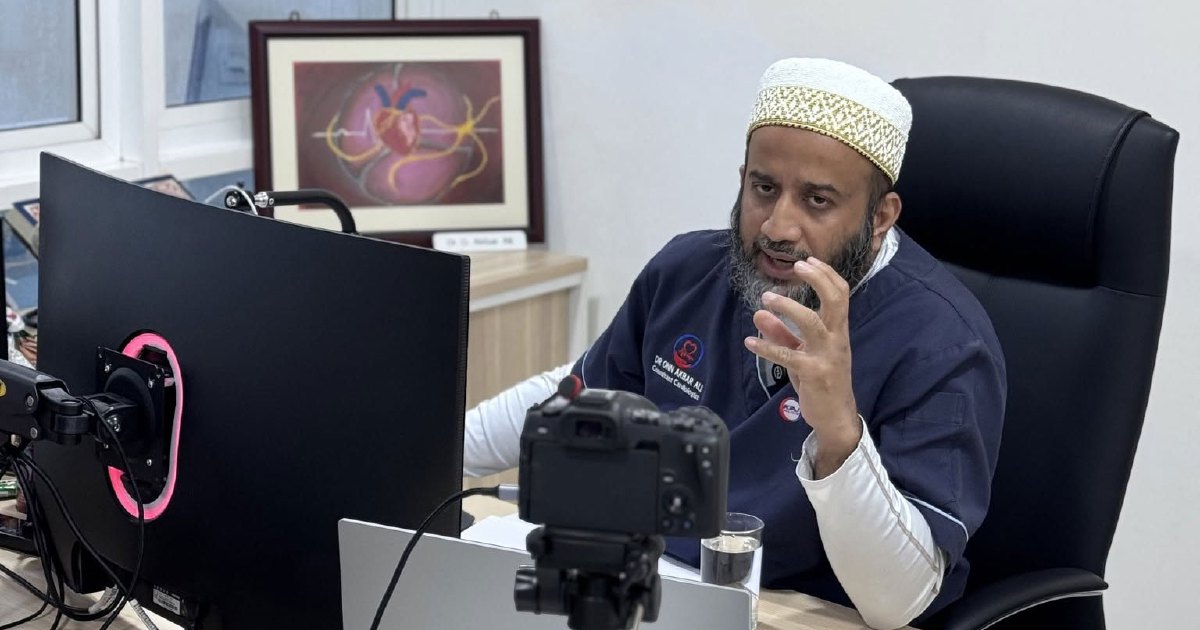
A prominent Malaysian cardiologist recently encountered a disturbing digital deception: deepfake technology had synthesized his likeness and voice into a promotional video falsely endorsing herbal tea as a cure for diabetes. The discovery of this fabricated footage by consultant cardiologist Dr Onn Akbar Ali signals a troubling evolution in health fraud schemes, one that leverages artificial intelligence to manufacture medical credibility at scale.
The incident underscores how Southeast Asia's medical establishment has become an attractive target for increasingly sophisticated cybercriminals who exploit the region's substantial appetite for alternative health remedies and high consumer trust in physician endorsements. Unlike traditional pharmaceutical scams that rely on text-based misinformation, deepfake medical fraud operates across a fundamentally different technological plane, enabling perpetrators to create convincing audio-visual evidence of endorsements that never occurred.
What makes these deepfake doctor scams particularly insidious is their exploitation of cognitive shortcuts. When patients observe what appears to be a trusted physician earnestly recommending a product through video evidence, the psychological barriers to skepticism collapse. The victim in Dr Onn Akbar Ali's case was leveraging not just his professional credentials but the veneer of authenticity that video evidence provides—a medium that most consumers instinctively perceive as documentary proof rather than malleable content.
The proliferation of accessible deepfake creation tools has democratized video forgery, placing sophisticated impersonation capabilities within reach of criminal enterprises operating across borders. A scammer in one jurisdiction can target physicians and patients in another with minimal technical friction, exploiting regulatory gaps and the difficulty of cross-border law enforcement. For Malaysia, which sits at a crossroads of digital commerce and traditional health-seeking behaviors, this represents a compound vulnerability.
Doctors themselves constitute both victims and vectors in this ecosystem. Their professional reputation—painstakingly built through years of clinical practice—becomes a commodity that criminals appropriate to monetize fraudulent products. Dr Onn Akbar Ali's experience likely represents only the visible portion of a much larger problem; many physicians may remain unaware that fabricated content impersonating them circulates through social media platforms, messaging applications, and wellness forums where verification mechanisms are minimal or nonexistent.
The health products being promoted through these deepfake videos frequently target chronic conditions where patient desperation runs highest. Diabetes, cardiovascular disease, and cancer—ailments where conventional medicine offers management rather than cure—become focal points for health fraud precisely because they address genuine suffering and hope for resolution. The deepfake doctor lends false medical authority to products that may contain ineffective, contaminated, or dangerous ingredients.
From a Malaysian regulatory standpoint, deepfake medical fraud exists in a grey zone where technology has outpaced statutory frameworks. Traditional health advertising regulations focus on the content being promoted rather than the methodology of impersonation, leaving authorities struggling to address crimes that didn't exist when existing laws were drafted. The Medical Device Authority and pharmaceutical regulatory bodies have authority over products but limited mechanisms to prosecute media forgery used in promotion.
Social media platforms themselves occupy a complex position in this landscape. While they benefit economically from advertising spend and engagement metrics, their content moderation systems remain imperfectly equipped to detect deepfakes, particularly those in regional languages or cultural contexts. Malaysia's significant presence on platforms like TikTok, Instagram, and WhatsApp creates multiple vectors through which fraudulent medical content can distribute rapidly among vulnerable populations.
The psychological dimension of deepfake medical fraud deserves emphasis. Unlike traditional scams where consumers recognize inconsistencies or obvious sales tactics, deepfake video content triggers a form of evidence-based credulity. The brain interprets video as documentary reality in ways that written or spoken claims cannot match. This cognitive advantage explains why perpetrators invest in the technical sophistication required to create convincing facial and vocal synthesis.
Dr Onn Akbar Ali's discovery also raises questions about the broader medical profession's preparedness for this threat. Few physicians receive training in recognizing when their identity has been compromised through deepfakes, identifying the platforms distributing fraudulent content featuring their likeness, or navigating the legal and technical steps required for removal. The incident suggests an urgent need for proactive digital identity protection protocols within healthcare institutions.
Looking forward, Malaysia's response to deepfake medical fraud will likely require collaboration spanning multiple sectors. Medical associations must establish rapid-response systems for members to report identity theft and coordinate takedowns with platform operators. Regulatory authorities need modernized frameworks addressing media forgery specifically. The public health sector should conduct awareness campaigns helping patients develop critical consumption habits around medical recommendations encountered online.
International cooperation becomes essential when criminals operate across borders with minimal logistical constraints. ASEAN nations face similar vulnerabilities, yet coordination mechanisms for investigating and prosecuting deepfake health fraud remain underdeveloped. Establishing regional agreements on evidence sharing and jurisdictional cooperation could substantially increase the friction criminals face when targeting Southeast Asian medical professionals.
The deepfake doctor scams targeting Dr Onn Akbar Ali and others in Malaysia's medical community represent more than a threat to individual physicians—they signal a structural vulnerability in healthcare trust itself. As artificial intelligence continues advancing, the capacity to forge medical authority will only become cheaper and more convincing, necessitating defensive innovation across regulatory, technological, and cultural domains to protect both practitioners and patients.

