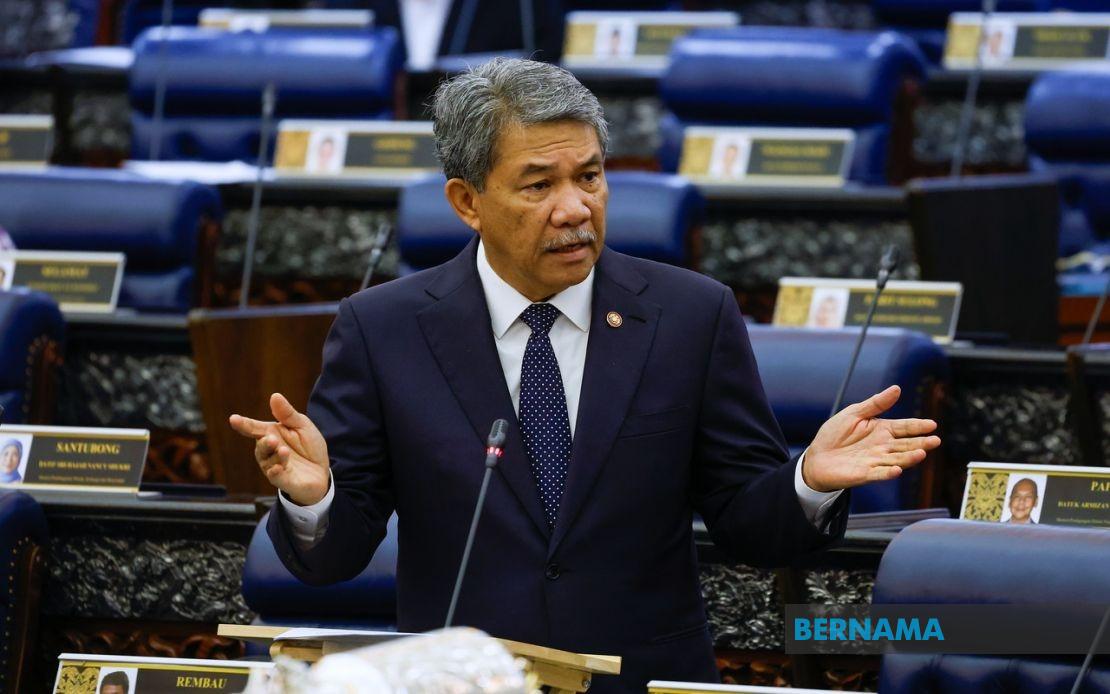
Foreign Minister Datuk Seri Mohamad Hasan has moved to dispel concerns about Malaysia's approach to Myanmar, emphasising that a high-level visit by Malaysian officials last month represents pragmatic diplomacy rather than any shift towards legitimising the military administration. Speaking in parliament, Mohamad stressed that the engagement remains consistent with Malaysia's longstanding refusal to recognise the junta and does not compromise ASEAN's collective position on the political crisis that has engulfed the Southeast Asian nation since the 2021 coup.
The clarification addresses mounting scrutiny over Malaysia's diplomatic manoeuvre, which saw representatives travel to Yangon in May to meet with Myanmar's Foreign Minister Tin Maung Swe. Critics had questioned whether such high-level engagement might be interpreted as tacit acceptance of the military's continued grip on power, particularly following Myanmar's controversial elections held under junta administration. Mohamad's parliamentary statement seeks to reframe the visit within a broader ASEAN strategy of constructive engagement, distinguishing between maintaining dialogue channels and extending formal recognition or legitimacy.
According to Mohamad, the visit was mandated by decisions taken at the 48th ASEAN Summit, which tasked foreign ministers with sustaining informal communication lines with Myanmar despite the country's political upheaval. This framework provides the regional bloc with strategic cover for engagement while ostensibly preserving collective disapproval of military rule. The distinction between formal and informal dialogue—evidenced by Mohamad's choice to meet his Myanmar counterpart at a hotel rather than at an official ministry building—underscores ASEAN's delicate balancing act between isolation and engagement.
During the encounter, Mohamad conveyed Malaysia's expectations for Myanmar's political trajectory, presenting a set of conditions that Kuala Lumpur believes should guide the nation toward democratic transition. These messages served as Malaysia's vehicle for exerting diplomatic pressure without ostensibly negotiating with or legitimising the regime. The approach reflects the region's broader challenge: Myanmar's strategic importance to ASEAN security architecture and economic integration conflicts with the bloc's stated commitment to democracy and civilian rule.
Crucially, Mohamad reminded Myanmar's delegation that participation in ASEAN entails reciprocal obligations alongside the privileges of membership. This framing attempts to shift the dialogue from moral condemnation to institutional accountability, positioning Myanmar's compliance with regional norms as a membership responsibility rather than an external imposition. By invoking ASEAN's institutional framework, Malaysia seeks to leverage peer pressure and collective expectations to influence Myanmar's behaviour, a strategy that depends on Myanmar valuing its regional standing.
The Five-Point Consensus, adopted in 2021 as ASEAN's formal response to the Myanmar coup, remains central to regional diplomacy despite its limited implementation. The framework calls for dialogue among all stakeholders, cessation of violence, humanitarian assistance delivery, non-interference from external powers, and mediation by ASEAN envoys. Mohamad's reiteration of these principles signals that Malaysia maintains rhetorical alignment with ASEAN's humanitarian and democratic objectives while pursuing pragmatic engagement to achieve incremental progress.
Underlying Malaysia's approach is a strategic calculation that isolating Myanmar entirely would prove counterproductive to ASEAN's interests and Myanmar's own political evolution. Mohamad explicitly warned that continued international isolation risks creating a vacuum that external powers—presumably China, India, or Western nations—could exploit for geopolitical advantage. This concern reflects deep anxieties within Southeast Asia about great-power competition and the risk that Myanmar's strategic location could become contested territory if ASEAN loses influence over its trajectory.
The planned follow-up engagement, tentatively scheduled for early or mid-July, indicates that Malaysia intends to sustain these dialogue channels as an ongoing mechanism for applying pressure and monitoring developments. Regular high-level contacts create opportunities for incremental messaging and signal-sending without formal recognition. They also preserve Malaysia's position as an active stakeholder in Myanmar's future, preventing other regional players from monopolising influence over the outcome.
For Malaysian readers, this diplomatic posture carries implications for broader regional stability and ASEAN's internal cohesion. Malaysia's willingness to maintain dialogue despite domestic pressure reflects the complex calculus Southeast Asian nations must perform between principle and pragmatism. The approach also underscores how Myanmar's crisis has become a proxy for deeper questions about ASEAN's authority, the bloc's capacity to enforce norms, and the region's vulnerability to external interference.
Moving forward, the success of Malaysia's engagement strategy depends on whether sustained dialogue can actually influence Myanmar's political trajectory or whether it merely provides diplomatic cover for continued military entrenchment. Critics argue that the junta interprets such engagement as international validation that isolation remains incomplete, reducing pressure for concessions. Supporters contend that maintaining channels preserves opportunities for negotiation and prevents Myanmar from drifting further into exclusive partnerships with non-ASEAN powers.
Mohamad's parliamentary testimony reveals the tension inherent in ASEAN's Myanmar policy: the need to maintain institutional consistency and moral clarity while acknowledging the political realities that demand pragmatic engagement. Malaysia's balancing act reflects the broader Southeast Asian struggle to navigate geopolitical pressures while adhering to principles of non-interference and regional solidarity. The coming months will reveal whether this carefully calibrated diplomatic approach yields meaningful progress toward Myanmar's democratic restoration or whether it merely postpones deeper questions about ASEAN's ability to influence outcomes among its own members.

