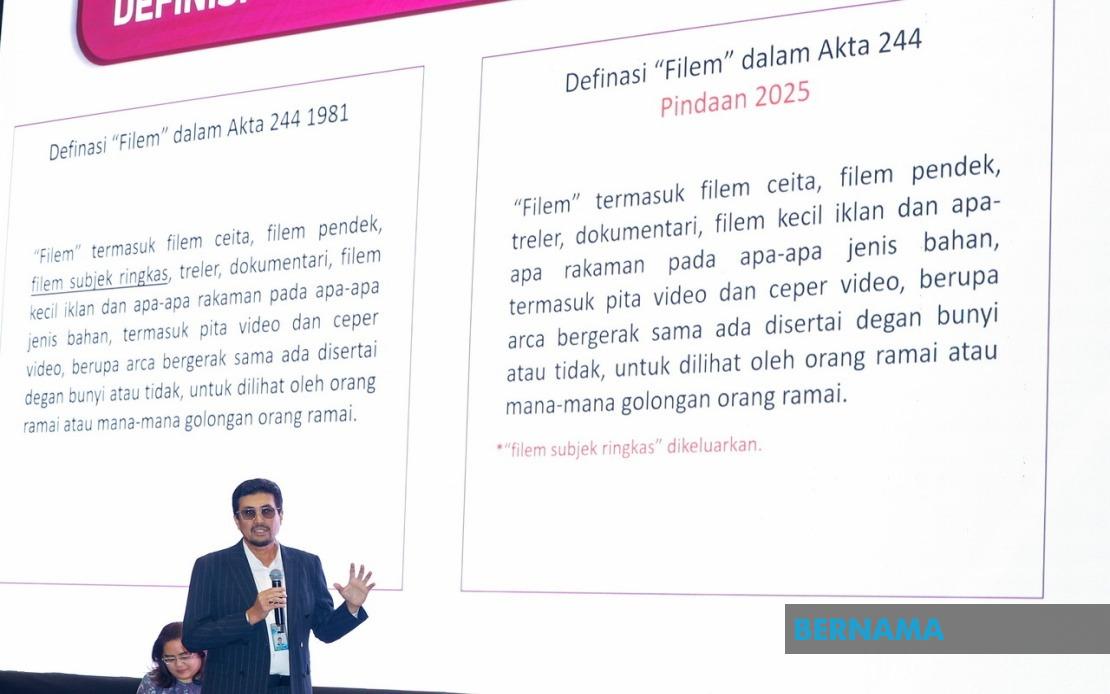
Malaysia's film industry is poised for significant transformation following the completion of a comprehensive National Film Policy (DFN) 2026-2035 that promises to fundamentally reshape how the sector operates and competes globally. Datuk Azmir Saifuddin Mutalib, chief executive of the National Film Development Corporation Malaysia (FINAS), confirmed that the policy framework will reach Cabinet for final approval and launch within 2024, marking the culmination of an intensive two-year consultation process that has involved filmmakers, studios, government agencies, and cultural institutions across the country.
The emerging policy represents Malaysia's third major national film strategy since the 1980s, and the first legislative update to governing frameworks since 2005. Rather than operating in isolation, the 2026-2035 policy deliberately builds upon and supersedes the previous framework, incorporating lessons from two decades of implementation and responding to dramatic shifts in global entertainment consumption patterns, production technologies, and audience behaviour. This phased evolution reflects a maturing policy approach that acknowledges what worked in prior iterations while introducing entirely new mechanisms for an industry increasingly reliant on digital platforms and international co-production models.
At the heart of the new policy lies a restructuring around five interconnected pillars that address persistent challenges within Malaysia's film ecosystem. The financing and investment pillar tackles a longstanding constraint: accessing capital for film development remains difficult for Malaysian producers compared to counterparts in Thailand, South Korea, and Indonesia. By developing alternative financing models beyond traditional banking and government subsidy, the policy aims to unlock private investment, encourage venture capital participation, and potentially facilitate international pre-sales mechanisms that reduce production risk. The marketing and promotion pillar acknowledges that having quality films means little without effective distribution channels and audience awareness, particularly in an era when discovery algorithms and social media buzz determine box office performance as much as traditional cinema exposure.
Technology adoption, particularly artificial intelligence integration, signals Malaysia's intent to position its industry within global production realities rather than remaining peripheral. AI applications span visual effects, scriptwriting assistance, audience analytics, and post-production efficiency—capabilities that smaller markets must leverage to compete against Hollywood and Asian entertainment hubs with vastly larger budgets. Rather than viewing technological change as a threat to employment, the policy framework incorporates human capital development and workforce certification programmes, recognising that sustainable industry growth requires upskilling workers and creating career pathways that retain talent within Malaysia rather than seeing it migrate to regional production hubs.
The governance and legislation pillar proves particularly significant for Malaysian stakeholders. Intellectual property protection represents a persistent vulnerability, with piracy and informal digital distribution undermining revenue generation for films regardless of production quality or market potential. Strengthening protections across theatrical, broadcast, streaming, and ancillary markets requires coordinated legal updates, enforcement mechanisms, and international cooperation—elements this policy framework explicitly addresses. For Malaysia as a Southeast Asian entertainment gateway, robust IP protection becomes a competitive advantage in attracting international productions seeking predictable regulatory environments.
Azmir's disclosure that feedback from stakeholder sessions primarily focused on clarifying implementation details and outlining specific cooperation frameworks between FINAS and industry associations reveals the policy's depth. Rather than aspirational generalizations, the final document will contain operational specifics for how government agencies, private companies, and cultural bodies coordinate activities and resources. This practical orientation distinguishes the 2026-2035 policy from earlier approaches that sometimes lacked clear implementation pathways.
The policy's explicit emphasis on positioning Malaysia's film sector as an economic growth engine responds to regional competitive pressures and national development priorities. Thailand's rapid ascent as an Asia-Pacific production destination, driven partly by government incentives and streamlined permitting, has demonstrated that film policy directly influences investment flows and job creation. By establishing clear incentive frameworks, Malaysia seeks to recapture market share and attract productions that generate employment across multiple skill levels and geographic regions.
Cultural dimensions embedded within the policy framework deserve particular attention for Malaysian audiences. The commitment to fostering a platform that reflects Malaysia's multicultural identity and drives national unity through cinema acknowledges that film possesses cultural power beyond entertainment economics. Malaysian cinema has historically showcased diverse communities and narratives; formalizing this commitment within policy ensures it remains central to industry direction rather than incidental. For a nation grappling with periodic social tensions, cultural industries that authentically represent shared experiences and build cross-community appreciation constitute genuine social infrastructure.
The involvement of Universiti Teknologi MARA (UiTM) and the National Academy of Arts, Culture and Heritage (ASWARA) in final policy formulation strengthens educational linkages within the ecosystem. By integrating academic and cultural institutions into policy development, Malaysia constructs feedback loops between training facilities and industry needs, reducing the mismatch between graduate skillsets and employer requirements that has historically plagued creative sector development. This approach mirrors successful models in South Korea and Singapore where education and industry operate in closer coordination.
International recognition emerges as an explicit policy objective, reflecting Malaysian filmmakers' growing presence at international festivals and marketplace events. By creating policy conditions that facilitate export-oriented production, distribution deals, and cross-border collaboration, Malaysia aims to build on successes in regional film markets while penetrating Western distribution channels. This outward orientation differs markedly from earlier policies with predominantly domestic focus and acknowledges that sustainability increasingly depends on international revenue streams and audience reach.
The timeline for Cabinet presentation and policy launch carries practical implications for industry planning. Productions greenlit in late 2024 or 2025 will operate under the new framework, making knowledge of policy instruments—financing mechanisms, tax incentives, certification pathways, technology support—essential for stakeholders. Industry associations and FINAS face intensive communication obligations to ensure producers, distributors, and service providers understand new opportunities and comply with updated governance requirements.
For Malaysian audiences and consumers, the policy's success ultimately determines what films get made, distributed, and available domestically. Stronger financing mechanisms might encourage more locally-funded productions reflecting Malaysian narratives and aesthetics. Expanded international market access could increase theatrical availability of Malaysian films regionally, enriching cinema-goers' exposure to regional storytelling. Technology adoption might reduce post-production costs, making micro-budget and independent productions more economically viable. Collectively, these shifts promise a more dynamic, competitive, and culturally representative film sector emerging from Malaysia over the 2026-2035 period.

