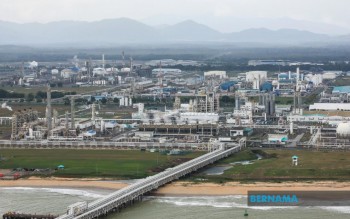
Malaysia is moving to investigate the feasibility of establishing a national petroleum reserve, a decision that industry specialists regard as well-timed given mounting pressures on the world's energy supply chains. The government's interest in this strategic stockpiling mechanism reflects deepening concerns about the vulnerability of critical maritime passages to political upheaval and military conflict, making long-term energy security an increasingly urgent priority for Southeast Asian policymakers.
The geopolitical landscape threatening energy supplies has become markedly more volatile in recent years. The Strait of Hormuz remains the world's most critical petroleum chokepoint, with roughly 20 million barrels daily traversing its waters—representing approximately one-fifth of global petroleum consumption. Yet rather than serving as a singular crisis point, this strategic waterway has transformed into a persistent source of market instability. Analysts now view the threat not as an occasional disruption but as an enduring structural feature of global energy markets, one unlikely to stabilize without substantial investment in alternative pipeline networks, diversified shipping corridors, and expanded export infrastructure.
Stephen Innes, managing partner at SPI Asset Management, emphasizes that treating the Strait of Hormuz as an isolated geopolitical shock no longer reflects market realities. Repeated incidents, accumulating insurance premiums, vessel scarcity, and continuous supply uncertainty have embedded a permanent risk surcharge into global energy pricing. These pressures—whether rising or falling in intensity—show no signs of vanishing until alternative infrastructure develops. Given the years required to construct viable bypass systems and diversified trade routes, the strait will almost certainly remain a destabilizing force on energy markets for the foreseeable future.
Prime Minister Datuk Seri Anwar Ibrahim recently announced that the government intends to examine both the necessity and implementation approaches for establishing such a reserve, positioning it as essential infrastructure for managing geopolitical uncertainty and protecting against international supply disruptions. This policy direction acknowledges that conventional commercial inventory systems may prove insufficient when facing sustained external shocks to the global energy system.
The risks extend far beyond the Persian Gulf. Recent reports indicate that Yemen-based Houthi forces, allied with Iran, have prepared coordinated attacks on maritime traffic approaching the Red Sea from the south, following which they claimed responsibility for strikes against Saudi tankers. These incidents follow intensified American military operations targeting Iranian military installations. The expanding geographic scope of shipping disruptions means that Southeast Asian economies face simultaneous exposure across multiple critical maritime corridors, potentially triggering cascading price increases, elevated transportation expenses, and significant supply delays across the region.
Innes warns that coordinated disruptions affecting both the Gulf and Red Sea corridors could inflict substantial economic damage on Southeast Asian nations. He recommends that regional governments undertake comprehensive reviews of existing strategic fuel stockpiles, establish purchasing relationships with multiple crude and liquefied natural gas suppliers, and develop coordinated mechanisms within ASEAN for managing inventory levels, responding to shipping interruptions, and implementing mutual emergency assistance protocols. At current writing, Brent crude oil climbed 2.97 percent to US$96.86 per barrel, while West Texas Intermediate advanced 1.93 percent to US$88.76 per barrel, reflecting ongoing market anxieties.
Innes also advocates reassessing broad fuel subsidy systems currently common throughout the region. Rather than providing universal price support, he contends that targeted assistance directed specifically toward lower-income populations and essential industries offers greater fiscal sustainability if elevated oil prices persist as a structural feature of global markets. Understanding the distinction between energy security—mere access to supplies—and energy resilience—the capacity of energy systems to continue functioning during disruptions—proves critical for policymakers. True resilience demands maintaining buffer inventories, cultivating supplier diversity, creating redundant shipping pathways, reinforcing electrical grid capacity, and developing the capability to substitute between fuel sources proactively rather than reactively.
For Malaysia specifically, Innes characterizes a national petroleum reserve as serving an "emergency insurance" function, one that supplements rather than substitutes for private commercial storage systems. Such a reserve cannot address every conceivable supply challenge but can furnish policymakers with crucial decision-making time during acute crises. Effective deployment requires embedding the reserve within a comprehensive strategy encompassing diversified supplier relationships, enhanced storage capacity, transparent governance frameworks specifying reserve release and replenishment procedures, expanded fuel supply diversification, upgraded transport infrastructure, promotion of commercially viable domestic gas development, enhanced regional electrical grid interconnection, and accelerated renewable energy deployment supported by battery storage and dependable backup generation.
Tariro Chiweza, an oil and gas analyst at BMI, affirms that Malaysia's examination of an NPR arrives at a strategically appropriate moment. While commercial petroleum stockpiles function adequately for routine operations, they often lack the scale necessary to counteract protracted external supply interruptions. Malaysia's current position underscores this vulnerability: despite producing approximately 570,000 barrels daily, the nation remains a net refined fuel importer, sourcing nearly 70 percent of crude oil imports from suppliers connected to the Strait of Hormuz during 2025. This dependency renders Malaysia particularly susceptible to disruptions originating within the Persian Gulf region.
Chiweza contends that establishing a national reserve forms an increasingly persuasive component of Malaysia's broader resilience architecture. She recommends concurrent advancement across multiple energy dimensions: expanding domestic gas extraction, developing renewable capacity, installing battery storage systems, constructing regional transmission interconnections, promoting transportation electrification, and incorporating nuclear generation into the energy mix. Existing Malaysian initiatives including Solar@PETRA, the Corporate Renewable Energy Supply Scheme supporting business renewable adoption, biodiesel blending programs, and electric transit systems already advance these resilience objectives substantially. BMI's forecasts indicate Malaysian dry gas output will reach 82.3 billion cubic metres by 2026, reinforcing domestic supply foundations and complementing the nation's transition toward sustainable energy infrastructure.

