Malaysia's port operators stand to capitalise on a confluence of global trade disruptions and a regional pivot towards sustainable maritime operations, according to analysis from AmBank (M) Bhd. The nation's strategic location along the Strait of Melaka and established port infrastructure are attracting increased cargo flows as international shippers seek alternatives to more volatile routes affected by geopolitical instability in West Asia. This repositioning reflects a broader reality: when global supply chains face friction at chokepoints elsewhere, Malaysia's geographic advantages and operational efficiency position it to absorb displaced traffic and strengthen its role as a critical transhipment centre in Southeast Asia.
The country's two flagship container terminals have demonstrated this capacity expansion momentum in recent months. Port Klang, Malaysia's largest port by volume, handled 15.14 million twenty-foot equivalent units (TEUs) last year, while Port Tanjung Pelepas (PTP) processed 14.03 million TEUs. These figures underscore the scale of maritime activity flowing through Malaysian waters. More tellingly, growth trajectories remain positive despite the elevated freight cost environment. During the first five months of 2026, Port Klang recorded five per cent year-on-year growth in container volumes, while PTP achieved stronger eight per cent expansion. For Malaysian readers, these numbers matter because port activity directly feeds into broader economic activity—the more cargo handled domestically, the greater the multiplier effects for logistics, manufacturing, and employment across the supply chain.
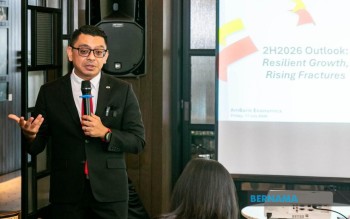
AmBank's chief economist Firdaos Rosli characterised the current environment as one where transhipment volumes are likely to remain robust, though this optimism comes with a qualification. Port operators cannot simply coast on traffic growth; maintaining competitiveness requires continuous capital investment in terminal infrastructure, berth deepening, and automated handling equipment. This demand for infrastructure spending carries implications for Malaysian port operators and government agencies responsible for maritime development policy. The window of opportunity to capture displaced trade may be temporary if competitors in Singapore, Thailand, or Indonesia upgrade their facilities more aggressively.
Beyond immediate cargo volumes, Malaysia is simultaneously positioning itself at the vanguard of regional shipping decarbonisation. The government's Green Bunkering Regulatory Roadmap sets an ambitious target: low-carbon fuels should comprise 40 per cent of maritime fuel consumption by 2050. PTP has already begun implementing operational capabilities for liquefied natural gas (LNG) and methanol bunkering, transforming from a conventional container terminal into a hub for sustainable fuel supply. This transition carries strategic weight because environmental compliance costs are becoming competitive advantages. Shipping lines increasingly factor bunker sustainability into route planning and port selection; ports offering green fuel options at competitive prices will attract premium customers willing to pay for compliance-ready operations.
The shift towards alternative marine fuels also reflects international maritime regulatory pressure. The International Maritime Organization's decarbonisation framework is tightening emissions standards, making LNG and methanol progressively more attractive to fleet operators seeking to avoid future penalties and regulatory fines. For Malaysian port authorities, early adoption of green bunkering infrastructure positions the country as a preferred refuelling stop rather than a peripheral player forced to adapt reactively. When major international shipping lines plan transpacific or intra-Asian voyages, they increasingly route vessels through ports offering sustainable fuel availability. Malaysia's proactive stance could translate into higher margin business and a more resilient long-term customer base less vulnerable to price competition.
The financial picture for freight markets reveals why port activity remains elevated despite uncertainty. The Baltic Exchange Index (BDI), a key barometer of dry bulk shipping costs, surged more than 120 per cent year-on-year in both February and May 2026, and remained substantially elevated at 64.6 per cent in June. Typically, when supply chain disruptions occur—whether from geopolitical events, natural disasters, or congestion—freight rates spike sharply but then contract just as rapidly once the disruption clears. That pattern did not materialise following West Asia tensions. Instead, elevated rates have proven sticky, remaining persistently high across multiple months, signalling that underlying supply-side constraints persist.
This persistent freight cost elevation reveals a fundamental shift in maritime economics that extends beyond temporary crisis response. While the immediate security threats in West Asia may no longer be directly disrupting oil tanker routes or bulk carrier movements, the downstream effects continue rippling through shipping markets. Vessel operators, facing uncertain conditions and volatile insurance premiums for certain routes, are adjusting their sailing patterns and scheduling algorithms to favour safer passages—even if slightly longer—through Malaysian waters. This behavioural adaptation by global shipping companies directly translates into sustained cargo volumes through Malaysian ports, independent of whether geopolitical tensions subsequently ease. The market is essentially pricing in structural uncertainty about future disruptions, making Malaysia's position as a buffer hub more valuable.
For Malaysian policymakers and port industry stakeholders, these trends converge to suggest a multi-year opportunity. Transhipment volumes are unlikely to collapse quickly because the underlying factors driving route diversification—geopolitical fragmentation, deglobalisation pressures, and supply chain regionalisation—represent longer-term structural shifts rather than temporary fluctuations. Simultaneously, the transition to green shipping is not a distant future scenario but an operational reality beginning to play out at Malaysian terminals. Port operators capable of investing in both conventional capacity expansion and green bunkering infrastructure simultaneously will establish competitive moats that are difficult for rivals to replicate quickly.
However, realising these opportunities requires consistent execution and strategic investment. The port sector cannot rely indefinitely on displaced cargo and higher freight rates; operational excellence, technological modernisation, and service quality differentiation are essential to retaining customers once immediate crisis pressures subside. Malaysian port authorities must also ensure that regulatory frameworks for green bunkering remain internationally aligned while providing sufficient incentives for terminal operators to invest in costly LNG and methanol supply chains. These challenges highlight why Firdaos's emphasis on continuous capacity investment and strategic infrastructure projects is not merely industry boilerplate but a genuine strategic imperative.
Regionally, Malaysia's positioning as both a transhipment hub and green bunkering leader carries broader implications for Southeast Asia's maritime competitiveness. Singapore dominates regional container transshipment through overwhelming scale and capital investment, while Thailand's deep-water ports increasingly compete for regional traffic. Malaysia's differentiation through sustainable fuel infrastructure offers a distinct value proposition that could attract environmentally conscious shipping lines and multinational corporations prioritising decarbonisation in their supply chains. For Malaysian exporters and importers, more efficient, sustainable port infrastructure ultimately translates into lower logistics costs and faster cargo clearance, enhancing the country's competitiveness in global manufacturing and trade.
Looking forward, Malaysia's port sector appears positioned for sustained growth underpinned by structural factors that should prove more durable than crisis-driven demand spikes. The combination of geopolitical-driven trade rerouting, supply chain regionalisation, and environmental regulatory compliance creates overlapping demand drivers for Malaysia's port and maritime services. Whether port operators and government agencies can capitalise on this convergence depends on translating elevated throughputs into sustainable competitive advantages through strategic infrastructure investment and operational innovation.

