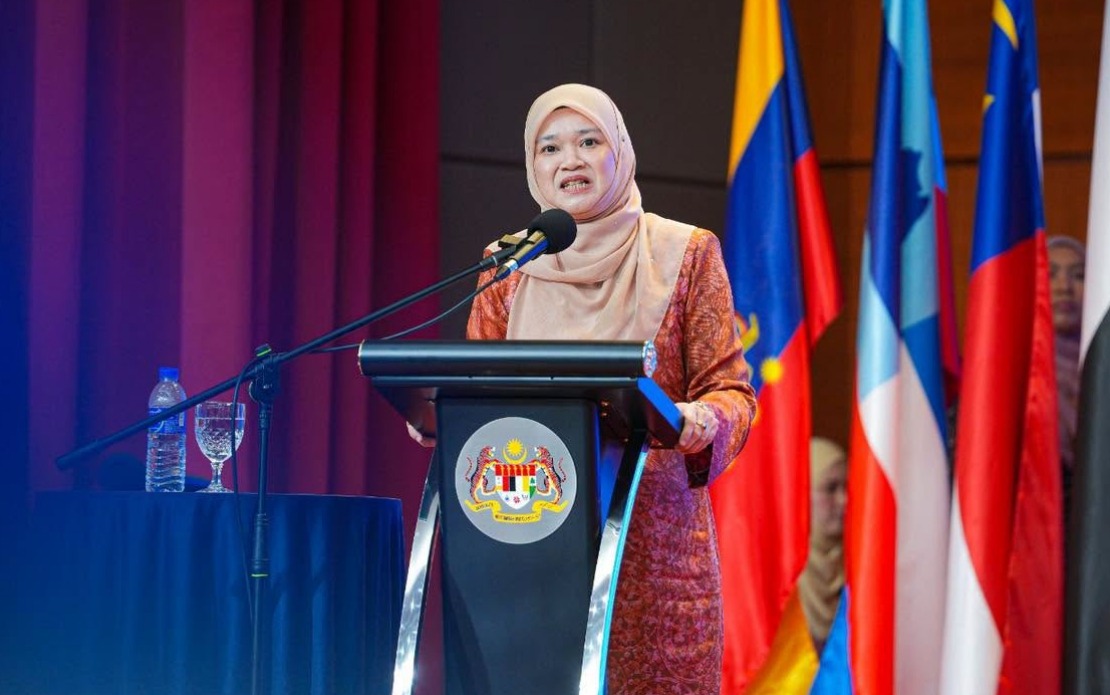
The Education Ministry is moving to formalize recognition of co-curricular participation and sporting achievements by students in prison institutions, a significant policy shift intended to expand educational pathways for incarcerated youth completing their secondary education. Education Minister Fadhlina Sidek announced the initiative while closing the 17th Hijrah Kasih Programme, a collaborative effort between the ministry and the Malaysian Prison Department held in Kajang, signalling government commitment to ensuring that students in these institutions are not disadvantaged in their pursuit of higher education once they leave the system.
The proposed merit system would consider achievements in activities ranging from traditional sports to cultural and recreational pursuits undertaken within prison educational facilities. This recognition represents a departure from conventional university admission frameworks that typically exclude or minimise consideration of achievements earned outside mainstream school environments. By incorporating these credits into university application assessments, the ministry aims to acknowledge that educational development and personal achievement are possible regardless of institutional context, addressing a significant barrier to social mobility for this vulnerable student population.
Fadhlina emphasised that the merit framework forms part of a broader rehabilitation strategy designed to facilitate successful reintegration. She stated that students completing their Sijil Pelajaran Malaysia (SPM) examinations while incarcerated should have concrete advantages when pursuing tertiary education, ensuring that their circumstances do not permanently foreclose opportunities for advancement. The initiative reflects a philosophical shift within the ministry towards recognising the holistic development of students in non-traditional settings, rather than viewing prison education purely as basic literacy and numeracy provision.
Complementing the merit system, the ministry is exploring formal skills certification pathways for students who complete vocational training while incarcerated. Prison educational programmes currently teach practical competencies including sewing, food preparation, and other trades that have direct labour market applicability. By awarding recognised credentials for these skills, the ministry aims to equip students with tangible qualifications that enhance employability upon release, addressing one of the most significant obstacles faced by formerly incarcerated individuals seeking reintegration into the formal economy.
The announcement comes as prison schools continue demonstrating remarkable academic performance. Students in these institutions have achieved 100 per cent pass rates in the SPM for two consecutive years, a statistic that Fadhlina highlighted to challenge assumptions linking incarceration with educational failure. She attributed these outcomes not to institutional advantages but to student determination, framing success as dependent on individual commitment rather than circumstances. This narrative, while emphasising resilience, also underscores the potential for transformation within the carceral education system when given appropriate resources and support.
Deputy Director-General of Education (School Operations Sector) Datuk Zainal Abas provided specific timelines for implementation, indicating that the ministry aims to have Physical, Sports and Co-curricular Assessment (PAJSK) scores formally recognised this year. Once approved, beginning with the 2027 cohort of SPM candidates, students from prison institutions would receive 10 per cent merit weighting when submitting university applications. This percentage, while modest, represents meaningful additional consideration that could materially affect admission decisions at competitive institutions, particularly for students with moderate academic grades.
Digital access constitutes another dimension of the ministry's modernisation agenda for prison education. Officials are exploring mechanisms to provide students with controlled access to DELIMa, the Digital Educational Learning Initiative Malaysia platform, enabling participation in online learning and access to contemporary educational resources. This initiative acknowledges that prison students must not fall behind peers in mainstream schools in terms of exposure to digital literacy and technology-mediated learning, competencies increasingly essential for tertiary education and modern employment. The emphasis on "controlled access" reflects legitimate security concerns while attempting to balance educational equity with institutional safety requirements.
Teacher capacity and professional development within prison educational settings represent enabling factors for successful implementation. The ministry plans to extend DELIMa platform access to educators at integrity schools and Henry Gurney schools nationwide, ensuring that instructors in these institutions can utilise contemporary digital teaching tools comparable to those available in conventional schools. This investment in professional infrastructure suggests the ministry recognises that educational quality in specialised settings depends heavily on staff capability and access to modern pedagogical resources.
The policy framework sits within Malaysia's broader commitment to rehabilitation and social reintegration rather than purely punitive incarceration. By formally recognising achievements, facilitating skills certification, and ensuring digital learning access, the ministry is creating structural conditions that support successful community reintegration following release. International evidence demonstrates that educational continuity and skills development during incarceration significantly reduce recidivism rates, generating long-term social and economic benefits that extend beyond individual student outcomes.
Parental engagement emerged as another critical element highlighted by Fadhlina, who emphasised the necessity of family support during students' most difficult periods. Prison education programmes depend substantially on maintaining familial connections and demonstrating to students that their educational achievements are valued by those closest to them. This acknowledgement recognises that structural policy changes require complementary social support systems to achieve sustained impact on student motivation and post-release outcomes.
For Southeast Asia more broadly, Malaysia's approach offers a regional model for integrating incarcerated populations into mainstream educational and economic systems. While prison education remains underdeveloped across much of the region, Malaysia's initiatives in merit recognition, vocational certification, and digital access demonstrate feasibility of sophisticated programmes within resource-constrained criminal justice systems. The framework implicitly challenges regional attitudes that often marginalise incarcerated youth from educational advancement opportunities.
Implementation challenges remain substantial, requiring coordination between education, prison, and higher education stakeholders with divergent institutional priorities. Universities must establish consistent criteria for evaluating non-traditional credentials, while prison administrators must manage security implications of expanded digital access and activity participation. The ministry's willingness to address these complexities through formal programme design and stakeholder engagement suggests confidence that benefits sufficiently justify administrative complexity.

