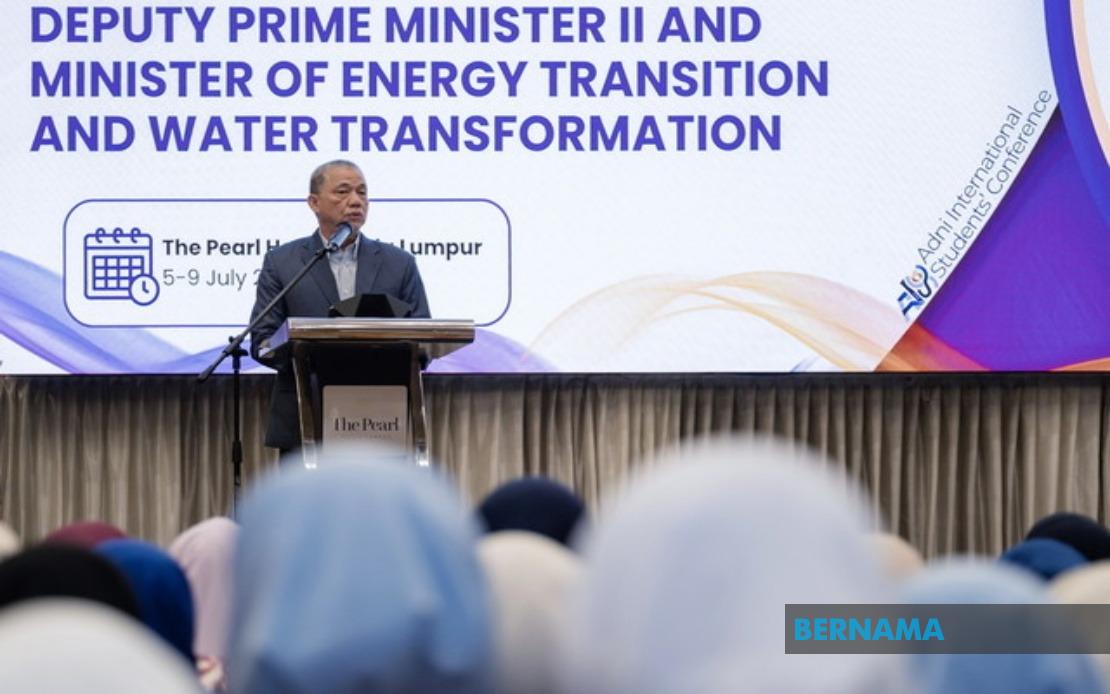
Malaysia's trajectory in an increasingly interconnected global landscape will ultimately be determined by the calibre of its workforce and citizens, not simply by economic metrics or technological prowess, according to Deputy Prime Minister Datuk Seri Fadillah Yusof. Speaking at the opening of the ADNI International Students' Conference 2026 in Kuala Lumpur, Fadillah articulated a vision where human development takes precedence as the foundation upon which national progress is built. This positioning reflects a deliberate policy shift towards recognising that competitive advantage in the modern era demands more than infrastructure investment or digital infrastructure—it requires people equipped with sophisticated cognitive abilities and emotional intelligence.
Fadillah outlined the essential attributes that Malaysian citizens must cultivate to thrive amid contemporary complexities. These include the capacity for critical analysis, the ability to articulate ideas persuasively across diverse audiences, and the resilience to navigate rapid technological and social change. By emphasising these competencies, the Deputy Prime Minister acknowledged that traditional educational measures focusing primarily on subject mastery are insufficient for preparing the next generation. Instead, the emphasis has shifted towards fostering versatile individuals who can synthesise information, engage in reasoned debate, and respond flexibly to unforeseen challenges.
The pressing global challenges confronting humanity today exemplify why human capital development cannot be sidelined. Issues ranging from climate change and pandemic management to the ethical implications of digital transformation and the persistent problem of social inequality transcend national boundaries and defy siloed solutions. Fadillah stressed that these multifaceted problems demand collaborative approaches involving governments, universities and research institutions, business enterprises, community organisations, and younger generations working in concert. The complexity of contemporary challenges means that isolated national responses are insufficient—genuine progress requires pooling expertise, resources, and perspectives across sectors and borders.
The MADANI Government's strategic positioning of human capital development reflects principles articulated decades earlier by Malaysia's third Prime Minister, Tun Hussein Onn, who identified national unity and individual character as the true foundations of state strength. This continuity in philosophy suggests bipartisan recognition of a fundamental truth: material wealth and technological sophistication, while important, ultimately derive their value from the wisdom, integrity, and vision of the people wielding them. Fadillah reinforced this point by noting that while technology serves as a conduit connecting devices and systems, only shared principles, reciprocal regard, and confidence can forge genuine connections between communities and societies.
The comprehensive vision of development articulated by Fadillah extends beyond conventional economic parameters to encompass education quality, physical and mental wellbeing, ethical frameworks, creative capacity, environmental stewardship, and social harmony. This holistic framework recognises that sustainable national progress requires simultaneous advancement across multiple dimensions of human flourishing. A nation might achieve impressive GDP growth while experiencing social fracture, declining public health outcomes, or environmental degradation—outcomes that would undermine long-term stability and prosperity. The MADANI approach seeks to avoid such imbalances by positioning development as genuinely inclusive and multidimensional.
The ADNI International Students' Conference 2026, themed 'Thriving Together: Diversity, Education and Wellness in a Digital World,' embodied many principles Fadillah articulated. The gathering attracted approximately 150 participants representing both domestic and international cohorts, with representatives from Thailand, the Philippines, and Indonesia among the attending delegations. This composition itself represents the kind of cross-cultural intellectual exchange Fadillah identified as vital for producing graduates with global perspective and robust value systems. By bringing together young people from varied backgrounds and educational traditions, the conference created conditions for genuine dialogue about shared challenges and divergent approaches to tackling them.
Fadillah explicitly aligned the conference's objectives with the United Nations Sustainable Development Goals framework, noting how initiatives focused on quality education, inclusive participation, institutional excellence, and meaningful partnerships contribute to realising the broader SDG agenda. This linkage demonstrates how Malaysia positions itself not merely as a recipient of international development frameworks but as an active participant shaping regional responses to global priorities. The Deputy Prime Minister's endorsement signals governmental commitment to supporting platforms where young people can engage substantively with SDG themes rather than treating these objectives as abstract external mandates.
A particularly notable element of Fadillah's remarks was his direct address to the relationship between artificial intelligence and human wisdom. While acknowledging that AI capabilities continue expanding and will inevitably surpass human performance in specific domains, he asserted an irreplaceable role for uniquely human qualities. Technology cannot replicate wisdom—that distinctive human faculty combining experience, reflection, moral discernment, and contextual judgment. Similarly, technological systems, however sophisticated, cannot generate genuine compassion, the profound capacity to recognise suffering in others and respond with care. This distinction carries significant implications for education policy and workforce development in an age of accelerating automation.
The emphasis on values and identity alongside intellectual development reflects acknowledgment that education in Malaysia must serve simultaneously as a vehicle for economic mobility and professional competence while also cultivating citizens rooted in ethical principles and cultural awareness. Young Malaysians entering an interconnected world require confidence in their own heritage and values while simultaneously embracing openness to diverse worldviews. Fadillah's framing suggests that this balance is achievable—that cultivating strong personal and cultural identity need not preclude global mindedness or cross-cultural collaboration.
For Malaysian policymakers and educators, Fadillah's remarks signal a reorientation of priorities within national development strategy. While Malaysia continues investing in physical infrastructure, technological capabilities, and institutional capacity, the government is signalling that equal attention and resources must flow towards deliberately nurturing the human qualities that animate and direct these systems. This shift has implications for curriculum design, teacher training, student assessment methodologies, and the broader ecosystem supporting lifelong learning. It suggests that future competitive advantage will accrue to nations that successfully integrate technical capability with ethical reasoning, creative problem-solving, and collaborative capacity.
Regionally, Fadillah's emphasis on human capital and collaborative responses to shared challenges carries particular resonance. Southeast Asian nations face remarkably similar development pressures and environmental threats, yet frequently operate in relative isolation from one another. The MADANI Government's openness to regional partnerships and cross-border intellectual exchange, as evidenced by welcoming Thai, Filipino, and Indonesian students to the AISC platform, suggests a more integrated approach to regional development. By cultivating networks of young people from neighbouring nations who understand one another's contexts and share commitment to sustainable development, Malaysia contributes to building social capital that can facilitate cooperation on pressing issues from climate adaptation to digital governance.
Looking forward, the challenge for Malaysia will involve translating these articulated principles into concrete educational reforms, institutional investments, and policy frameworks. Developing human capital of genuine quality requires long-term commitment, sustained funding, and alignment across government, educational, and private sectors. It demands that educators possess the capability and autonomy to cultivate critical thinking rather than mere compliance, that examination systems reward creativity and reasoned analysis rather than rote memorisation, and that young people experience genuine opportunities to engage with complex problems collaboratively. The Deputy Prime Minister's remarks provide rhetorical endorsement for these shifts, but implementation will determine whether Malaysian human capital development moves from aspiration to achievement.

