Malaysia faces a pressing public health challenge as sudden cardiac arrest claims lives at alarming rates, with survival figures languishing between 0.5 and 8.5 per cent compared to international benchmarks exceeding 50 per cent in some developed nations. The gulf in outcomes reflects a fundamental gap in emergency infrastructure and preparedness rather than a lack of medical expertise, prompting Sunway Medical Centre Velocity to launch an ambitious initiative addressing both hardware and human capability across the country's capital.
The clinical urgency cannot be overstated. When cardiac arrest strikes, every moment without intervention diminishes the victim's prospects for recovery. Beyond the eight to ten minute mark, the probability of meaningful survival plummets as brain damage accelerates without oxygen. Yet most Malaysians lack access to Automated External Defibrillators at critical moments, and untrained bystanders freeze rather than act. This combination of equipment scarcity and knowledge gaps explains why Malaysia's survival statistics trail so dramatically behind comparable healthcare systems.
Sunway Medical Centre's response extends far beyond symbolic gesture. Under its corporate social responsibility mandate, the institution has identified high-traffic urban zones where cardiac events statistically cluster—public transport nexuses, commercial epicentres, and cultural landmarks. Installing units at Tun Razak Exchange, Bukit Bintang, Ampang Park, and Muzium Negara MRT stations targets commuters in their daily routines. Adding installations at Aquaria KLCC, Menara Public Bank, and Menara Public Bank 2 captures shopping districts where large crowds congregate. The Stadium Merdeka complex extension into Merdeka 118 Precinct further fortifies cultural venues. This geographic strategy recognises that emergencies occur where people congregate, not where planning committees convene.
Dr Wee Tong Ming, the medical centre's director of emergency medicine, articulated the philosophical foundation undergirding this initiative. Delayed response and equipment inaccessibility create artificial mortality where lives should be salvageable. The framing rejects fatalism—cardiac arrest need not prove fatal if systems respond swiftly. By reducing the time between collapse and defibrillation, communities directly influence who survives and who perishes. This paradigm shift treats emergency preparedness as infrastructure investment comparable to road networks or water systems, rather than optional supplementary care.
Physical infrastructure represents only half the equation. Each AED standee incorporates design features maximising visibility and usability during chaotic moments when panic clouds judgment. QR code stickers linking to the hospital's "Save A Number, Save A Life" campaign webpage connect physical devices to digital resources, allowing bystanders immediate access to guidance. Placement in general practitioner clinics extends the campaign's reach into regular healthcare interactions, normalising lifesaving knowledge as part of routine medical engagement rather than specialised training.
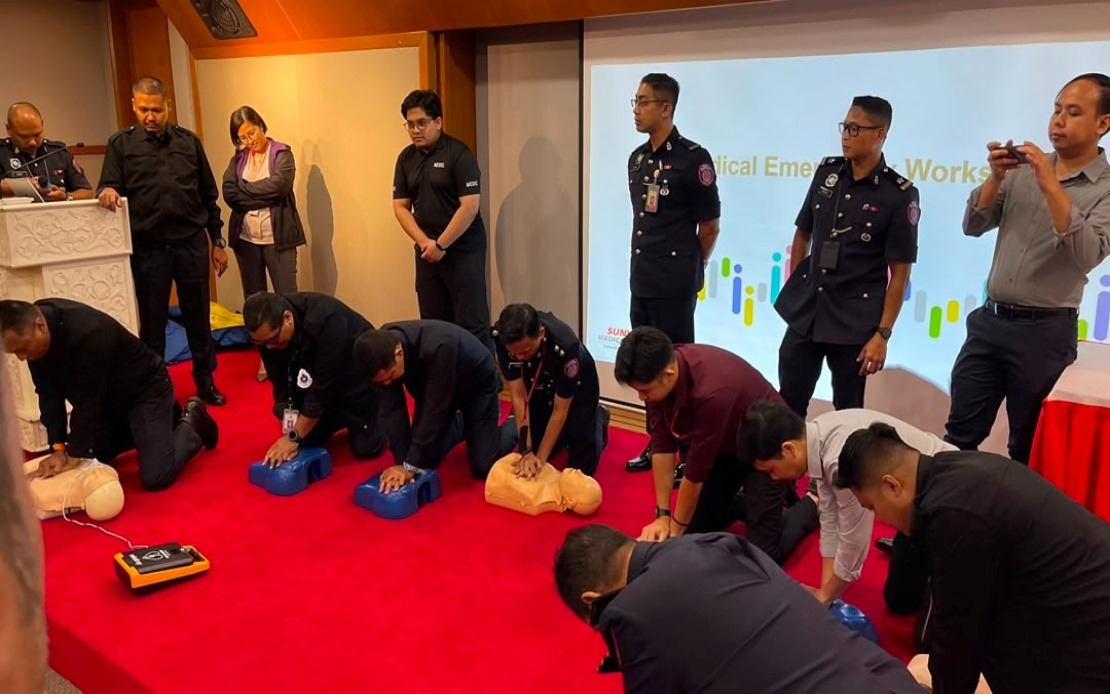
The training component transforms passive equipment into active community capability. Sunway Medical Centre has deployed on-site instruction sessions teaching recognition of cardiac arrest symptoms, proper CPR technique, and AED operation. These hands-on programmes move beyond theoretical knowledge toward muscle memory and confidence—the psychological prerequisite for bystander intervention. Susan Cheow, the hospital's chief executive, emphasised that infrastructure without capability remains inert. Equipment gathering dust in inaccessible corners saves no lives. Only trained, confident communities convert defibrillators from medical equipment into lifesaving implements.
This initiative carries implications extending beyond Kuala Lumpur's boundaries. Malaysia's regional position as a medical tourism destination and healthcare hub demands that public spaces reflect international safety standards. Visitors suffering cardiac events in shopping centres or transport networks encounter either rapid, competent response or preventable tragedy. Establishing visible AED networks and trained responders enhances Malaysia's healthcare reputation while protecting both citizens and visitors. The message communicated internationally—that Malaysia prioritises emergency preparedness—carries economic and diplomatic weight.
The psychological dimension merits attention. Communities witnessing visible AED installations and public training programmes develop collective confidence in medical emergencies. Rather than paralyzing fear, citizens recognise themselves as potential rescuers equipped with tools and knowledge. This empowerment creates virtuous cycles where more bystanders intervene faster, improving outcomes, which further reinforces community engagement. Conversely, communities lacking visible emergency infrastructure and training develop learned helplessness, freezing when crisis strikes.
Sunway Medical Centre's framing of this effort as normative emergency preparedness rather than exceptional innovation suggests a systems-thinking approach. The hospital advocates positioning lifesaving interventions within everyday planning processes—building design incorporates AED accessibility, corporate orientation includes CPR training, community events feature emergency response education. Over time, this mainstreaming transforms emergency readiness from specialist domain into shared cultural responsibility.
Implementation success depends on sustained commitment beyond the initial installation phase. AED maintenance requires regular battery and pad replacement. Training programmes need refreshment as population turnover introduces unprepared cohorts. Public awareness must combat complacency and device abandonment. These ongoing demands explain why many jurisdictions launch initiatives only to watch them deteriorate. Sunway Medical Centre's integration into institutional structures and CSR programming suggests institutional commitment, though accountability mechanisms remain crucial.
The initiative addresses a critical but often-invisible policy gap. While Malaysia invests in tertiary care infrastructure and pharmaceutical innovation, emergency access in public spaces remains fragmented and inconsistent. This project demonstrates how private healthcare institutions can catalyse systems thinking, pressuring governments to embed emergency preparedness into urban planning and building codes. Success may inspire regulatory mandates ensuring every new commercial development incorporates AED infrastructure and trained staff.
From a Southeast Asian perspective, Malaysia's approach offers a replicable model for resource-conscious societies balancing healthcare ambition with fiscal constraints. AED deployment costs substantially less than expanding intensive care capacity yet prevents many admissions entirely. Training bystanders leverages existing populations as distributed emergency response networks. These strategies appeal to neighbouring economies grappling with rising cardiac disease incidence amid limited healthcare budgets.
Ultimately, the initiative reflects a fundamental principle: survival during cardiac arrest depends primarily on time and proximity to intervention, not on medical sophistication. A defibrillator wielded by a trained bystander within three minutes proves more valuable than an intensive care unit accessible in thirty minutes. By flooding high-traffic urban areas with accessible equipment and training citizens in rapid response, Sunway Medical Centre challenges the assumption that emergency healthcare depends on institutional infrastructure alone. Public spaces themselves become healthcare assets, transforming urban environments from sites of medical vulnerability into networks of potential rescue.

