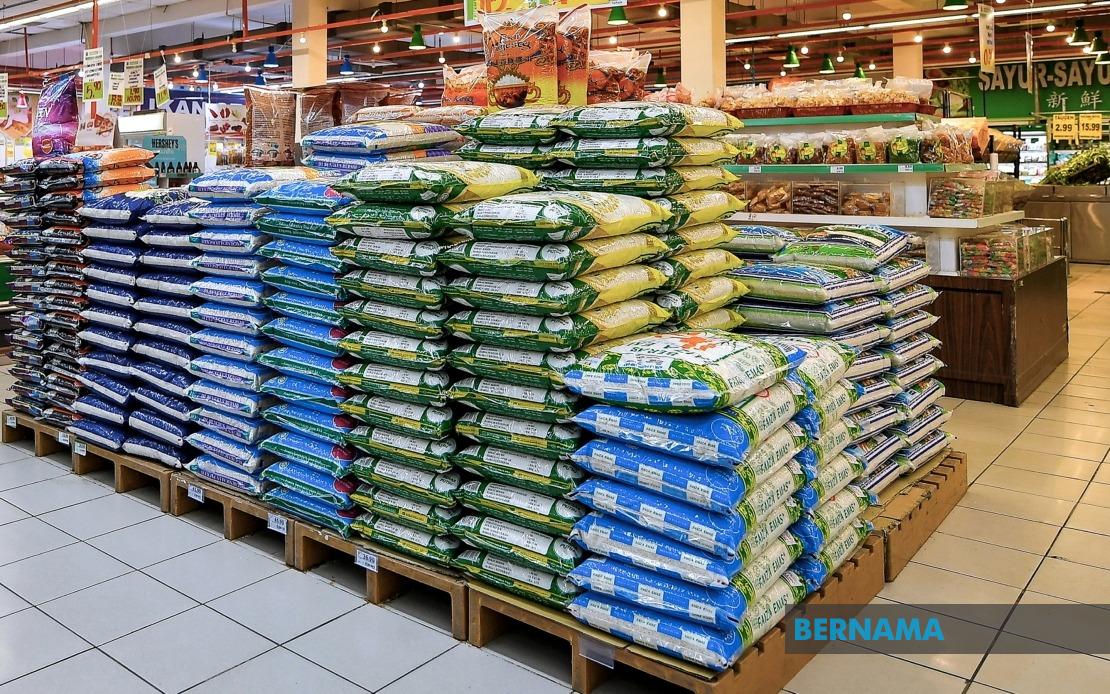
Malaysia's food security remains intact with current rice reserves sufficient to meet the nation's consumption needs for the next half-year, according to Economy Minister Akmal Nasrullah Mohd Nasir. The assurance comes as global supply chain disruptions and inflation pressures mount across multiple sectors, prompting governments worldwide to reassess their strategic stockpiles. For Malaysian consumers and policymakers alike, the six-month buffer represents a meaningful cushion against external shocks, though it also underscores the importance of sustained domestic production and international trade stability.
The minister's statement carries particular weight given Malaysia's reliance on both local paddy production and regional rice imports. While the country produces rice in substantial quantities—particularly in breadbasket regions like Kedah, Perlis, and Sarawak—domestic output alone does not cover total demand. The maintenance of a strategic reserve demonstrates foresight in navigating the current volatile global environment, where competing demand from larger rice-consuming nations in South and Southeast Asia could potentially tighten supplies. By openly communicating the adequacy of reserves, the government appears intent on reassuring both the public and financial markets of the nation's preparedness.
Price stability emerges as a second pillar of the government's food security strategy. The commitment to maintaining unchanged pricing for Local White Rice (BPT) represents a concrete measure to protect household purchasing power at a time when inflation erodes real incomes across income brackets. For lower-income households, rice remains the most essential dietary staple, accounting for a significant portion of food expenditure. Freezing retail prices requires careful coordination between federal authorities, state agencies, and millers to manage margins and prevent market distortions, signalling that considerations of social welfare take precedence over short-term sectoral profit maximization.
The backdrop for these announcements lies in broader global uncertainties affecting food systems worldwide. Weather disruptions, logistics challenges, and geopolitical tensions have created unpredictability in agricultural commodity markets. Unlike some regional neighbours, Malaysia benefits from substantial domestic production capacity and established trade relationships, yet remains exposed to price volatility transmitted through international channels. The economy ministry's messaging appears calibrated to anchor expectations and prevent panic buying or hoarding that could artificially create shortages.
Policyl discussions centred on food security took place during a National Economic Action Council (MTEN) meeting convened by Prime Minister Datuk Seri Anwar Ibrahim at Parliament. The involvement of the nation's highest economic decision-making body underscores the gravity with which leadership views this portfolio. Such high-level engagement typically signals that food security considerations influence broader macroeconomic and political calculus, recognizing that public confidence in the availability and affordability of basic necessities directly impacts social stability and electoral sentiment.
Supporting domestic paddy farmers forms an integral component of the government's integrated approach. The distribution of RM45.98 million to 118,908 paddy farmers in Peninsular Malaysia through the Paddy Farmers Plowing Incentive demonstrates recognition that production sustainability depends on farmer viability. Climate variability and escalating input costs—particularly fertiliser, fuel, and labour—have compressed margins in the paddy sector. Direct financial support reduces the risk of farmland abandonment or conversion to other uses, helping preserve the nation's agricultural productive base for future generations.
The scale of this subsidy initiative reveals the government's commitment to maintaining domestic productive capacity rather than relying entirely on imports. Over the medium term, countries that allow their agricultural sectors to deteriorate face greater vulnerability to international price shocks and supply disruptions. Malaysia's investment in farmer support, though potentially costly in budgetary terms, represents insurance against longer-term food security risks. The fact that support targets Peninsular Malaysia specifically may also reflect regional deployment patterns of paddy cultivation and political considerations tied to farming constituencies.
Context regarding climate pressures facing farmers merits particular attention for Malaysian stakeholders. The nation's tropical monsoon climate, while generally favourable for agriculture, increasingly presents challenges including irregular rainfall patterns, flooding during northeast monsoon seasons, and drought stress during southwest monsoon periods. These phenomena, partly attributable to broader climate trends, directly impact paddy yields and farming profitability. Targeted support acknowledging these pressures signals government awareness of evolving agricultural challenges and commitment to adaptation measures.
For consumers and economists monitoring inflation trends, the price-freeze commitment on Local White Rice requires close observation. Price controls, when applied selectively to essential commodities, can create unintended consequences including black markets, quality deterioration, or production disincentives if margins compress excessively. The government's ability to sustain this pledge depends on external price movements, exchange rate stability, and domestic cost pressures. Should international rice prices spike sharply, tensions could emerge between maintaining the price freeze and ensuring adequate supply through imports.
Regionally, Malaysia's food security messaging carries implications beyond its borders. Southeast Asian countries frequently coordinate on agricultural trade and food security matters through forums like ASEAN. Malaysia's demonstration of strategic reserve adequacy and policy commitment to price stability may reassure trading partners and investors about the nation's economic resilience. Conversely, should circumstances force policy reversals, it could create confidence disruptions affecting perceptions of government credibility across multiple policy domains.
The alignment of messaging across multiple dimensions—reserves, pricing, farmer support, and high-level coordination—suggests a comprehensive policy framework rather than ad-hoc responses. However, sustaining these commitments amid prolonged global uncertainty or domestic economic pressures will test government resolve. For Malaysian households dependent on affordable rice and stable food markets, near-term assurances provide relief, though longer-term food security ultimately depends on sustained investment in agricultural productivity, climate adaptation, and trade relationship stability.

