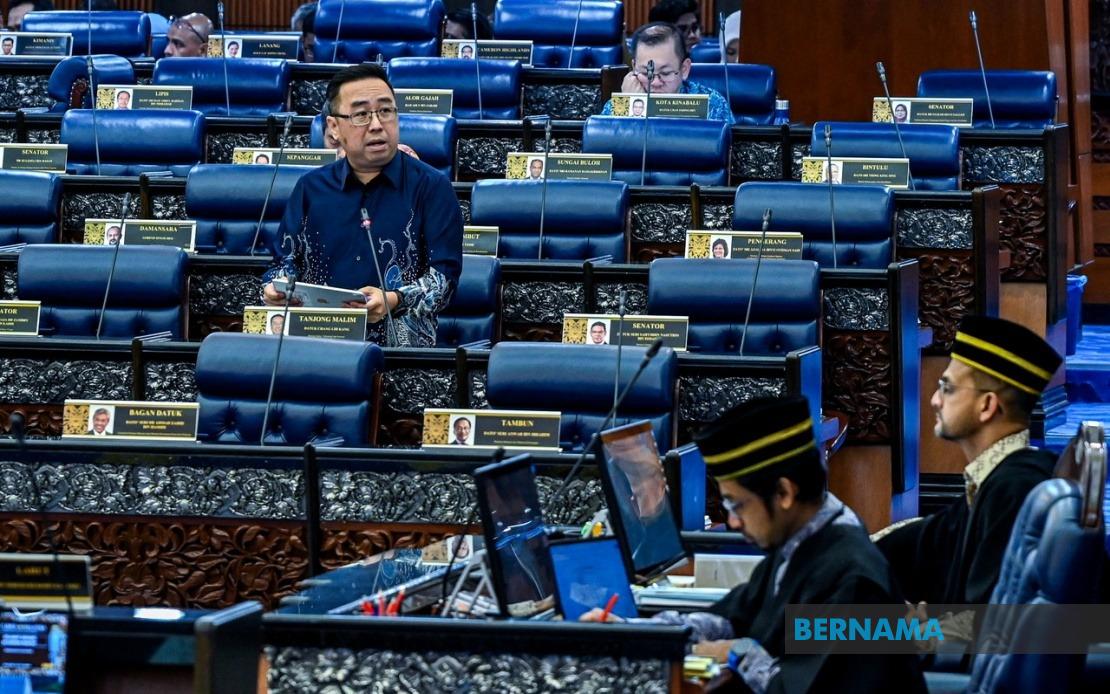
The Malaysian government has embarked on an ambitious two-year initiative to transform locally-developed semiconductor packaging technology from laboratory prototypes into market-ready commercial products. Science, Technology and Innovation Minister Datuk Chang Lih Kang announced that the RM185 million pilot project, operating under the Malaysia Science Endowment framework, represents a strategic pivot toward high-value semiconductor manufacturing capabilities that could reshape the nation's standing in global electronics supply chains.
The initiative pools resources from five domestic companies alongside government research institutions in a consortium structure designed to accelerate technology maturation. Rather than funding indefinite research cycles, the government has committed to a carefully bounded capacity-building window aimed at lifting the technology from Technology Readiness Level 5—where laboratory demonstrations prove basic feasibility—to TRL 9, the threshold where commercial deployment becomes viable. This structured progression marks a departure from open-ended subsidies, instead emphasising measurable advancement toward market viability.
The underlying business model reflects a deliberate shift in government strategy. After the two-year support period concludes, responsibility transfers entirely to participating companies, which must then secure their own customer bases, financing arrangements, and supply chain partners without relying on continued state backing. This transition framework addresses a persistent challenge in Malaysia's technology commercialisation efforts: the tendency for government-incubated projects to remain indefinitely dependent on public funding rather than achieving genuine market sustainability.
Within the semiconductor ecosystem, advanced packaging represents a critical growth frontier. Unlike traditional packaging that simply encases integrated circuits, advanced packaging techniques enable complex multi-chip systems that form the backbone of modern computing applications. Artificial intelligence processors, data centre equipment, high-performance computing clusters, and next-generation automotive systems all demand packaging innovations that Malaysia currently imports rather than manufactures domestically. By establishing local packaging capabilities, the country positions itself to capture higher-margin manufacturing stages while reducing supply chain vulnerabilities exposed by recent global semiconductor shortages.
The consortium model carries significant implications for competitive dynamics within Malaysia's semiconductor sector. By requiring participating companies to collaborate rather than compete during the development phase, the structure encourages knowledge-sharing while building technical expertise across multiple organisations. This approach contrasts with winner-take-all subsidies that concentrate innovation within a single firm, potentially creating more resilient and distributed capabilities across the industry. However, the eventual transition to pure market competition tests whether this collaborative foundation sustains through the commercialisation phase.
Broader technology trends underpin the timing of this investment. The emerging importance of 5G infrastructure, quantum computing research, and smart vehicle electronics creates expanding demand for sophisticated packaging solutions. Countries that develop these capabilities domestically gain strategic advantages in controlling critical infrastructure components and capturing employment opportunities in design and manufacturing. Malaysia's intervention positions the nation to participate in these growth markets rather than remaining confined to contract manufacturing roles with limited technical ownership.
The decision to use grant funding rather than loans or equity investments reflects confidence in the underlying technology's potential while minimising financial burden on participating companies during the development phase. Grants reduce the risk profile for industrial partners, making participation more attractive while allowing companies to redirect cash flows toward infrastructure investments and workforce development. This capital injection acknowledges that private markets alone cannot justify initial investment in emerging domestic capabilities that lack established supply relationships or customer commitments.
Minister Chang's parliamentary statement emphasised that the initiative targets not merely producing a single technology but catalysing systematic transformation within Malaysia's semiconductor ecosystem. By developing locally-owned intellectual property and technological competencies, the programme aims to shift the industry toward higher-value activities where Malaysia can compete on innovation and quality rather than solely on labour costs. This repositioning aligns with broader economic diversification goals as manufacturing wages rise across Southeast Asia.
The two-year timeframe warrants scrutiny regarding realistic technology maturation schedules. Moving from laboratory demonstration to commercial-scale production typically demands solving unforeseen technical challenges, building manufacturing infrastructure, qualifying products with potential customers, and establishing quality assurance systems. The success of this timeline depends heavily on the maturity of underlying technology when the consortium begins and the resources devoted to scaling activities. Malaysian officials will need to demonstrate concrete progress milestones to maintain parliamentary and public confidence in the investment.
For Malaysia's position within regional semiconductor dynamics, this initiative signals growing ambitions to move beyond assembly and testing services that historically defined the nation's role. Vietnam, Thailand, and Singapore are simultaneously investing in advanced semiconductor capabilities, creating competitive pressure to establish technological differentiation quickly. Malaysia's approach through government-enabled consortia differs from Singapore's emphasis on multinational partnerships or Thailand's focus on discrete component production, suggesting deliberate positioning for a specific niche within the broader industry.
The success of this venture will significantly influence future government technology commercialisation strategies. Demonstrated success in transitioning advanced packaging to profitable commercial production could justify similar consortium approaches for other emerging technologies where Malaysia seeks to build competitive advantage. Conversely, difficulties in achieving commercialisation within the timeframe might prompt policy recalibration toward longer support periods or different institutional models for nurturing emerging capabilities.
Industry observers will monitor whether participating companies successfully secure customer commitments and external financing as the two-year capacity-building period approaches completion. The true test arrives when government support ends and companies must demonstrate that the technology generates genuine market value. This transition point will reveal whether the MSE initiative has built sustainable competitive capabilities or created temporary protected markets that collapse without ongoing subsidisation.

