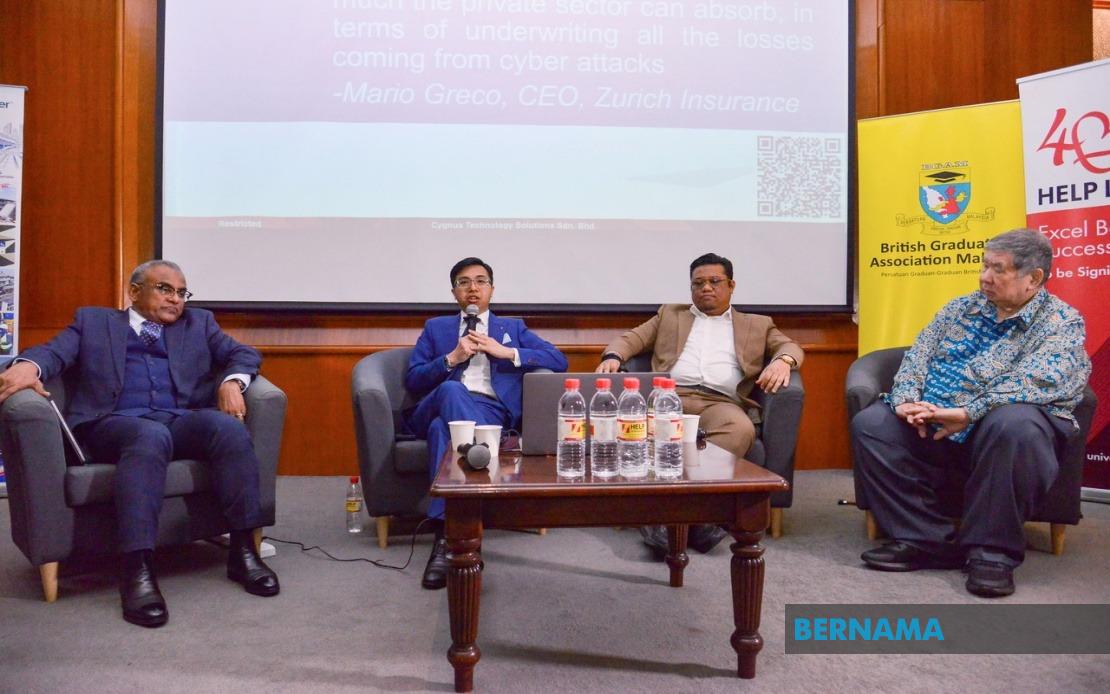
Malaysia's scam problem has transformed from a sporadic nuisance into a structural threat to national prosperity and public trust. With over 66,000 documented online fraud cases in the past year and aggregate losses touching approximately RM2.97 billion, the scale of the crisis has prompted policymakers and law enforcement leaders to sound fresh alarms about the sophistication and reach of criminal networks exploiting digital platforms. Datuk Kamarudin Md Ali, an executive member of the Malaysia Crime Prevention Foundation and president of the British Graduates Association Malaysia, framed the challenge not as an isolated criminal phenomenon but as a pervasive social malady that penetrates families, businesses and the fabric of digital commerce across the nation.
The evolution of scamming tactics reflects a fundamental shift in how organised crime operates in Southeast Asia's most developed economy. Rather than relying on crude deception, contemporary syndicates deploy artificial intelligence-driven deepfakes, sophisticated social engineering strategies and psychological manipulation designed to exploit human vulnerabilities rather than technological gaps. This transition reveals why traditional law enforcement responses have struggled to contain losses. The orchestration of these attacks often involves international organised crime compounds, particularly across Myanmar, Cambodia, Laos and the Philippines, which collectively generate approximately USD40 billion annually through methods ranging from cryptocurrency laundering to the exploitation of trafficked workers from more than 80 nations across borders.
Akhbar Satar, director of HELP University's Institute of Criminology and Criminal Justice, articulated a crucial insight during recent discussions on scam prevention: perpetrators succeed not by hacking computer systems but by hacking human psychology. This observation reframes the entire debate around cybersecurity and fraud prevention. A person with compromised integrity becomes the entry point for criminal exploitation, whether the vector involves a phishing email, a romantic catfish scheme or an investment fraud. Satar argued that universities bear institutional responsibility for cultivating critical thinking and ethical reasoning among graduates who will shape policymaking, law enforcement strategy and criminal justice frameworks in coming years. The implication extends beyond academia: if tertiary education fails to build defences rooted in integrity and rational scepticism, no technological solution can fully compensate.
Tan Sri Dr Syed Hamid Albar, the former Home Minister who now serves as Asia e University chancellor, broadened the policy conversation by framing scams as more than financial crimes. He positioned them as threats to public confidence in digital systems and state capacity. His diagnosis emphasises that enforcement mechanisms alone cannot arrest the rise of organised fraud. Instead, he advocates a comprehensive national approach anchored in public education and digital literacy. The rationale is straightforward: a population equipped to recognise scam techniques, verify information sources and think critically about unsolicited digital contact presents a far more resilient bulwark than any reactive policing operation after fraudsters have already struck.
Southeast Asia's emergence as the global epicentre of commercial crime represents a geopolitical vulnerability with immediate Malaysian implications. Datuk Seri Ramli Mohamed Yoosuf, formerly heading Bukit Aman's Commercial Crime Investigation Department, assessed that regional scam losses in 2025 could reach between USD88 billion and USD114 billion. These figures underscore why Malaysian policymakers cannot treat fraud containment as a domestic policing matter alone. The operational infrastructure for large-scale scamming has become regionalised and cross-border, requiring coordinated intelligence-sharing and law enforcement cooperation across ASEAN. Malaysia's recent legislative responses, including the Cybersecurity Act 2024 and enhanced compliance with Financial Action Task Force standards, represent steps toward this integration, though implementation speed and inter-agency coordination remain critical variables.
The sophistication of contemporary fraud operations increasingly hinges on technological advancement, specifically the generation of deepfake videos and audio recordings that convincingly impersonate trusted figures. When combined with stolen personal data harvested from prior breaches and social media profiling, this capability enables scammers to conduct initial contact with plausible claims. A potential victim receiving a video message appearing to show a known business associate or family member requesting urgent payment faces psychological pressure that undermines rational evaluation. The deployment of AI in fraud amplifies the asymmetry between individual victims and criminal syndicates, tilting the risk-reward calculation sharply in the scammers' favour. Malaysia's financial sector, which processes high-value transactions daily, faces particular vulnerability to schemes exploiting this technology.
The National Scam Response Centre represents one institutional response to the coordination challenge, though its effectiveness depends on resourcing, information-sharing protocols and alignment with private sector partners including banks and telecommunications companies. Law enforcement agencies face the structural problem that scam syndicates can operate across jurisdictions and exploit legal grey zones, particularly where cryptocurrency transactions obscure asset trails. Datuk Seri Ramli stressed that escalating synergies between organised scamming and other serious crimes including human trafficking and money laundering demand sustained technological innovation alongside human expertise. Malaysia cannot simply import best practices from developed nations; regional criminal networks have adapted methods specifically to exploit Southeast Asian vulnerabilities in financial regulation, telecom oversight and international cooperation frameworks.
Public awareness campaigns, while necessary, require sophisticated design to penetrate information environments fragmented by social media and alternative news sources. The challenge extends beyond warning vulnerable populations about obvious frauds; it encompasses building institutional scepticism within businesses regarding wire transfer requests, recruitment offers and vendor payment instructions. Educational institutions ranging from secondary schools through professional certifications can embed fraud recognition and verification protocols into curricula, creating generations of digitally literate citizens less susceptible to manipulation. Universities particularly bear responsibility for shaping leaders in banking, technology, telecommunications and public administration who understand both the technical and psychological dimensions of fraud prevention.
The economic consequences of Malaysia's scam epidemic ripple beyond direct victim losses. Businesses experiencing fraud may reduce digital commerce activity, dampening e-commerce growth and digital transformation initiatives that support long-term productivity gains. Consumer confidence in online payment systems and digital banking services declines when high-profile fraud cases receive media coverage, potentially slowing financial inclusion efforts targeting underbanked populations. Insurance and compliance costs escalate across financial institutions and technology companies forced to implement enhanced verification procedures. The cumulative drag on Malaysia's digital economy becomes measurable through reduced investment in fintech innovation and digital infrastructure development.
The framework for genuine scam reduction requires moving beyond enforcement-centric models toward ecosystem approaches recognising that banks, telecommunications providers, technology platforms, educational institutions and community organisations each control critical junctures where fraud can be detected or prevented. Financial institutions can implement transaction monitoring and anomaly detection systems, but only if customers understand why repeated verification requests occur. Telecommunications companies can block spoofed calls and suspicious SMS patterns, but only if users learn to distrust unexpected digital contact. Technology platforms can remove scam advertisements, but only if civil society maintains pressure for transparency and accountability. Malaysia's most effective scam-fighting strategy must therefore weave together enforcement action, regulatory innovation, technological deployment and sustained public education into a coherent national response.
The gathering of government leaders, law enforcement professionals, cybersecurity experts and academics at the BGAM Lecture Series signals political recognition that scam prevention has ascended to strategic national importance. The involvement of former and current ministerial figures suggests policymakers understand that incremental responses have failed to contain an expanding threat. However, translating awareness into coordinated action across fragmented institutional interests remains the critical next step. Malaysia's success in building genuine resilience against organised scamming will ultimately depend less on any single initiative than on the consistency and coherence with which public institutions, private sector entities and civil society organisations execute complementary strategies rooted in education, technology and collective responsibility.

