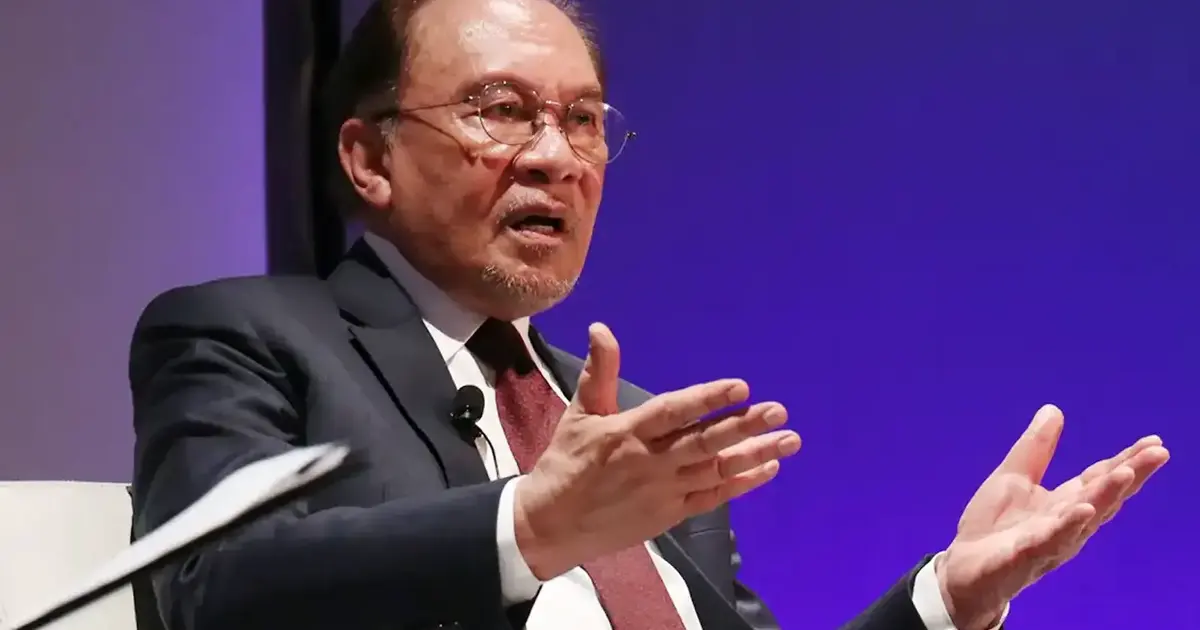
Prime Minister Anwar Ibrahim has characterised Malaysia's second quarter gross domestic product expansion as a testament to the country's underlying economic strength, reflecting the tangible benefits of his administration's sustained reform agenda since taking office. The positive growth figures arrive at a significant moment for the government, which has pursued an ambitious programme of structural economic reforms aimed at modernising the country's productive capacity and improving its competitive positioning in the region.
Anwar's assessment underscores the political significance attached to Malaysia's macroeconomic performance, which serves as a key metric for evaluating the government's economic stewardship. The second quarter results provide empirical support for the administration's policy direction, particularly after three years of comprehensive initiatives designed to reshape Malaysia's economic architecture. These reforms have encompassed diverse areas including digital infrastructure investment, financial sector modernisation, and efforts to attract higher-value manufacturing and technology sectors to the country.
The Prime Minister's statement reflects confidence that the structural improvements introduced by Putrajaya have created a more durable foundation for sustained economic growth. Rather than relying on commodity price cycles or short-term stimulus measures, the government's approach has emphasised building institutional capacity and improving the business environment to encourage private sector dynamism. This philosophy represents a deliberate shift toward long-term competitiveness rather than cyclical management of the economy.
From the perspective of Southeast Asian economic performance, Malaysia's Q2 expansion carries regional implications. As the region's third-largest economy and a crucial trading hub, Malaysia's growth trajectory influences broader regional dynamics and investor sentiment across Southeast Asia. The government's ability to deliver consistent growth helps maintain confidence in the country as a stable investment destination, competing with regional peers for foreign direct investment and talent.
The three-year timeframe cited by Anwar encompasses a period of significant political and economic transition in Malaysia. After the 2022 elections that brought the current government to power, policymakers inherited an economy challenged by inflation, supply chain disruptions stemming from global factors, and structural weaknesses accumulated over previous administrations. The fact that the government can now point to sustained expansion suggests that initial policy interventions have begun yielding measurable results.
Anwar's emphasis on strengthened economic fundamentals deserves scrutiny in the context of Malaysia's specific vulnerabilities. The country remains dependent on semiconductor exports, petroleum revenues, and regional trade patterns that can fluctuate significantly. However, the government's articulation of structural reform suggests an attempt to diversify Malaysia's revenue base and reduce these dependencies. Initiatives promoting renewable energy, green technology, digital economy development, and value-added services represent efforts to create more resilient growth engines less vulnerable to commodity price shocks.
The political dimension of economic messaging cannot be overlooked in Malaysian context. As the government approaches the mid-point of its current electoral cycle, demonstrating economic competence remains crucial for maintaining public confidence and support. GDP growth figures translate into employment opportunities, wage improvements, and enhanced government revenues for public services. The narrative of reformed fundamentals resonates with middle-class voters particularly concerned about economic stability and career prospects.
For Malaysian businesses and investors, Anwar's framing of the Q2 results carries practical implications. Positive growth expectations can influence corporate investment decisions, expansion plans, and hiring intentions. When policymakers articulate confidence in structural improvements, private sector actors adjust their risk assessments and strategic planning accordingly. Financial markets similarly respond to official economic assessments, affecting capital flows and asset valuations across Malaysia's financial system.
The challenge ahead lies in maintaining this growth trajectory while addressing persistent concerns about living costs, wage stagnation relative to inflation, and income inequality. GDP growth measured in aggregate terms does not automatically translate into improved conditions for all segments of Malaysian society. The government's ability to ensure that economic expansion benefits distributed equitably across regions and income groups will ultimately determine whether Q2's positive figures translate into sustainable political support and genuine improvement in citizens' economic circumstances.
International economic conditions will continue influencing Malaysia's growth prospects. Global trade dynamics, particularly surrounding chip manufacturing and demand from major trading partners, remain central to Malaysia's export-dependent economy. The government's reform narrative assumes a relatively stable external environment; significant global disruptions could test whether structural improvements prove sufficiently robust to insulate Malaysia from external shocks. Nevertheless, Anwar's characterisation of Q2 performance reflects optimism that the past three years of deliberate policymaking have positioned Malaysia for more resilient, diversified growth moving forward.

