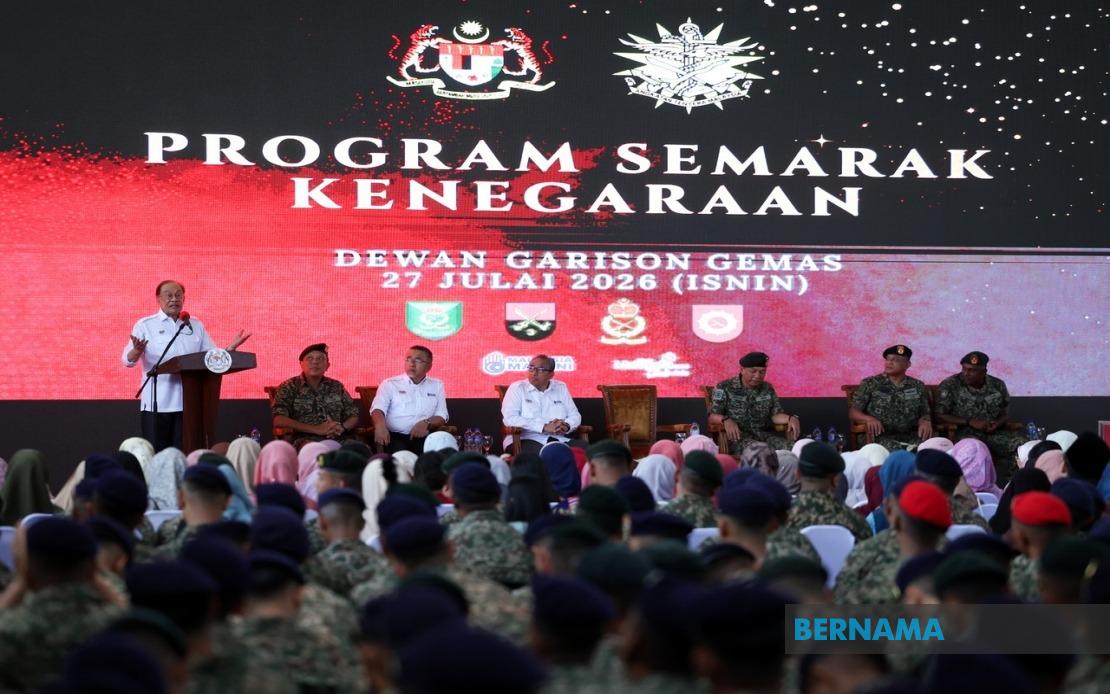
Malaysia's choice as the host nation for a Formula 1 Grand Prix reflects far more than motorsport credentials. According to Prime Minister Anwar Ibrahim, the decision hinges on a combination of political stability, institutional strength, and high-level international relationships—particularly the established rapport between His Majesty Sultan Ibrahim and King Hamad bin Isa Al Khalifa of Bahrain. This convergence of factors positions Malaysia as a reliable partner capable of managing one of the world's most demanding sporting events.
The personal relationship between Malaysia's monarch and Bahrain's king carries considerable diplomatic weight. Such connections at the highest levels of state facilitate trust and cooperation on matters of substantial international importance. In the context of securing a major global event like F1, these personal ties provide confidence that arrangements will be honoured, logistics will run smoothly, and the host nation maintains the governance standards expected by international stakeholders. The strength of these royal connections demonstrates Malaysia's integration within the Gulf Arab sphere of influence—a region increasingly important to Malaysian business and diplomatic interests.
Anwar emphasised that Malaysia's peaceful domestic environment constitutes a fundamental prerequisite for hosting the Grand Prix. Without political stability and social cohesion, major international events cannot succeed. The absence of civil unrest, sectarian tensions, or security threats makes the country an attractive destination for teams, sponsors, media personnel, and international spectators. This stability reflects decades of institutional development, from the rule of law to professional security forces. For nations competing to host global events, peace is not merely an advantage but an existential requirement—something Malaysia can demonstrate through its track record.
The Prime Minister deliberately shifted credit away from individual political leadership, attributing Malaysia's suitability instead to the nation's broader institutional framework and collective social contribution. This approach acknowledges the distributed nature of national success: the military and police forces maintain order, civil servants administer systems efficiently, the private sector drives economic dynamism, and hospitality industries ensure visitor satisfaction. Anwar's framing underscores that F1 hosting represents a whole-of-nation effort rather than a single leader's accomplishment, a perspective that resonates with concepts of institutional strength valued by international event organisers.
Malaysia's performance as ASEAN Chair during the preceding year significantly enhanced its international standing. A successful chairmanship—characterised by effective diplomatic coordination, productive regional dialogue, and constructive outcomes—demonstrates a nation's capacity to convene, negotiate, and deliver results at a multilateral level. The Arab world's recognition of Malaysia's leadership in this capacity extended the country's soft power beyond Southeast Asia into the Middle Eastern sphere. This expanded prestige and proven organisational competence naturally translate into confidence in Malaysia's ability to manage other complex, high-stakes undertakings like F1 hosting.
The selection of Malaysia as an F1 host venue carries implications for Southeast Asian motorsport development and tourism positioning. Formula 1 brings global media attention, international visitor spending, infrastructure investment, and technological knowledge transfer. The region has limited existing F1 heritage compared to Europe or Asia-Pacific nations like Japan and Singapore, making Malaysia's hosting opportunity particularly significant for elevating the region's motorsport profile. This event serves as a platform to showcase ASEAN capabilities to a worldwide audience comprising hundreds of millions of television viewers and corporate stakeholders.
From an economic perspective, hosting F1 generates substantial revenue through ticketing, hospitality, broadcasting rights, and ancillary spending across hotels, restaurants, and tourism services. Anwar's specific mention of the hotel and restaurant sectors' contribution underscores the event's ripple effects throughout the service economy. Communities across the hosting region benefit from employment opportunities, supplier contracts, and increased consumer activity surrounding race weekends. The infrastructure developments required—improved transportation networks, venue construction, security enhancements—often leave lasting legacies enhancing national capacity.
The diplomatic dimension remains particularly noteworthy for Malaysian policymakers. The fact that both Gulf Arab leadership and international motorsport authorities recognised Malaysia as suitable reflects the country's successful navigation of multiple spheres simultaneously. Malaysia maintains relationships across the Muslim world, engages effectively with ASEAN partners, and participates credibly in global governance forums. This multi-directional diplomatic presence, anchored by strong institutional foundations and personal relationships at the leadership level, creates the confidence necessary for major international commitments.
For Malaysian citizens, Anwar's framing offers an implicit social contract narrative: the stability and prosperity the nation enjoys result not from any individual's efforts but from collective institutional performance and social discipline. This messaging, whether intentional or not, emphasises shared ownership of national achievements and distributed responsibility for maintaining the conditions that attract global opportunities. It suggests that Malaysia's F1 selection validates the existing system of governance and social organisation rather than signalling need for fundamental change.
Looking forward, Malaysia's hosting of F1 establishes precedent for future major events and reinforces positioning within the global events circuit. Success in this domain opens possibilities for other international gatherings—from sporting championships to business conferences to diplomatic summits. The country's demonstrated capability to manage world-class events, combined with its geographic location bridging Asia's developed and developing regions, positions Malaysia as an increasingly attractive venue for organisations seeking Southeast Asian platforms. This virtuous cycle—successful event hosting leading to greater prestige and further opportunities—amplifies Malaysia's regional influence and economic returns.

