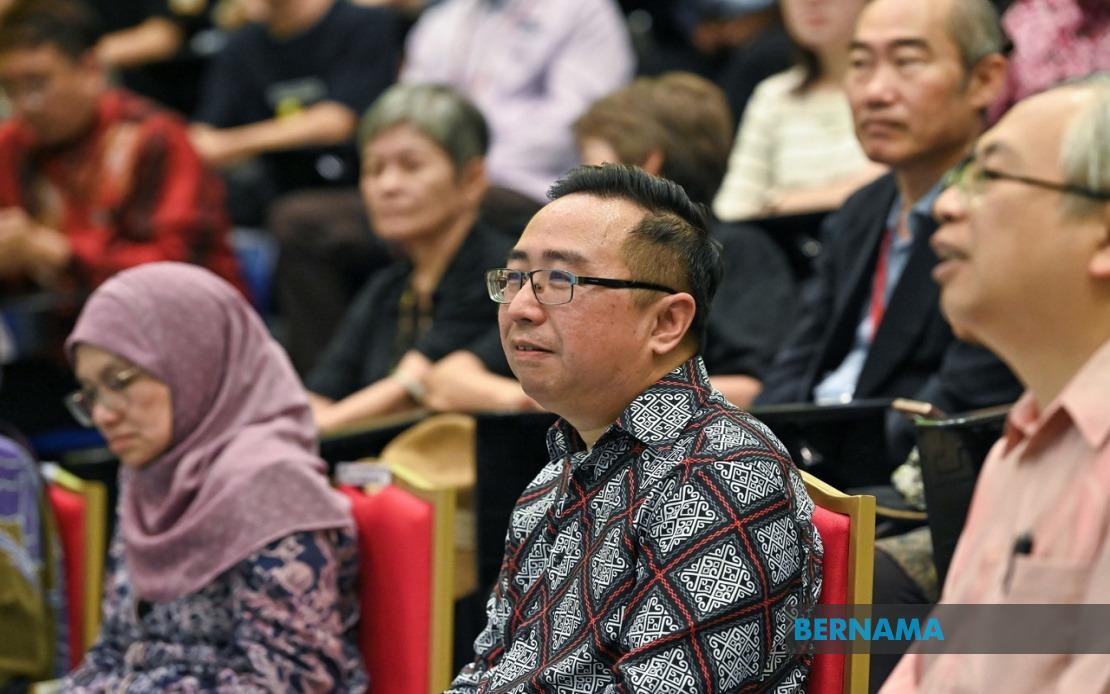
Malaysia's rapid emergence as a regional hub for advanced technology is translating into robust employment prospects for university graduates trained in science, technology, engineering and mathematics, Science, Technology and Innovation Minister Datuk Chang Lih Kang said Tuesday at the 20th Malaysia Festival of the Minds in Kampar. The gathering, held at Universiti Tunku Abdul Rahman's Kampar campus, highlighted a critical imbalance in the local labour market where positions for skilled technical professionals are multiplying faster than qualified candidates can fill them.
The shortage of talent in Malaysia's technology sector reflects a broader regional phenomenon as countries compete fiercely to attract and retain engineering expertise. Chang emphasised that this supply-demand gap represents an opportunity for current students, particularly those wavering about their academic direction or worried about career stability after graduation. Rather than fearing technological disruption to traditional employment, graduates entering the field should view themselves as essential participants in Malaysia's economic transformation rather than as replaceable components.
Addressing persistent public anxieties about artificial intelligence and automation, the minister used the festival as a platform to reframe the narrative around technology's impact on human employment. Rather than allowing concerns about job displacement to circulate unchecked, MOSTI is taking the initiative to engage directly with students and explain the government's perspective on how technological advancement will complement rather than eliminate human workers. This proactive messaging aims to counter misconceptions that might otherwise discourage promising students from pursuing demanding STEM programmes.
The government's partnership strategy with educational institutions and private industry reveals a recognition that developing Malaysia's technology capabilities requires coordinated effort across multiple sectors. Universities must expand enrolment in relevant disciplines and ensure curricula remain aligned with industry needs, while companies must commit to absorbing graduates into meaningful roles that reward their specialised training. Chang underscored that this is not merely aspirational policy but reflects tangible economic activity already underway across the country.
Underlying these employment opportunities is a substantial wave of capital investment in Malaysia's technology infrastructure. The government and private partners have committed RM185 million over two years to advance the country's capabilities in semiconductor packaging, a foundational technology that sits within the critical semiconductor value chain. This financial commitment signals serious intent to position Malaysia as more than merely an assembly location for global technology companies but rather as a centre of innovation and technological development.
The funding structure itself illustrates evolving government thinking about technology development in Malaysia. Rather than shouldering the entire financial burden through state coffers, MOSTI has mobilised the private sector through a matching-fund framework where government contributions are equalled by industry investment. The government is providing RM92 million while five industry partners contribute RM93 million, creating shared ownership of success and demonstrating that technology advancement in Malaysia now attracts sufficient commercial confidence to attract comparable private capital.
Advanced packaging technology represents a strategic priority for Malaysia's semiconductor sector, offering opportunities to climb the value chain beyond basic manufacturing. Packaging—the process of encasing silicon chips in protective materials and connecting them to circuit boards—demands substantial technical expertise and represents a segment where companies can capture greater profit margins and intellectual property. By 2028, MOSTI aims to strengthen Malaysia's position in this domain, recognising that competing successfully in global semiconductor markets requires mastery across multiple technological domains.
The initiative acknowledges that developing sophisticated technological capabilities presents formidable obstacles beyond simply allocating funding. Creating world-class expertise in advanced packaging requires sustained investment in research infrastructure, recruitment and retention of highly skilled personnel, collaboration between academic researchers and industry practitioners, and protection of intellectual property as knowledge accumulates. Chang recognised these complexities while projecting confidence that Malaysia can achieve its two-year objectives, a statement carrying implicit acknowledgement that the challenges are surmountable with appropriate commitment and coordination.
For Malaysian graduates and parents evaluating educational pathways, these announcements carry significant implications. The trajectory suggests expanding employment stability and career advancement opportunities within Malaysia itself, reducing the historical brain drain that has seen accomplished STEM graduates seek opportunities in more established technology hubs. Students completing undergraduate degrees in physics, chemistry, computer science, or engineering disciplines can anticipate entering a labour market where their qualifications command premium compensation and where specialised roles remain difficult to fill.
The broader economic context supporting these opportunities reflects Malaysia's strategic positioning within global semiconductor supply chains. As international companies diversify manufacturing away from concentration in Taiwan and South Korea, Malaysia remains an attractive alternative given its established infrastructure, skilled workforce, and government support for technology sectors. The RM185 million packaging technology initiative represents Malaysia's effort to deepen this advantage by developing capabilities that extend beyond routine manufacturing into higher-value technological domains.
These developments also carry implications for Malaysia's positioning within Southeast Asia's technology ecosystem. As the region gradually builds technological self-sufficiency and reduces dependence on foreign expertise, countries that successfully develop domestic STEM talent pipelines will enjoy competitive advantages in attracting future investment. Malaysia's explicit focus on creating employment opportunities for graduates reflects understanding that sustainable technology development requires not merely foreign capital but also local human capital that remains committed to advancing the sector.
For policymakers and industry leaders, the challenge now extends beyond simply announcing opportunities and securing funding. Delivering on these promises requires rigorous execution—ensuring that promised job openings materialise, that graduate compensation remains competitive with international alternatives, and that career progression pathways allow talented individuals to advance into senior technical and leadership roles. The credibility of Malaysia's technology sector depends substantially on following through on current commitments.

