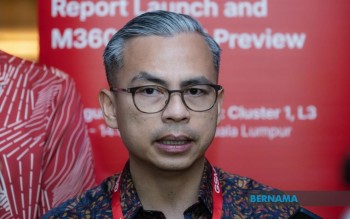
Malaysia has been selected to host M360 ASEAN 2026 on September 9 and 10, marking a significant moment for the country's standing in Southeast Asia's rapidly evolving digital economy. The decision to hold the inaugural ASEAN edition of this major industry summit in Kuala Lumpur represents recognition of Malaysia's growing influence in telecommunications and artificial intelligence sectors, according to Communications Minister Datuk Seri Fahmi Fadzil. The event, organised by the GSM Association (GSMA), is expected to position Malaysia as a central hub for regional digital policy discussions and technology innovation during a critical period of technological transformation across the bloc.
The choice of Kuala Lumpur as host carries particular weight because this marks the first occasion the M360 summit has been held anywhere in ASEAN, elevating Malaysia's profile beyond its own borders. Fahmi described the selection as an honour for the nation, underscoring the international recognition implicit in such an appointment. The event represents more than merely hosting global delegates; it signals Malaysia's readiness to lead conversations about the digital architecture that will define Southeast Asia's economic competitiveness over the coming decade. For a region still establishing coherent digital governance frameworks, having Malaysia serve as the convening point offers practical advantages in proximity, infrastructure, and regulatory familiarity for ASEAN member states.
M360 ASEAN 2026 will gather an expansive cross-section of stakeholders whose collective influence shapes digital policy and investment across the region. Industry executives, technology vendors, academic researchers, venture capital investors, and government representatives from ASEAN nations will converge to examine shared challenges and opportunities. This diversity of perspectives is crucial because telecommunications and AI development cannot proceed through market forces alone; government regulatory frameworks, academic research capacity, and cross-border investment all play determining roles. By creating a single venue where these constituencies interact directly, the summit facilitates the kind of informal knowledge exchange and relationship-building that often proves more valuable than formal presentations.
The broader context for this summit reflects Asia-Pacific's extraordinary digital economic trajectory. According to analysis presented by GSMA, mobile technologies and related services will inject approximately US$1.4 trillion (RM5.73 trillion) into the Asia-Pacific economy by 2030, representing a 40 per cent increase from the current US$1 trillion contribution. These figures underscore why telecommunications policy and AI governance have become priority concerns for government ministries across ASEAN. The stakes are not merely technological but profoundly economic, touching employment, consumer welfare, and national competitiveness. Malaysia's role as host positions it to help shape how these massive economic flows are distributed and regulated across Southeast Asia.
Beyond the headline figures, GSMA's analysis identifies four converging dynamics that will determine the region's digital trajectory, and these will form the intellectual core of discussions in Kuala Lumpur. The first involves the explosive expansion of artificial intelligence across industries and consumer applications. Unlike previous waves of technological disruption that unfolded gradually, AI advancement is accelerating at a pace that challenges conventional regulatory timelines. ASEAN nations collectively lack comprehensive AI governance frameworks, making regional dialogue essential for developing coordinated approaches that neither stifle innovation nor expose populations to unchecked risks. Malaysia's role as convener positions it to champion pragmatic regulatory philosophies that other ASEAN members might adopt.
The second priority centres on declining digital trust, a phenomenon extending far beyond ASEAN but acutely felt in Southeast Asia where cybersecurity capacity varies significantly between member states. Privacy breaches, misinformation campaigns, and data exploitation have eroded public confidence in digital platforms and services. This declining trust creates a genuine policy challenge because economic growth depends on digital adoption, yet citizens increasingly hesitate to engage with online services without stronger protections. The summit provides an opportunity for ASEAN governments to collectively signal commitment to trust-building measures that might reassure populations while maintaining the flexibility businesses require to innovate.
Third, the region faces mounting pressure to develop more resilient digital infrastructure, a concern that gained urgency following recent cyber incidents and supply chain disruptions affecting Asia-Pacific connectivity. As ASEAN nations integrate more deeply into global digital networks, their infrastructure vulnerabilities become vectors for regional instability. Current telecommunications infrastructure in several ASEAN states remains concentrated in specific geographic areas and vulnerable to single points of failure. Discussions in Kuala Lumpur about infrastructure resilience will likely emphasise the need for redundancy, diversified supply sources, and investment in underserved regions, challenges Malaysia understands intimately given its own geographic diversity.
The fourth dimension involves digital sovereignty, an increasingly assertive priority for ASEAN governments seeking to maintain policy autonomy amid pressure from technology giants and foreign powers. Digital sovereignty encompasses data localisation requirements, local content rules, and restrictions on foreign technology dominance. These policies often conflict with free-market principles and international trade obligations, creating genuine policy dilemmas. However, the ASEAN context demands discussion of sovereignty precisely because individual member states' isolated policies produce inefficiencies and fragmentation. Regional coordination on digital sovereignty issues could yield outcomes more beneficial than uncoordinated national measures, a possibility the summit will explore.
Minister Fahmi's emphasis on the summit providing a platform for ASEAN to collectively discuss digital sector direction reveals Malaysia's strategic vision. Rather than treating digital policy as a purely national matter, the perspective embedded in hosting M360 ASEAN 2026 reflects understanding that Southeast Asia's digital future depends on coordinated action. Telecommunications networks respect no political boundaries, and AI governance requires minimum standards to prevent regulatory arbitrage where companies simply relocate to permissive jurisdictions. Malaysia's telecommunications expertise, demonstrated through companies like Axiata and advanced infrastructure in major cities, provides credibility for leading these regional conversations.
The significance of Malaysia's hosting role extends to Malaysian companies and professionals themselves. The summit creates networking opportunities for Malaysian telecommunications operators, technology startups, and academics to establish partnerships with regional counterparts, potentially accelerating innovation adoption and investment inflows. For a nation seeking to position itself as Southeast Asia's technology leader rather than merely a consumer of technology, M360 ASEAN 2026 offers visibility and soft power opportunities that extend beyond the event itself. The visibility Malaysian officials and executives gain through chairing sessions and contributing to policy frameworks accumulates into longer-term influence over regional digital governance.
Looking toward September 2026, Malaysia faces the practical challenge of delivering a summit that meets international standards while genuinely advancing ASEAN's collective digital agenda. The event must balance regional interests—many ASEAN members harbour deep concerns about technology giants' influence—with the needs of the industry participants whose presence makes the summit valuable. Successfully navigating these tensions would establish Malaysia as a neutral broker in regional technology policy, an increasingly valuable role as geopolitical competition over AI leadership and digital infrastructure intensifies. The outcome of discussions in Kuala Lumpur will likely influence telecommunications investment, AI governance frameworks, and digital policy coordination across Southeast Asia for years to come.

