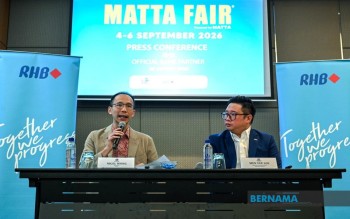
The Malaysian Association of Tour and Travel Agents (MATTA) has outlined an ambitious agenda for Budget 2027, placing particular emphasis on fiscal measures and capital investment designed to revitalize the nation's tourism sector. According to MATTA president Nigel Wong, the association's most pressing request centres on improved tax deductions for tour operators, a policy lever that could meaningfully enhance the competitiveness of Malaysian travel businesses in international markets. Speaking at the MATTA Fair press conference, Wong articulated a clear economic logic: by offering more generous tax treatments, the government would enable tour operators to redirect savings towards strengthening their overseas promotional campaigns, thereby generating increased visitor arrivals to Malaysia.
The timing of MATTA's submission assumes particular significance given the Visit Malaysia 2026-2027 initiative, a flagship campaign designed to establish Malaysia as a premier regional destination. Tour operators serve as crucial intermediaries in this effort, wielding substantial influence over source markets in Asia, the Middle East, Europe, and beyond. Without sufficient financial incentives to justify expanded marketing spend, many smaller and medium-sized operators may struggle to justify aggressive promotional strategies that would yield meaningful results for the national tourism target. Wong's request thus reflects not merely sectional interest but a recognition that the private sector requires supportive fiscal conditions to execute the government's tourism ambitions effectively.
Beyond tax policy, MATTA has articulated a complementary demand for substantial government capital investment in tourism infrastructure. Wong specifically highlighted the transformative impact of recent heritage conservation efforts, pointing to the restoration of the Sultan Abdul Hamad Building in Kuala Lumpur as a exemplary project that has elevated the city's cultural appeal and international profile. This observation opens a broader conversation about Malaysia's tourism assets. The country possesses considerable inventory of historical architecture, colonial-era structures, and culturally significant sites that remain inadequately maintained or promoted. Many such properties lack the funding or coordination necessary for systematic restoration, leaving them underutilized as tourism attractions despite their inherent drawing power.
The association's infrastructure advocacy extends beyond heritage preservation to encompass a systematic modernization of Malaysia's tourism amenities. Accommodation facilities, transportation networks, signage systems, and hospitality standards all require continuous upgrading to remain competitive with neighbouring destinations such as Thailand, Vietnam, and Indonesia. Tour operators frequently encounter situations where international clients experience disappointment due to inadequate facilities or poorly maintained attractions. Each such negative experience translates into reputational damage that extends far beyond the individual visitor, rippling through online review platforms and social networks to discourage future bookings from entire demographic cohorts.
Wong also advanced a more innovative proposal regarding municipal governance structures. The association contends that city councils and local authorities must assume greater responsibility for ensuring that urban environments meet international standards of safety, walkability, and cleanliness. This framing recognizes that tourists experience entire cities rather than isolated attractions, meaning that the quality of streets, parks, public facilities, and neighbourhood safety directly influences overall satisfaction and willingness to recommend Malaysian destinations to others. When tourists encounter litter-strewn streets, poorly maintained public spaces, or inadequate pedestrian infrastructure, their perception of Malaysia suffers accordingly, regardless of individual site quality.
The appeal for integrated urban management reflects a sophisticated understanding of modern tourism economics. Contemporary visitors, particularly from developed markets, increasingly prioritize experience quality and environmental standards over price alone. They seek destinations that offer not just iconic attractions but entire ecosystems of walkable neighbourhoods, reliable services, and visible cleanliness. Malaysia's current position in regional tourism rankings partly reflects gaps in these experiential factors. Singapore and Bangkok, while offering fewer natural attractions than Malaysia, consistently rank higher in visitor satisfaction metrics due to superior urban maintenance and infrastructure systems.
MATA's request for an elevated promotional budget addresses the marketing dimension of tourism expansion. International tourism markets demand sustained, sophisticated promotional efforts to maintain awareness and positive positioning. The Visit Malaysia 2026-2027 campaign requires sufficient central funding to support coordinated marketing efforts across diverse geographic markets, yet such centralized spending must be complemented by private sector promotional activity. Tour operators, travel agencies, and accommodation providers all conduct their own marketing, and these private efforts collectively amplify the impact of government campaigns. Without adequate tax incentives, private sector participants will rationally allocate limited resources to markets offering more immediate returns, thereby diminishing the overall promotional intensity directed toward Malaysia.
The September timing of MATTA's formal submission to government, preceding the October 9 tabling of the Supply Bill before Parliament, reflects the association's sophisticated engagement with budget timelines. This window allows ministry officials and Treasury officials to evaluate industry recommendations before draft allocations are finalized. However, the travel industry competes for budgetary resources against health, education, defence, and infrastructure sectors, each with powerful constituencies and documented needs. MATTA's challenge consists in demonstrating that tourism investment generates sufficient economic returns—through foreign exchange earnings, employment generation, and tax revenue—to justify allocations that may appear discretionary compared to social spending.
For Malaysian readers, the significance of these developments extends beyond sectional industry interests. Tourism represents a critical foreign exchange generator and employment source, particularly for communities in Sabah, Sarawak, and Peninsular Malaysia's cultural heartlands. Expansion of international visitor numbers directly supports thousands of jobs across accommodation, transportation, food service, heritage site management, and related sectors. Moreover, tourism provides economic justification for heritage conservation and urban renewal projects that enhance quality of life for residents independently of visitor numbers. Government responsiveness to MATTA's proposals will thus reveal its strategic prioritization of tourism within the broader economic policy framework reflected in Budget 2027.

