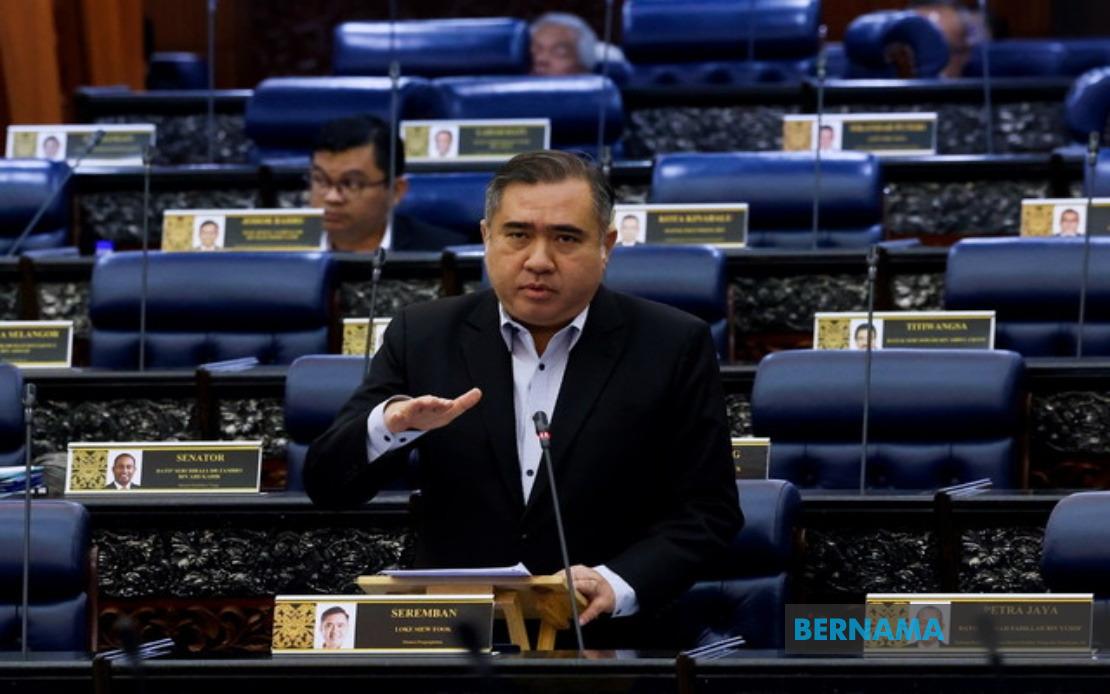
The Transport Ministry is moving to establish a structured compensation framework that would give Malaysian courts authority to order those convicted of serious driving offences to pay damages to victims or their families, marking a significant shift in how the country treats fatal and catastrophic road incidents. Transport Minister Anthony Loke announced the proposal in Parliament on July 14, emphasising that the amendments to the Road Transport Act 1987 would ensure drivers responsible for deaths through reckless driving or illegal street racing face consequences proportionate to the harm inflicted rather than standard traffic violation penalties.
Under the proposed mechanism, judicial authorities would assess compensation claims on a case-by-case basis, weighing several critical variables including the severity of injuries sustained, the degree of loss including loss of life, quantifiable economic damages suffered by victims and families, and the convicted offender's capacity to make restitution. This approach recognises that financial compensation, while never equivalent to human loss, provides vital support to families devastated by preventable tragedies and shifts the burden of care from the state to the party responsible for the tragedy.
The compensation proposal forms part of a broader legislative overhaul aimed at curbing illegal racing, a phenomenon that has caused multiple fatalities and injuries across Malaysia. The government successfully passed the Road Transport (Amendment) Bill 2026 through the Dewan Rakyat, introducing a new Section 42A that creates specific criminal offences exclusively for illegal street racing activities. This legal distinction is crucial for enforcement, as it allows authorities to intervene and prosecute illegal racing before accidents occur rather than waiting for collisions to happen.
Penalties for illegal racing have been substantially increased to reflect the danger posed by such activities. A first offence now carries a fine ranging from RM2,000 to RM10,000, with imprisonment up to two years or both penalties combined. Subsequent convictions trigger significantly harsher consequences, with fines between RM5,000 and RM20,000 and imprisonment extending to five years, creating a escalating deterrent system designed to discourage repeat offenders and address the street racing subculture that has proliferated in recent years.
Loke's emphasis on prosecuting illegal racers before accidents occur represents a fundamental change in the enforcement paradigm. Previously, the criminal justice system could only take action once an accident had happened, meaning authorities were inherently reactive rather than proactive. Now, any individual participating in illegal racing activities can be charged and convicted even if no collision or injury results from their actions, allowing police to disrupt dangerous behaviour at its source. This preventive approach could significantly reduce the number of innocent bystanders harmed by street racing incidents.
To demonstrate commitment to enforcement, the ministry highlighted a recent intensive operation in Johor that resulted in arrests of 16 individuals suspected of illegal racing involvement and seizure of 260 motorcycles, the primary vehicles used in street racing networks. These figures suggest organised enforcement capacity is being deployed systematically across states, though observers note that sustained operations across all 13 states will require significant resource allocation and inter-agency coordination that has occasionally faltered in the past.
A particularly tragic incident that prompted heightened legislative attention occurred on June 1 at Kilometre 27 of Jalan Renggam-Simpang Renggam in Johor, where a road accident claimed five lives. The Attorney-General's Chambers directed that investigations into this tragedy proceed under Section 302 of the Penal Code, which addresses culpable homicide, demonstrating that the justice system is treating such fatal incidents with maximum severity. These cases underscore the real human cost of illegal racing and the necessity for stronger deterrents.
Loke acknowledged that legislative amendments and enforcement operations alone cannot address the road safety crisis that claims more than 6,000 lives annually across Malaysia, a staggering toll that positions road accidents among the country's leading preventable causes of death. Sustainable reduction in fatalities requires parallel investments in behavioural change, public awareness campaigns, and community engagement that shift cultural attitudes toward reckless driving and street racing. The ministry recognises that changing deeply entrenched attitudes toward dangerous driving requires sustained messaging that resonates with younger demographics particularly vulnerable to illegal racing culture.
The minister appealed for cross-governmental cooperation and comprehensive societal commitment to road safety as a national priority. He specifically called upon all political parties to refrain from politicising road safety issues, framing the initiative as transcending partisan divisions in service of a shared objective. This appeal reflects concern that road safety reforms could become tools for political point-scoring rather than vehicles for genuine improvement, a risk that could undermine bipartisan support necessary for sustained implementation across multiple election cycles and government transitions.
The proposed compensation mechanism has particular significance for Malaysian readers given the disproportionate impact of road accidents on lower-income families who lack financial resources to pursue civil litigation independently. By establishing court-ordered compensation as a criminal sanction, the framework potentially removes financial barriers that have historically prevented families from receiving restitution. However, the actual impact will depend on whether compensation awards can realistically be collected from offenders and whether courts will have flexibility to account for genuine inability to pay without rendering judgments meaningless.
Implementation challenges loom large, including ensuring consistent application of compensation standards across jurisdictions, training judges in assessing appropriate damage awards, and establishing mechanisms to enforce payment over extended periods. Regional neighbours like Singapore and Thailand have demonstrated that structured compensation frameworks can function effectively when supported by dedicated enforcement infrastructure and clear sentencing guidelines. Malaysia's success will likely depend on whether the Ministry of Transport can coordinate with the judiciary and Attorney-General's Chambers to develop comprehensive implementation protocols prior to the amendments taking effect.
The amendments represent acknowledgment that traditional approaches emphasising purely punitive measures have failed to adequately protect road users or provide meaningful recourse to victims' families. By combining tougher criminal penalties with compensatory mechanisms and preventive enforcement authority, the government is attempting a multi-dimensional strategy addressing different aspects of the illegal racing phenomenon simultaneously. Whether this integrated approach will generate measurable reduction in road fatalities over the coming years will become a key indicator of the government's broader public safety capabilities and commitment to translating legislative intent into real-world outcomes.

