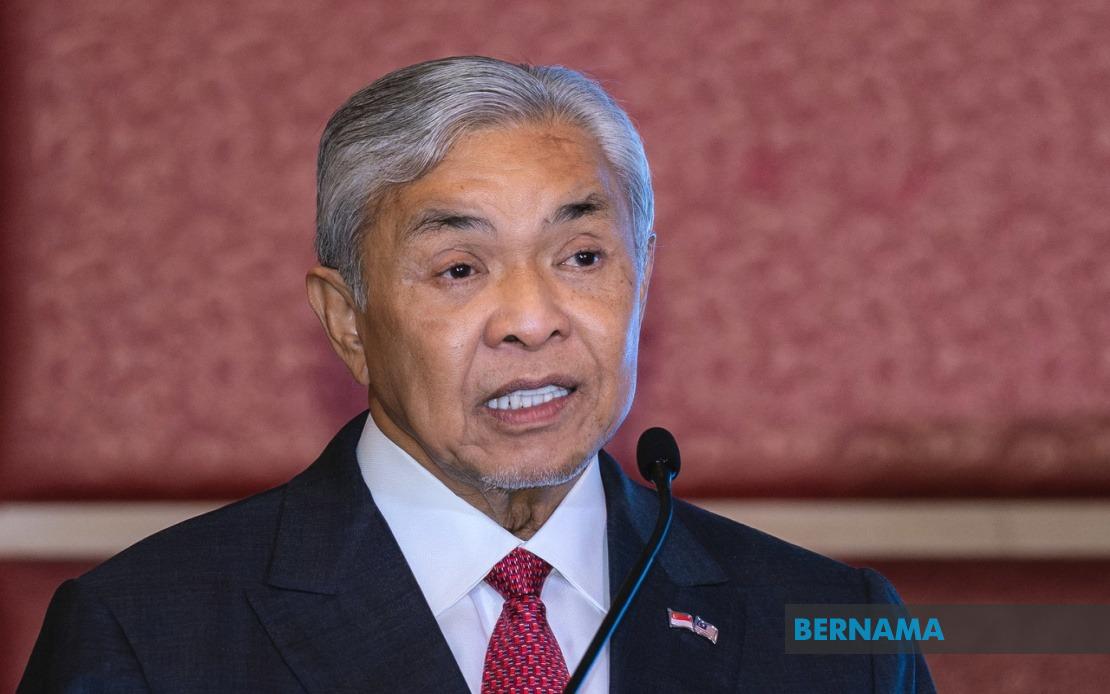
Malaysia's technical vocational sector is being repositioned as a direct pipeline to employment, with Deputy Prime Minister Datuk Seri Dr Ahmad Zahid Hamidi declaring that graduates from TVET institutions now achieve a 100 per cent employability rate through coordinated collaboration between educational providers and the private sector. Speaking in Kuala Lumpur on July 13, Ahmad Zahid outlined how the government has fundamentally restructured the relationship between training institutions and industry employers to eliminate the persistent challenge of job market misalignment that has historically plagued vocational graduates across the region.
The operational logic behind this employment guarantee rests on early and intensive engagement between TVET institutions and companies well before curriculum design is finalised. Rather than allowing educational institutions to develop training programmes in isolation, the government now ensures that industry representatives participate directly in shaping course content, learning outcomes, and skill priorities. This collaborative approach means that by the time students enter TVET programmes, their eventual employers have already identified them as candidates for specific roles, fundamentally transforming the typical trajectory from education to employment into a pre-arranged pathway.
Ahmad Zahid, who also serves as Rural and Regional Development Minister and chairs the National TVET Council, emphasised that this model addresses multiple longstanding complaints from employers and graduates alike. The persistent phenomenon of course mismatch—where graduates possess qualifications that do not align with actual labour market needs—effectively disappears when industry directly influences curriculum development. Furthermore, the anxiety surrounding wage expectations and job availability becomes moot when employment offers materialise during the training period itself, providing students with genuine economic security and purpose during their studies.
The strategic incorporation of High TVET courses represents an additional refinement to Malaysia's vocational education framework. These advanced technical programmes are explicitly designed to exceed basic industry requirements, ensuring that graduates possess skills that not only meet current workplace demands but anticipate future technological shifts and specialisation needs. This forward-looking approach positions Malaysian TVET graduates as adaptable professionals capable of navigating evolving industry landscapes rather than technicians trained only for present-day tasks.
The practical implementation of this vision becomes apparent through Malaysia's participation in WorldSkills Shanghai 2026, where the country will field a delegation of nine competitors from various TVET providers including MARA TVET, Universiti Kuala Lumpur, and GIATMARA. These participants will compete across nine skill categories spanning Fashion Technology, Cyber Security, and Electronics—disciplines reflecting both traditional crafts and cutting-edge technological domains. Ahmad Zahid's emphasis on mental resilience and emotional fortitude for these competitors underscores the government's view that international competition serves not merely as a showcase but as a developmental opportunity for Malaysian technical professionals.
For Malaysian policymakers, the TVET sector represents a critical counterbalance to the nation's traditional emphasis on university-level education and professional qualifications. Many Southeast Asian economies struggle with a paradoxical surplus of degree-holders alongside persistent shortages of skilled tradespeople and technicians. Malaysia's deliberate repositioning of TVET as a high-status, employment-guaranteed pathway aims to redirect educational aspirations toward vocational excellence, addressing both labour market gaps and the underutilisation of credentials that characterises many regional economies.
The timing of this initiative carries particular significance as Malaysia seeks to maintain competitiveness amid rapid industrial transformation. Sectors including renewable energy, semiconductor manufacturing, digital infrastructure, and advanced manufacturing all require technical expertise that traditional university pathways do not consistently provide. By guaranteeing employment through industry partnership, the government removes a primary barrier to TVET uptake among students and families who historically viewed vocational training as a second-choice option for those unable to access university education.
The regional implications extend beyond Malaysia's borders, as neighbouring economies including Indonesia, Thailand, and the Philippines grapple with similar challenges in connecting vocational graduates to employment. Malaysia's model of formalised industry-education collaboration, if successfully implemented and monitored, could offer a replicable template for other Southeast Asian nations seeking to strengthen their technical workforces. The approach directly addresses one of the region's persistent development constraints: the disconnect between training systems and actual employer requirements.
However, the success of this employment guarantee framework depends substantially on sustained employer commitment and the ability of TVET institutions to maintain quality standards while expanding capacity. The claim of 100 per cent employability carries implicit assumptions about labour market absorption capacity, employer reliability in maintaining partnership commitments, and the maintenance of wage standards among TVET-trained professionals. Regional observers will monitor whether this model proves sustainable during economic downturns or industry contractions when employer hiring patterns typically contract significantly.
The government's emphasis on skill enhancement, discipline, and focus during the two-month preparation period before the September 22-27 WorldSkills competition in Shanghai reflects broader confidence in the TVET sector's trajectory. Ahmad Zahid's public expression of optimism that Malaysian competitors can excel on the international stage signals governmental commitment to elevating the status and perceived quality of technical vocational education. This visibility and investment in competitive excellence help legitimise TVET pathways within Malaysian society, potentially encouraging higher-achieving students to consider technical careers.
Looking forward, the sustainability of Malaysia's TVET employment guarantee will depend on continuous curriculum updating, ongoing industry feedback mechanisms, and robust labour market data collection to ensure that claimed employment rates reflect genuine, sustainable placements rather than temporary or underemployment arrangements. The initiative represents a significant policy intervention acknowledging that technical education cannot succeed in isolation from employer needs and that credible employment pathways must be constructed through institutional partnership rather than assumed to emerge automatically from graduation.

