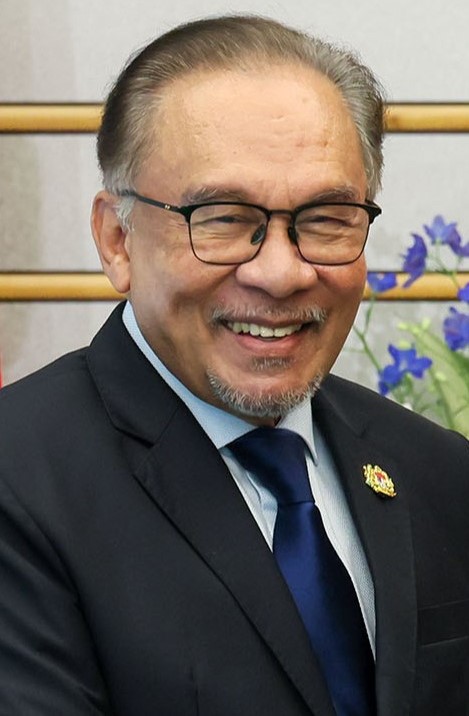
Human Resources Minister Datuk Seri R. Ramanan has drawn attention to a persistent challenge in Malaysia's labour landscape: the limited reach of workers' unions, which currently represent only six per cent of the country's entire workforce. Speaking at the Peninsular Malaysia Workers' Union Affairs Programme (PHEKS) 2026 grant presentation ceremony in Kuala Lumpur on June 23, Ramanan framed this relatively low participation rate as evidence of a significant awareness gap among workers regarding what union membership entails and the concrete advantages it offers.
The minister's observation reveals an important dynamic in Malaysia's industrial relations scene. Despite decades of union organising, the vast majority of Malaysian workers either lack access to unionised workplaces or have chosen not to participate in collective labour arrangements. This phenomenon is not unique to Malaysia, but its particular manifestation here points to specific challenges in how unions communicate their value proposition and in structural barriers that may prevent workers from joining. Ramanan's comments suggest the government views this as a problem requiring intervention, not merely a natural market outcome.
Ramanan emphasised that low participation reflects a fundamental misunderstanding about the primary purpose of workers' unions. Many workers, he suggested, regard unions primarily as emergency services that intervene when disputes arise between employers and staff. This reactive perspective, the minister contended, obscures the broader preventive and advocacy role that unions should play throughout an employment relationship. By framing unions as organisations designed to forestall workplace problems rather than simply remedy them after the fact, Ramanan articulated a vision of unions as proactive institutional actors within the economy.
The minister's framing of unions as strategic government partners signals a particular approach to labour relations in Malaysia. Rather than viewing unions and government as potentially adversarial, or presenting them as separate institutions negotiating at arm's length, Ramanan positioned unions as collaborators with government in achieving fair and economically inclusive development. This language emphasises the integration of labour interests into the broader national economic project, suggesting that union participation serves not only workers but also contributes to industrial stability and harmony that benefits employers and the state alike.
To address the participation challenge, the government has committed substantial resources to strengthening union capacity and outreach. The allocation of RM6.1 million for PHEKS 2026 nationwide reflects a deliberate investment strategy. Of this sum, RM3.5 million targets internal union strengthening through training, education, research initiatives, digitalisation efforts, and governance improvement programmes. These measures acknowledge that unions themselves require updated capabilities to remain relevant and effective in a rapidly evolving economy. The remaining RM2.6 million supports outreach and corporate social responsibility efforts, recognising that union growth depends partly on effective external communication and community engagement.
The emphasis on digitalisation and governance modernisation within union structures addresses a significant contemporary challenge. Many Malaysian unions, particularly those in traditional industries, have not fully adapted to digital-age organising and communication methods. Younger workers, increasingly active in gig economy and technology sectors, may not see traditional union structures as relevant to their employment circumstances. By investing in these areas, the government signals recognition that union revival requires structural innovation, not merely exhortation for workers to join existing organisations.
Ramanan highlighted the imperative for Malaysian workers and unions to engage meaningfully with artificial intelligence and broader technological change reshaping the workplace. The ministry's allocation of RM110 million through the Jelajah AI MyMahir initiative under TalenCorp for skills upgrading programmes demonstrates that government policy now couples union development with workforce upskilling. This connection recognises that union value in the future depends significantly on whether unions help workers navigate technological disruption and acquire relevant skills for emerging roles. Without this adaptive capacity, unions risk further marginalisation as sectors transform.
The current registered union landscape comprises 786 organisations representing over 1.06 million members as of December 31, 2025. While the absolute membership number is substantial, representing it against Malaysia's total workforce reveals the participation gap. This figure also masks significant sectoral variation: certain industries and regions maintain higher union density, while others remain largely unorganised. Manufacturing, construction, and public sector workers tend toward higher unionisation rates, while private service sectors, particularly those involving precarious or informal employment, show much lower penetration. Understanding these variations is essential for targeted organising strategies.
For Malaysian workers, the minister's message carries important practical implications. The emphasis on union education and the government's resource commitment suggest that both union bodies and policymakers view growing participation as achievable. Workers evaluating whether to join unions should consider not merely whether unions resolve existing disputes but whether they offer preventive advocacy and skill development support aligned with their career trajectories. The government's positioning of unions as economic development partners indicates that membership increasingly involves alignment with broader national agendas, which may appeal to workers viewing employment within a longer-term, stability-focused framework.
From a regional perspective, Malaysia's union participation challenge resonates across Southeast Asia. Many countries in the region show similarly low unionisation rates despite rapid industrialisation and significant workforce growth. The Malaysian government's approach—combining targeted funding with modernisation imperatives—may offer lessons for neighbouring countries seeking to revitalise union movements. The recognition that digitalisation and skills development must accompany traditional union functions represents an evolution in thinking about labour institutions in developing economies.
Looking forward, the success of the PHEKS 2026 initiative and related government efforts will depend on sustained commitment and measurable progress in union membership growth and capacity building. Ramanan's conditional language regarding future grant allocations—noting that government support will depend on effective use of funds and good governance practices—introduces accountability mechanisms. This approach may incentivise unions to demonstrate tangible outcomes in membership recruitment, service delivery, and governance improvements. The coming years will test whether Malaysian unions can overcome the participation gap and remain central institutions in the country's evolving labour market.