Malaysia's universities are moving to establish robust safeguards around generative artificial intelligence following the adoption of national guidelines by the Ministry of Higher Education in 2024. The framework, designed to help institutions navigate the dual challenge of embracing innovation while protecting academic standards, has already prompted universities to develop their own specific policies and operating procedures. Deputy Minister Adam Adli Abdul Halim confirmed at an awards ceremony in Melaka that the initiative has given higher education institutions clearer pathways to address misuse whilst encouraging ethical technology adoption.
The regulatory approach reflects growing concerns about how rapidly AI tools have permeated university campuses. Rather than imposing outright restrictions, the guidelines establish transparent expectations for students and academics, requiring disclosure of AI usage in coursework and maintaining adherence to traditional research methodologies and citation practices. Adam Adli emphasised that technology deployment must remain secondary to fundamental academic discipline, functioning as a supplementary learning aid rather than a replacement for intellectual rigour. This position seeks to preserve the educational value of assignments—whether essays, projects or research papers—by ensuring students retain ownership of their analytical and creative processes.
Universities have responded by formalising procedures for identifying and managing cases where generative AI is deployed inappropriately. These institutional protocols include response mechanisms and methods for assessing the extent and nature of any misuse. The Deputy Minister acknowledged that violations continue to occur, yet the framework provides institutions with standardised approaches to investigate and adjudicate such matters fairly. By establishing consistent procedures across the sector, the guidelines aim to reduce ambiguity about what constitutes acceptable versus prohibited AI usage, giving students and staff clearer boundaries to navigate.
The declaration requirement represents a practical enforcement mechanism. Students must explicitly state when they have used generative AI tools in their academic work, allowing educators to evaluate whether the reliance on such technology has compromised the intellectual integrity of the submission. This transparency-based approach differs from attempting to detect AI usage through technical means, instead placing responsibility on learners to honestly report their methodologies. Such a system presupposes and reinforces an institutional culture where academic honesty is valued and expected.
Penalties for violations are substantial, ranging from academic censure to revocation of qualifications in serious cases. The deterrent effect of such consequences, combined with clear guidance about expectations, appears designed to encourage compliance without requiring punitive enforcement in every instance. Adam Adli's remarks suggest that most institutions and students are adapting to the framework constructively, viewing the guidelines as helpful rather than restrictive. This consensual approach to regulation may prove more sustainable than heavy-handed prohibition, which could breed resentment or encourage circumvention.
The timing and framing of these guidelines reflect Malaysia's position as a developing nation seeking to harness advanced technology without sacrificing educational quality. Other Southeast Asian countries face similar pressures as AI tools become ubiquitous, making Malaysia's policy response potentially influential regionally. By establishing a national framework early, rather than allowing ad hoc institutional responses, the Ministry has positioned itself to shape how universities across the country approach this challenge. The approach balances pragmatism—acknowledging that generative AI is here to stay—with protection of core academic values.
Universities have invested effort in translating the national framework into institution-specific guidance. This decentralised implementation allows for customisation based on disciplinary differences and institutional contexts whilst maintaining alignment with national standards. A engineering programme, for instance, might permit AI for certain computational tasks whilst restricting its use in design-thinking phases, whereas humanities disciplines might impose stricter limitations. This flexibility within a coordinated system represents sophisticated policy design.
The guidelines also implicitly challenge students to develop critical engagement with AI outputs. Requiring proper research methods alongside AI use encourages learners to verify, critique and contextualise machine-generated content rather than passively accepting it. Over time, this could cultivate a generation of graduates who understand both the capabilities and limitations of generative AI—skills increasingly valuable in professional environments where these tools are becoming standard. The educational outcome thus extends beyond preventing cheating to building competency.
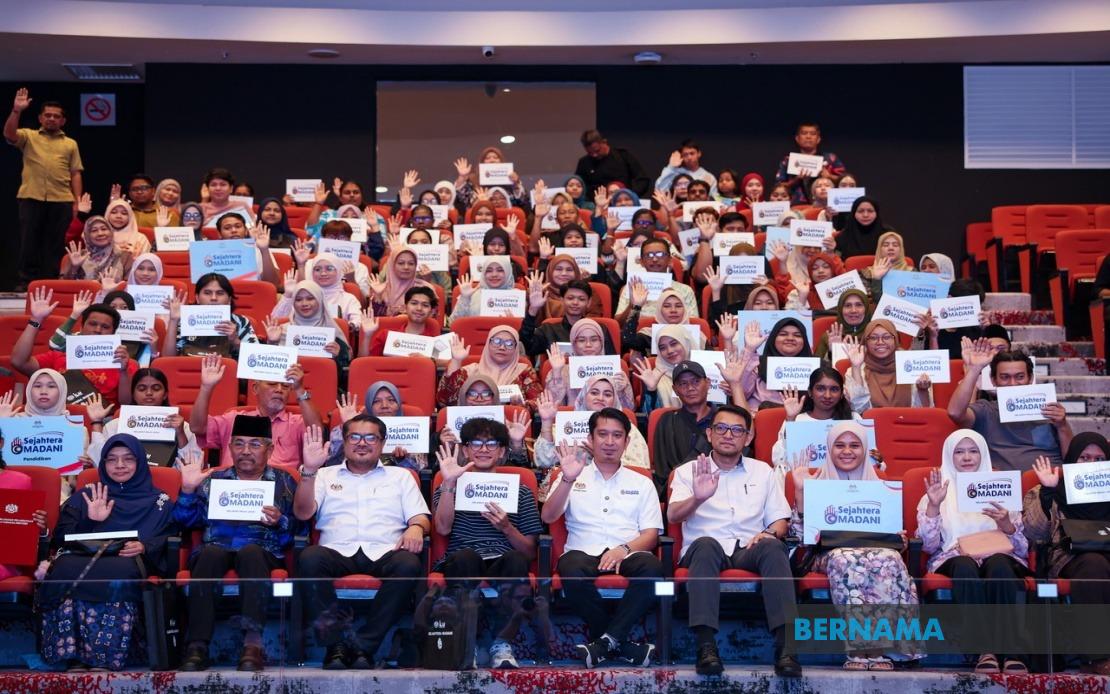
Beyond the regulatory framework, the Ministry has simultaneously demonstrated commitment to supporting disadvantaged students through technology provision. The awards ceremony in Melaka distributed laptops to outstanding SPM students and tablets to university scholars from lower-income households participating in the Sejahtera MADANI initiative. This parallel initiative acknowledges that managing AI responsibly requires not only clear rules but also ensuring equitable access to resources and recognition of academic achievement. Students who lack reliable technology at home face particular vulnerability to temptation to misuse available tools, making support programmes integral to the success of AI governance.
The combination of regulatory guidance and material support reflects a comprehensive approach to technology integration in Malaysian higher education. Rather than treating AI policy as a purely disciplinary matter, the Ministry frames it within broader initiatives to enhance student wellbeing and opportunity. This positioning may help universities implement the guidelines with stakeholder buy-in rather than resistance. Moving forward, the effectiveness of these measures will depend on consistent implementation, institutional commitment and ongoing refinement as experience with generative AI in academic settings deepens.

