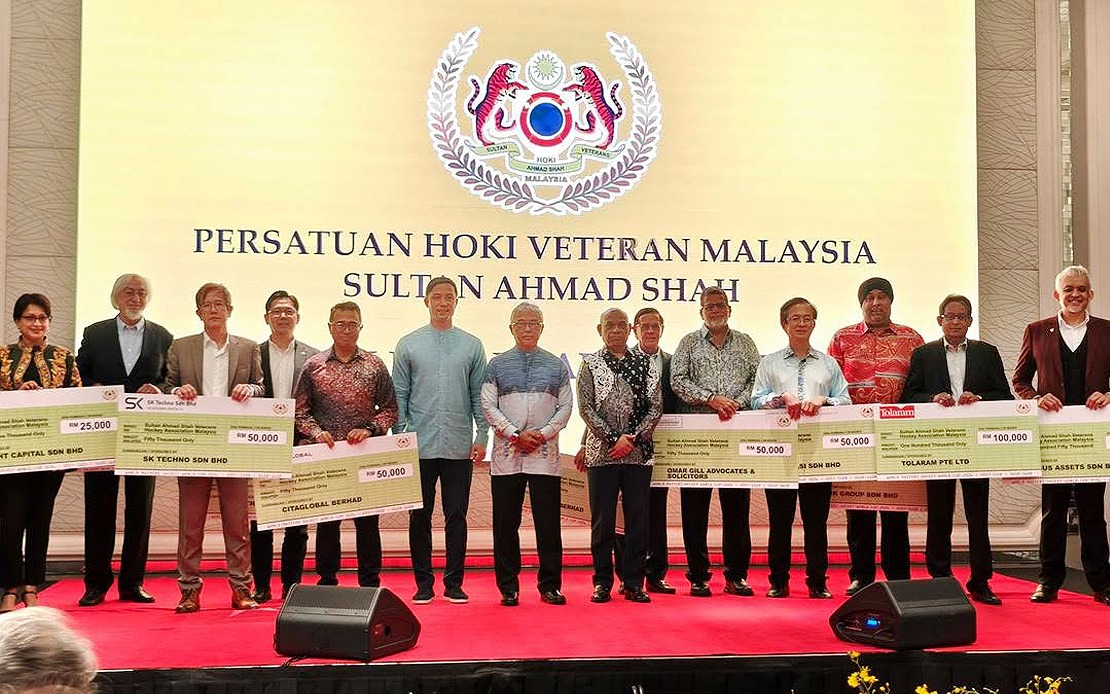
Malaysia's veteran hockey programme has received a significant financial injection of RM1.36 million as the country gears up for participation in the 2026 Masters Hockey World Cup. The funds were announced following a Royal High Tea Ceremony in Kuala Lumpur, with the event graced by Al-Sultan Abdullah Ri'ayatuddin Al-Mustafa Billah Shah, the Sultan of Pahang, who serves as Patron of the Sultan Ahmad Shah Malaysian Veteran Hockey Association. The championship will take place across multiple venues in the Netherlands and Belgium from July 22 to August 16, 2026, featuring Malaysian competitors spanning five distinct age categories.
Tengku Arif Temenggong Tengku Fahad Mu'adzam Shah, president of the Sultan Ahmad Shah Malaysian Veteran Hockey Association, emphasised that the funding package has been assembled through collaborative contributions from various stakeholders. The financial support represents a targeted investment in enabling Malaysian veteran players to compete at the highest international level, addressing the practical barriers that often prevent former national team athletes from participating in prestigious tournaments. The association's leadership outlined plans to deploy the resources strategically across multiple expenses, ensuring that the contingent is fully equipped for the demanding requirements of international competition.
Beyond covering the conventional tournament expenses, the funding framework incorporates a meaningful social dimension. The association intends to use a portion of the allocation to provide direct financial assistance to former national players who face economic constraints that might otherwise prevent their participation. This approach recognises that Malaysia's veteran hockey talent pool includes individuals whose careers have evolved in different directions, and whose participation carries significant symbolic value for Malaysian sport. By actively sponsoring established ex-national team players, the association aims to strengthen the competitive calibre of the Malaysian delegations while honouring the legacy of players who previously represented the nation at elite levels.
The tournament infrastructure spans two distinct geographical areas, with matches distributed across specific venues tailored to each age category. The 40-year-old category will compete at HC Schiedam in the Dutch city of Schiedam, whilst the 45-year-old and 50-year-old divisions are based at HC Rotterdam, with all three categories concluding their matches by August 1. The older age brackets—60 years and above—will travel to Belgium, with the 60-year-old category based at HC Olympia in Brasschaat, Antwerp, while the 65-year-old category competes at BHV Push in Breda, the Netherlands, extending the tournament schedule through August 16. This dispersed venue structure necessitates careful logistical planning, making the funding provision essential for managing accommodation and transportation requirements across multiple locations.
The Masters Hockey World Cup stands as the premier international competition for veteran hockey athletes globally, operating on a biennial schedule that attracts elite teams from around the world. The 2026 edition represents the eighth iteration of a tournament structure that emerged from the institutional consolidation of two major governing bodies in 2012. The merger of the International Masters Hockey Association (IMHA) and the World Grand Masters Association (WGMA) created a unified platform for age-category competition, establishing a championship that now draws the highest calibre of former professional and international players across multiple continents.
For Malaysia, participation in this championship carries particular strategic importance within the broader context of Southeast Asian sport. Veteran hockey competitions offer a pathway for former national team members to maintain their connection to international competition and contribute to Malaysia's global sporting profile. The age-categorical structure of the tournament means that players can continue competing at elite levels well into their 60s and beyond, extending the productive sporting career significantly compared to mainstream professional hockey.
The funding secured through this announcement provides the structural foundation necessary for Malaysia to field competitive teams across all five age categories. Historically, Southeast Asian nations have competed successfully in veteran competitions, and Malaysia's veteran hockey programme represents an opportunity to maintain this momentum. The investment reflects a conscious policy decision to support not merely the contemporary national team, but also to cultivate sustainable engagement with former elite athletes, creating what amounts to a secondary competitive ecosystem.
The announcement also underscores the evolving relationship between Malaysia's sporting institutions and government support structures. The participation of the Sultan of Pahang in the funding ceremony indicates institutional recognition of veteran sport as a legitimate and valued aspect of the national sporting portfolio. This elevation of veteran competition within official frameworks suggests a shift in how Malaysian sports governance conceptualises athlete development and engagement across the lifespan.
Looking ahead to the 2026 championships, the RM1.36 million allocation will determine whether Malaysia can optimise its team selections and ensure that financial constraints do not prevent the participation of potentially competitive athletes. The structure of the funding—encompassing accommodation, travel, tournament preparation, and direct player support—indicates a comprehensive approach to removing barriers to participation. For Malaysian readers and sporting enthusiasts, this investment represents a tangible commitment to maintaining the nation's presence in international veteran hockey competition, preserving the competitive heritage of former national players whilst contributing to Malaysia's enduring legacy in global sport.

