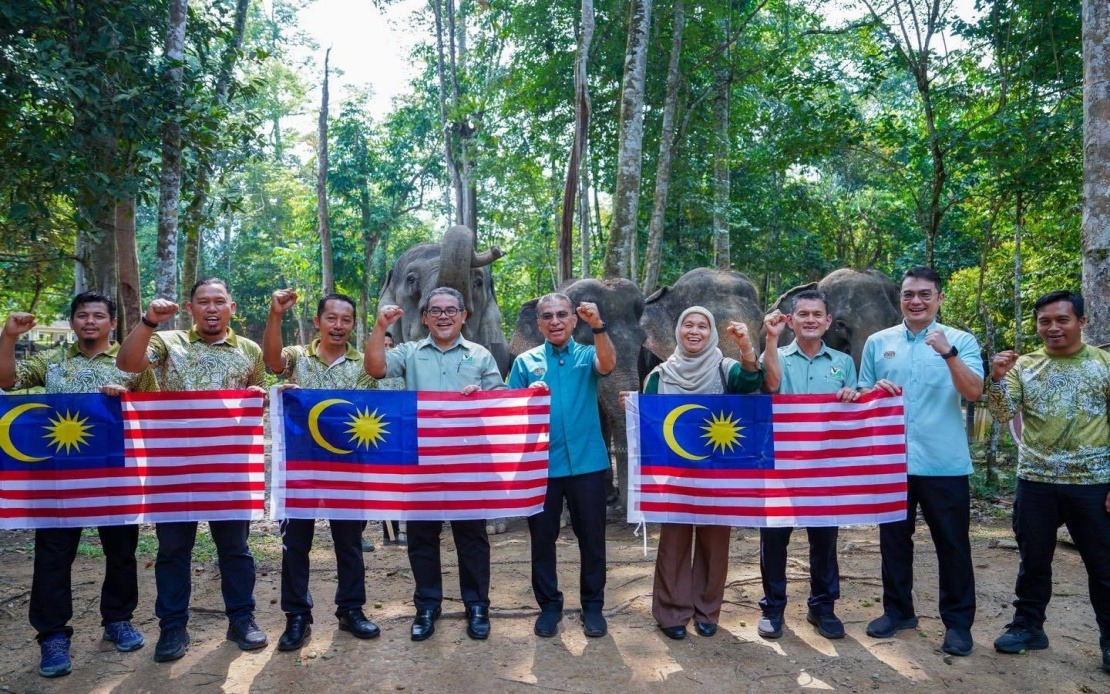
The Ministry of Natural Resources and Environmental Sustainability (NRES) is embarking on a comprehensive initiative to create new methodologies aimed at curtailing the rising frequency of human-wildlife conflicts across the country. Speaking in Tangkak, Deputy Minister Syed Ibrahim Syed Noh underscored the gravity of the challenge facing the Department of Wildlife and National Parks (Perhilitan), which shoulders primary responsibility for mitigating encounters between wild animals—especially elephants—and human populations.
The escalation of such conflicts represents a multifaceted crisis that extends beyond simple wildlife management. As Malaysia continues to expand urban settlements, agricultural enterprises, and development projects, the available habitat for large mammals contracts considerably. This territorial squeeze inevitably forces wildlife into closer proximity with human communities, creating situations that endanger both animal welfare and public safety. The ministry recognises that conventional reactive approaches—capturing or relocating problem animals—frequently prove insufficient in addressing the root causes of these encounters.
Syed Ibrahim explained that Perhilitan maintains rigorous oversight of conflict incidents as they unfold, contrary to perceptions that the agency remains passive. Rather than immediately intervening to remove animals, the ministry prioritises preservation of natural habitats and animal welfare, understanding that wild creatures possess innate behavioural patterns that cannot be suppressed through confinement. This philosophical approach reflects a shift toward ecosystem-based management rather than purely human-centric solutions that prioritise removal or elimination of wildlife.
The ministry and Perhilitan, working alongside other governmental and potentially private partners, are currently engaged in research and development of comprehensive solutions designed to reduce conflict occurrence. This collaborative framework suggests recognition that addressing wildlife encroachment requires multidisciplinary expertise spanning ecology, urban planning, agriculture, and community engagement. The initiative acknowledges that lasting resolution demands coordination across multiple sectors rather than isolated efforts by wildlife authorities alone.
A particularly instructive case study involves Sulong Chalil, an adult male elephant whose remarkable journey recently captured national attention. After relocation to a forested area in Gerik, Perak, the animal undertook a journey spanning hundreds of kilometres to return to its natural habitat in Gua Musang, Kelantan. This behaviour powerfully illustrates a central challenge confronting wildlife managers: animals possess strong territorial attachments and cannot simply be relocated to alternative habitats with expectation of acceptance. Sulong's determination to return home despite significant injury—he travelled with an injured leg—demonstrates the limitations of translocation as a standalone conflict-mitigation strategy.
The handling of Sulong's situation exemplifies the ministry's evolving approach. Rather than forcibly recapture the animal, Perhilitan maintained continuous surveillance while permitting the elephant to move through the landscape. This methodology reflects understanding that wild animals, particularly elephants with their complex social and cognitive capacities, experience stress when confined or prevented from returning to familiar territories. By allowing movement whilst maintaining monitoring, the authority attempted to balance animal welfare with public safety, ensuring eventual return to designated habitat areas.
Syed Ibrahim acknowledged the delicate balance inherent in this approach, recognising that permitting wildlife movement might appear to external observers as permissive or irresponsible policy. However, he stressed that such operations involve sophisticated tracking and oversight mechanisms designed to ensure animal safety and prevent harmful encounters. The strategy represents informed wildlife management grounded in scientific understanding of animal behaviour rather than ad-hoc decision-making. Success with Sulong and similar cases will likely inform the new methodologies under development across the broader conflict-reduction initiative.
For Malaysia and other Southeast Asian nations confronting similar wildlife pressures, the ministry's approach carries significant implications. The region experiences intense development pressures alongside substantial populations of large megafauna including elephants, tigers, and rhinoceroses. As habitat loss accelerates across the region, human-wildlife conflicts intensify dramatically, creating pressure for solutions that balance conservation with development imperatives. Malaysia's efforts to develop sophisticated conflict-reduction methods could establish frameworks potentially applicable across neighbouring countries facing comparable challenges.
The underlying issue reflects broader tensions between conservation and development that characterise contemporary environmental policy in Malaysia. Rapid expansion of human infrastructure inevitably encroaches on wilderness areas, yet complete abandonment of development proves politically and economically unfeasible. The ministry's commitment to formulating new approaches suggests recognition that sustainable coexistence requires neither wholesale preservation nor unlimited development, but rather carefully calibrated strategies that permit both economic activity and wildlife conservation.
Implementation of new conflict-reduction methodologies will likely encompass diverse interventions including habitat corridor creation, community education initiatives, compensation schemes for agricultural losses, and technological solutions such as early-warning systems. Early identification of animal movements toward settlements could enable preventive measures including temporary human evacuation or reinforced animal containment, reducing opportunities for dangerous encounters. Such comprehensive strategies demand significant investment and inter-agency coordination, reflecting the complexity of addressing conflicts rooted in fundamental land-use competition.
The success of these emerging initiatives will significantly influence wildlife conservation outcomes across Malaysia over coming decades. As human populations expand and development intensifies, the approaches adopted now will determine whether species including wild elephants can persist in viable populations or face continued marginalisation into ever-shrinking habitat fragments. For Malaysian communities living adjacent to wildlife areas, new conflict-reduction methods offer potential relief from dangers and agricultural losses that have plagued rural regions.
Syed Ibrahim's comments reflect a ministry increasingly cognisant that managing human-wildlife coexistence represents a defining environmental challenge. Rather than seeking simplistic solutions through removal or elimination, the NRES is pursuing sophisticated understanding of animal behaviour combined with landscape-level planning that acknowledges both conservation and human development needs. Whether these new methodologies will effectively reduce conflict frequency while permitting sustainable wildlife populations remains to be demonstrated, but the commitment to developing science-based approaches offers cautious optimism for improved outcomes across Malaysia's human-dominated landscapes.

